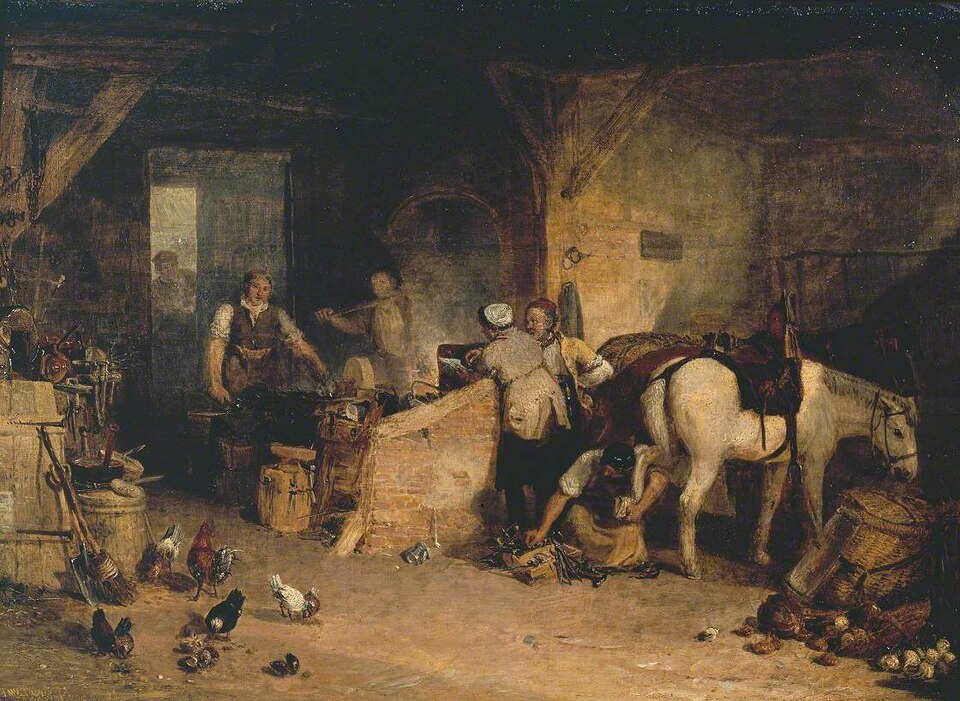
J. M. W. Turner, A Country Blacksmith Disputing upon the Price of Iron, and the Price Charged to the Butcher for Shoeing his Poney, 1807. Wikimedia Commons. · PD
A Country Blacksmith Disputing upon the Price of Iron, and the Price Charged to the Butcher for Shoeing his Poney
Details
The story
In the spring of 1806 the British government, needing money for the war with France, proposed a duty on pig iron. Members of Parliament objected that iron was one of the country's staple goods, and within weeks the tax was withdrawn. A year later Turner showed this village forge at the Royal Academy, and its long title is all about money: a blacksmith disputing the price of iron and what he charged a butcher for shoeing his pony. The pony stands at the right, one hoof lifted for the farrier. Turner also had a rival in view. The young Scottish painter David Wilkie had made his name the year before with small scenes of village life, and at the 1807 exhibition Wilkie's Blind Fiddler hung beside this panel. When the collector Sir John Leicester asked the price, Turner answered that Wilkie was getting 100 guineas and he would not take less. Leicester paid it.