Jusepe de Ribera · PD
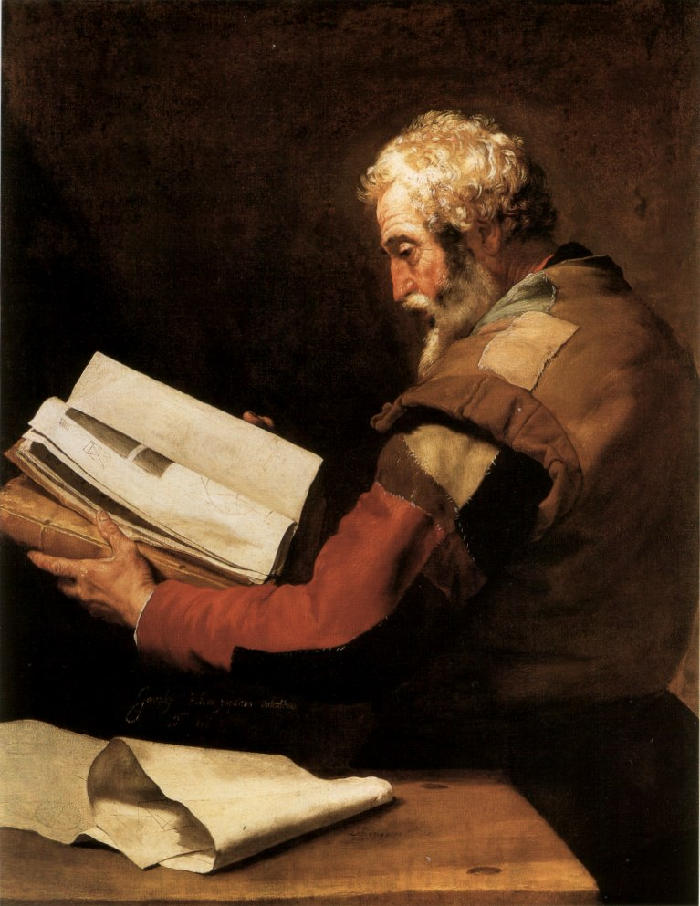
Anaxagoras
Details
The story
In May 1636 Karl Eusebius, Prince of Liechtenstein, ordered a dozen paintings of ancient philosophers from Ribera through his agents in Naples. Six were delivered. Ribera gave them torn clothes and weathered faces and worked from men he could find in Naples, which is what a buyer of the time expected from a philosopher picture. An inventory of 1767 names the six as Aristotle, Plato, Crates, Anaxagoras, Protagoras and Diogenes. Only three of the canvases carry the philosopher's name written on them, and this is one of the three. It is signed in Latin and dated 1636. The others have been renamed again and again. The one now called Aristotle was known for years as Archimedes, on the strength of the geometry in his hands. Anaxagoras himself taught in Athens and was prosecuted there for saying the sun was a glowing stone rather than a god. The six were split up in a sale in 1957 and stood in one room together only once after that, at a Ribera exhibition in New York in 1992. This canvas is in a private collection.