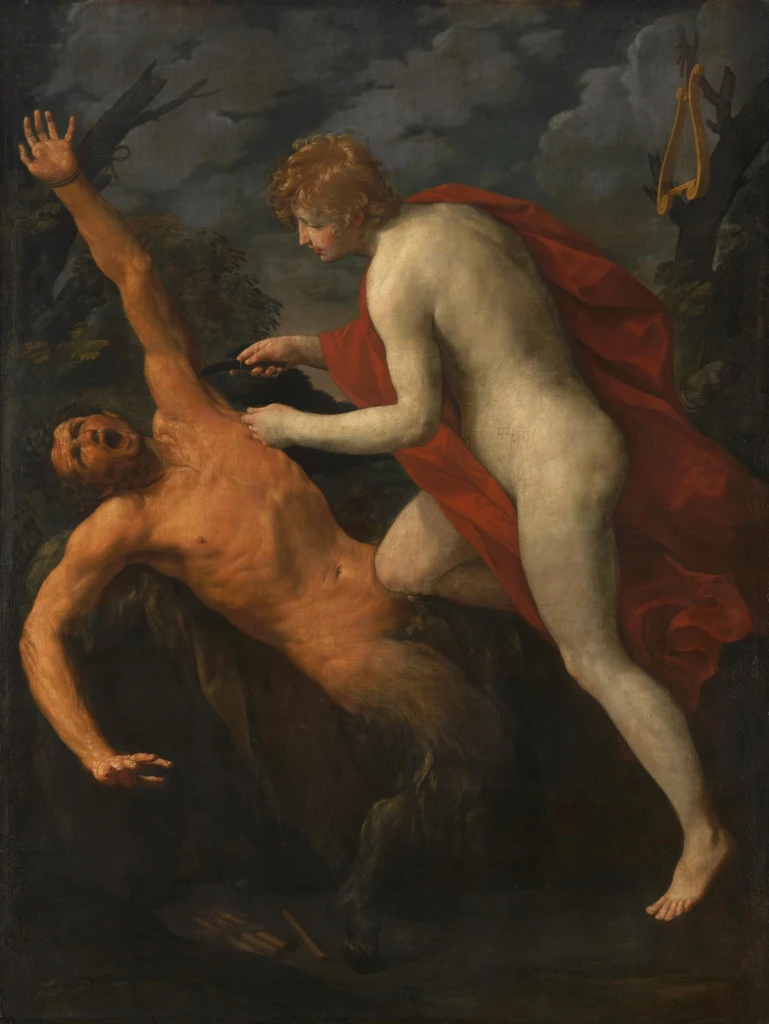
Apollo Flaying Marsyas
Details
The story
In Ovid's telling, the satyr Marsyas challenged Apollo to a contest of music, his rough pipes against the god's lyre. The Muses judged Apollo the winner, and the loser's fate was his to decide. He hung Marsyas from a tree and flayed him alive. Guido Reni painted the punishment around 1633, on a canvas more than two metres tall, and the museum sees in it an argument about art itself. Apollo is built like a flawless ancient statue, calm and pale, and the satyr is a tormented creature of untamed nature. Set side by side, the two figures make the case for the ideal beauty of antiquity as the model painting should follow. Other painters of the 1630s took the same story the opposite way. In Naples in 1637 Jusepe de Ribera painted it twice, with the screaming satyr thrown upside down across the foreground. Reni returned to his own composition as well, and another version given to him hangs in Toulouse.