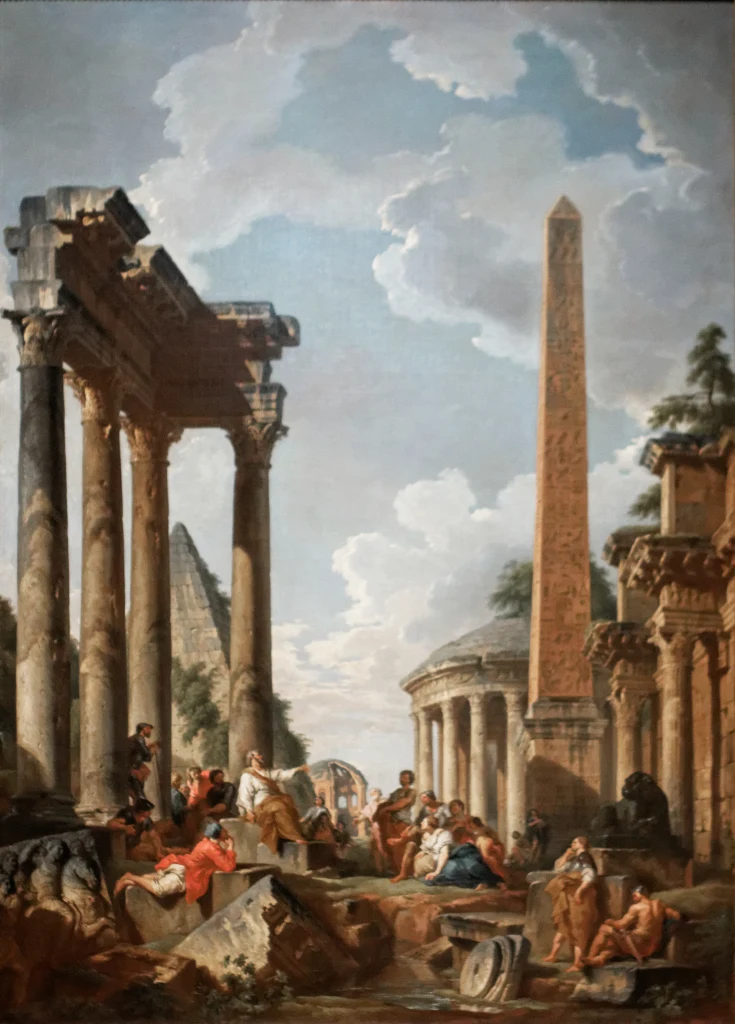
Architectural Capriccio with a Preacher in Roman Ruins
Details
The story
The obelisk on the right of this imaginary corner of Rome is covered with hieroglyphs, and when Panini painted it nobody in Europe could read them. The emperors of ancient Rome had shipped obelisks from Egypt, and from the 1580s the popes had them dug up and raised again in front of churches and in public squares, so a painter of the city's ruins had them all around him. The pyramid on the left is Roman. It is the tomb of Gaius Cestius, a magistrate of the time of Augustus, and it still stands beside one of the city gates.
Neither monument stands anywhere near a round temple or a portico like the ones Panini set beside them. Pictures of this kind are capriccios, imaginary views put together from real buildings, and he filled the foreground with people, here a preacher in a pale robe raising his arm to listeners seated on fallen blocks. The Louvre dates the canvas only to the second quarter of the 18th century.
Two collectors from Strasbourg, Othon Kaufmann and François Schlageter, bought it in 1966 from a dealer in Venice. They gave their collection to the Louvre in 1983 on condition that they could keep it for the rest of their lives, and the painting arrived in 1997. In 2022 it was lent to an exhibition at the Louvre's branch in Lens devoted to Champollion, the French scholar who deciphered hieroglyphs in 1822.
More works by Giovanni Paolo Panini
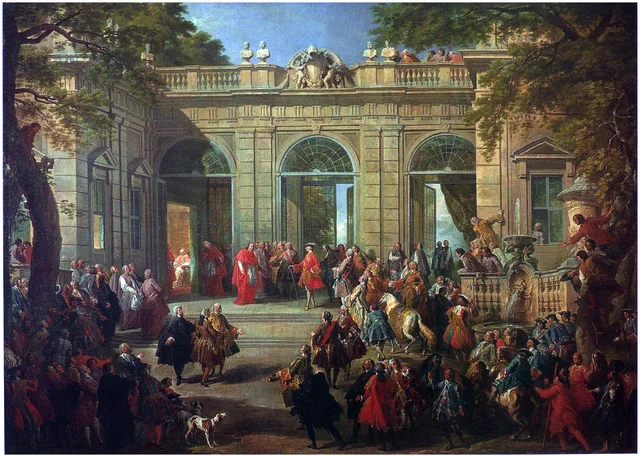 Carlo III di Borbone visiting the Pope Benedetto XIV in the coffee-house of the Quirinale, RomeGiovanni Paolo Panini, 1746
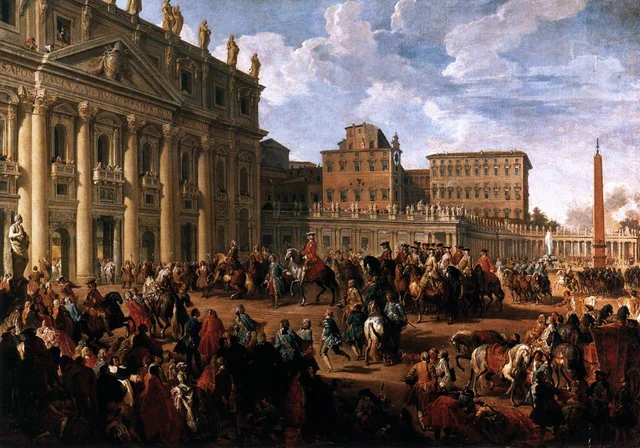 Charles of Bourbon Visiting St Peter's BasilicaGiovanni Paolo Panini, 1745
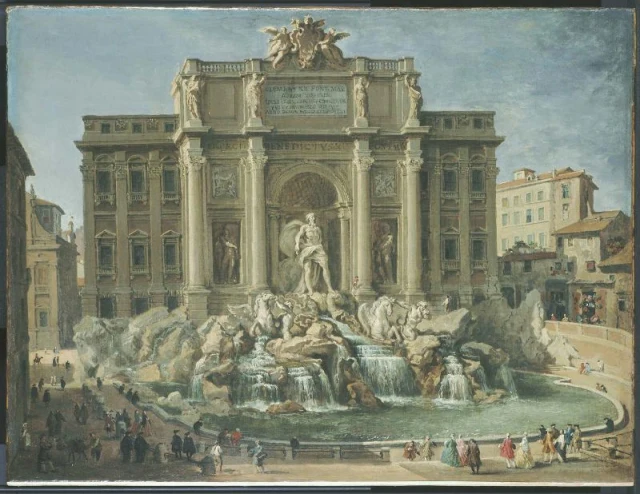 Fountain of Trevi, RomeGiovanni Paolo Panini
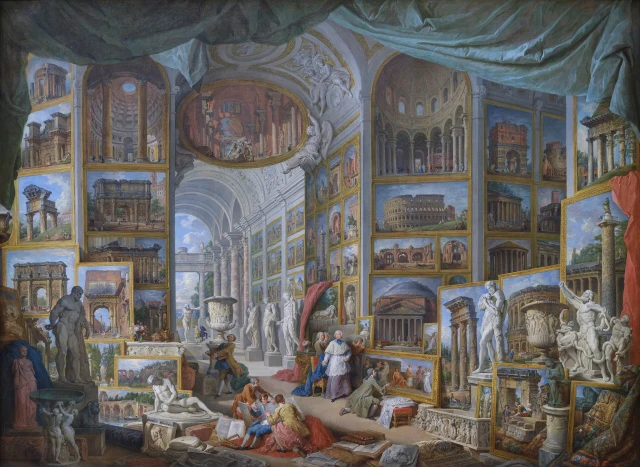 Gallery of Views of Ancient RomeGiovanni Paolo Panini, 1758
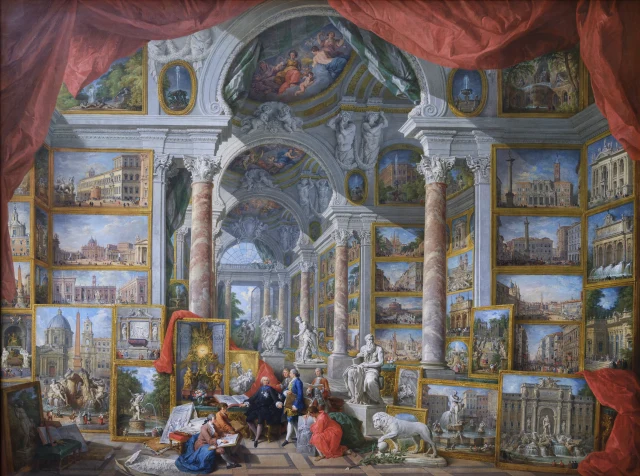 Gallery of Views of Modern RomeGiovanni Paolo Panini, 1759