Christoph Willibald von Gluck
Details
The story
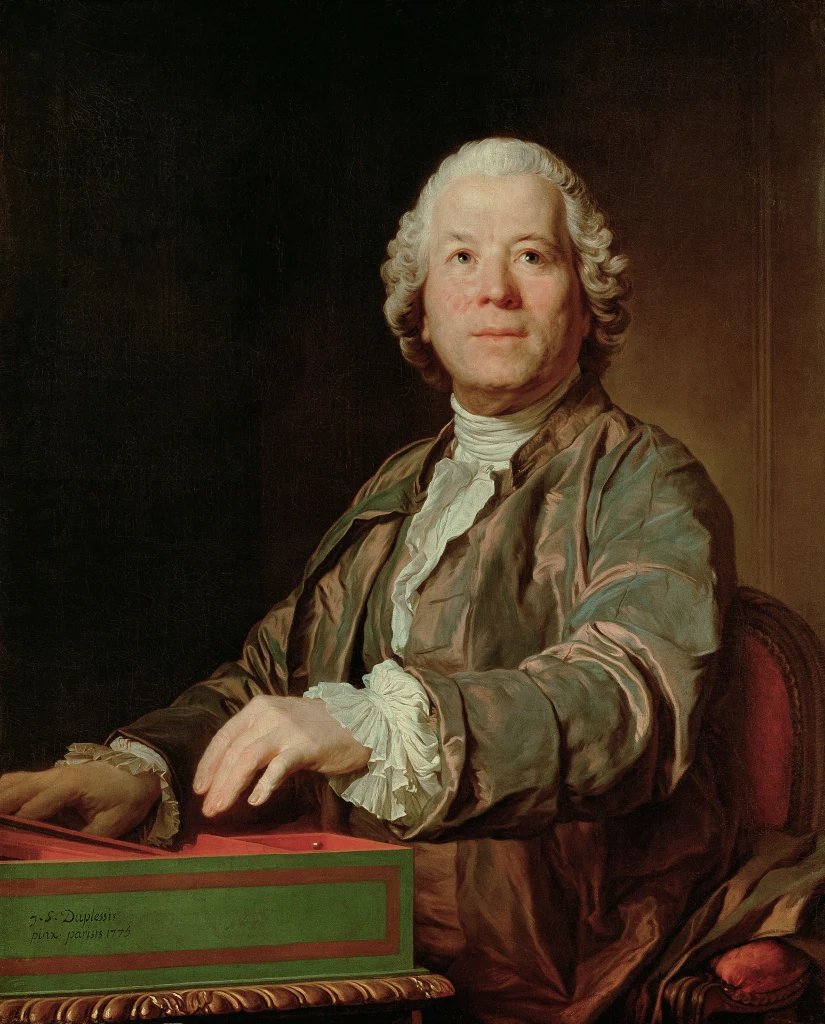
In 1774 Paris could talk of little but Gluck. His Iphigénie en Aulide opened at the Opéra in April, a French version of his Orpheus followed in August, and the new queen, Marie Antoinette, who had grown up at the Viennese court where he worked, was openly on his side. At the Salon in the Louvre the following year, the composer was on show twice, in plaster in a bust by the sculptor Jean-Antoine Houdon, and in paint here, by Joseph-Siffred Duplessis.
Duplessis did not flatter him. Gluck had survived smallpox, and the pockmarks on his face are left in plain view. The Kunsthistorisches Museum points out that the setting is a formal, official one, while the face itself is caught in a private moment. Gluck liked the result and hung it prominently in his own home. Duplessis signed and dated it on the spinet, painted in Paris, 1775, and the picture has been recorded since 1824 in the imperial gallery in Vienna, the city where Gluck died in 1787.