Piet Mondrian · PD
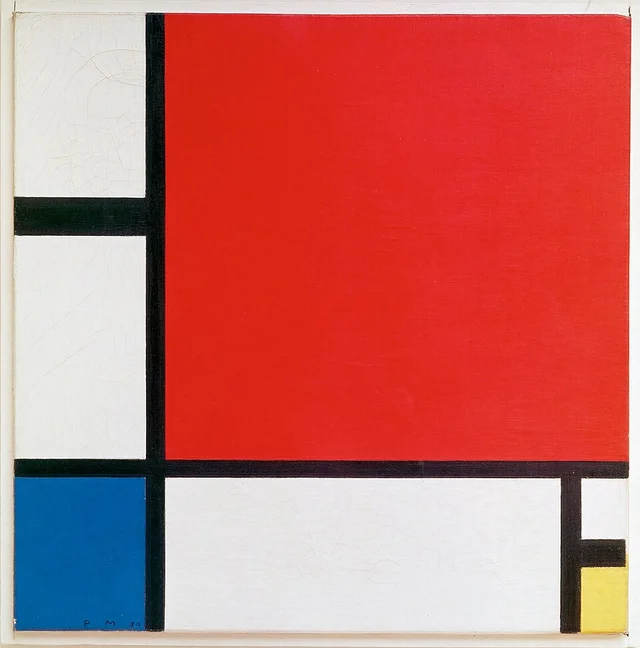
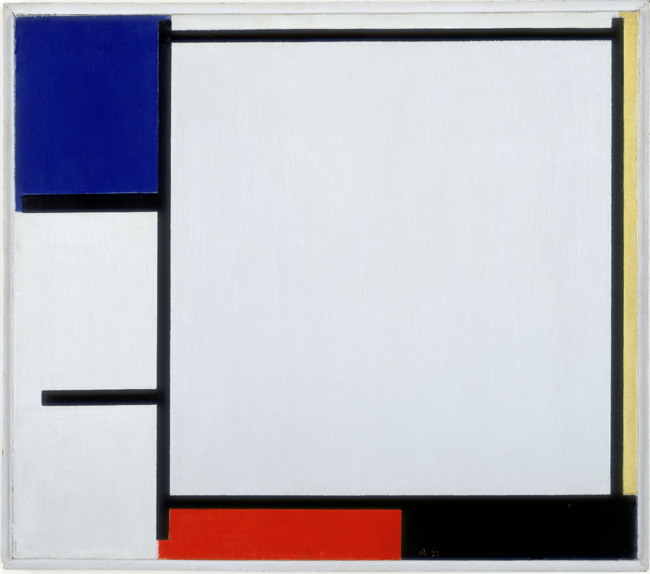
Composition with Blue, Yellow, Red, Black, and Gray
Details
The story
1922 was the year Amsterdam finally caught up with Mondrian. He was living in Paris, painting grids that many of his countrymen still found baffling, and that year, for his 50th birthday, this very museum, the Stedelijk, gave him a retrospective. He came back from France for it and raised a glass with friends. This canvas dates from exactly that moment. By now he had settled the language he would keep for the rest of his life. Black lines, only the three primary colours, and large fields of grey and off-white. Notice how he pushes the strongest colour toward the edges and corners and leaves the centre nearly empty, so your eye keeps traveling out to the borders instead of resting in the middle. He called this way of working Nieuwe Beelding, usually translated as Neo-Plasticism, and believed it could reach past painting into how rooms and cities might one day be built.