Piet Mondrian · PD
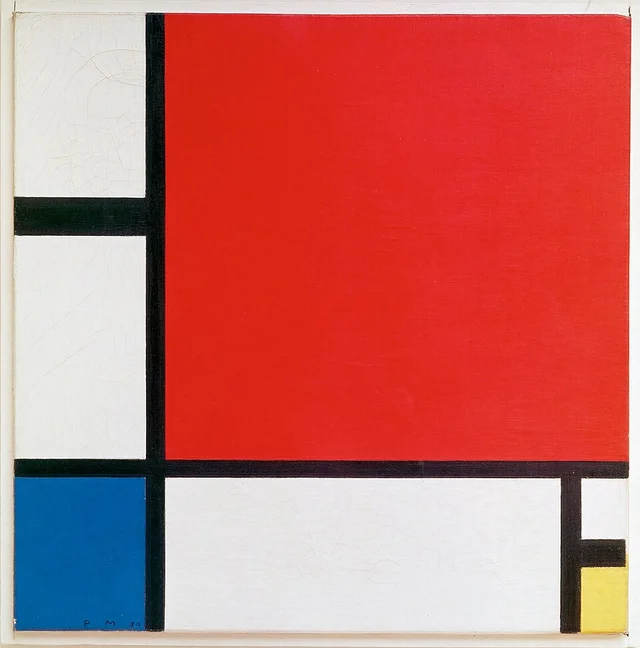
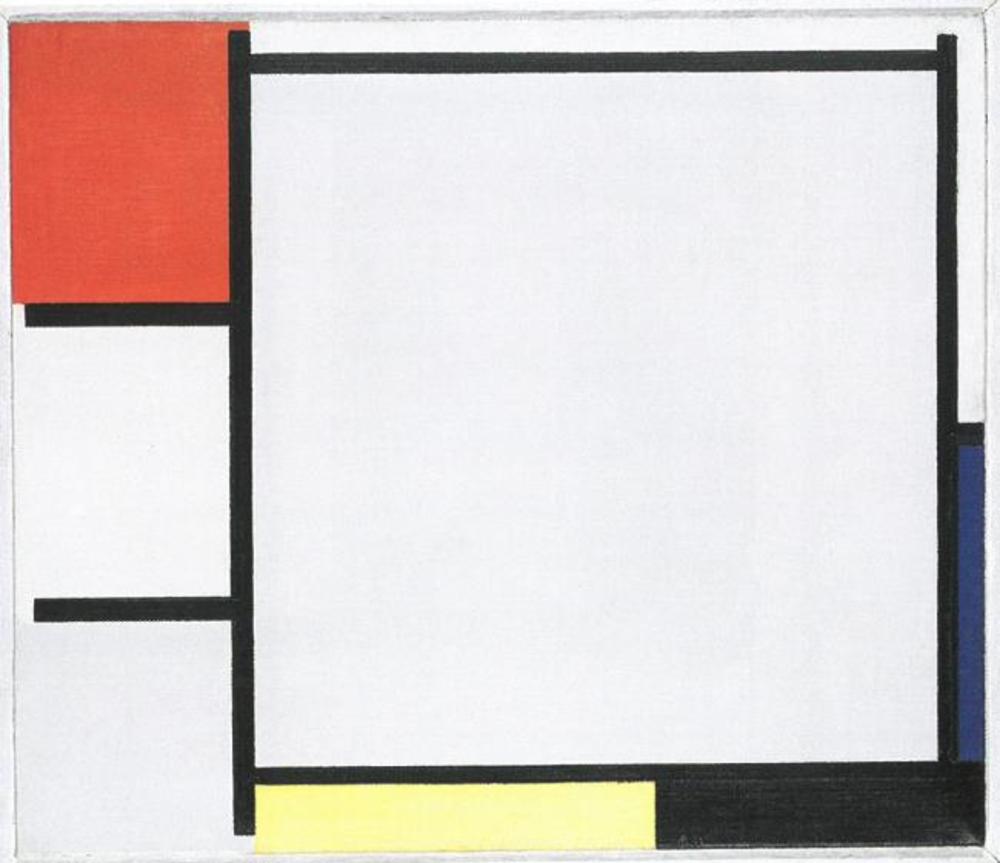
Composition with Red, Blue, Yellow, Black, and Gray
Details
The story
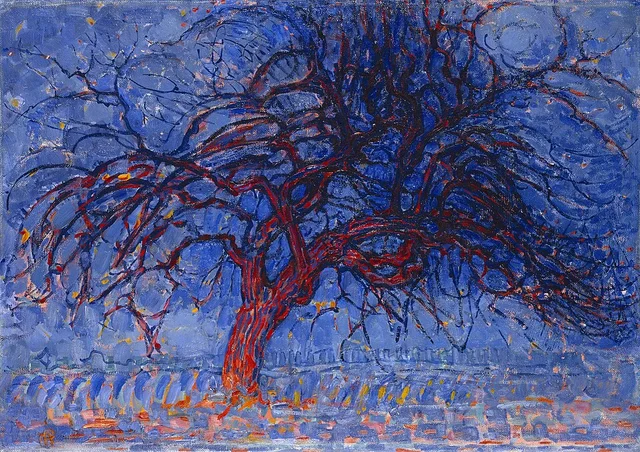
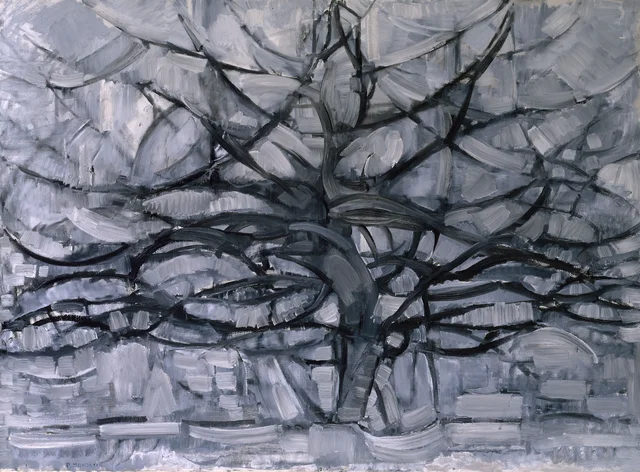
Mondrian made this in Paris in 1922, the year he turned 50. Back in Amsterdam, friends marked the birthday by hanging a small retrospective that traced his path from ordinary Dutch landscapes all the way to this: no trees, no windmills, nothing you could name. Over the previous two years he had settled into the language he would keep for the rest of his life and called Neoplasticism, only the three primary colors, black lines, and a ground of white and gray. Look at how the black lines behave. Several of them stop just short of the edge instead of running off it, so the white planes seem to lift slightly forward while others sink back. A red rectangle in the upper left is set against thin bars of yellow, blue, and black gathered in the lower right, and the whole thing is tuned until neither side wins. It came to Toledo as a gift from Edward Drummond Libbey, the glassmaker whose fortune built the museum.