I, Sailko · CC-BY-SA-3.0
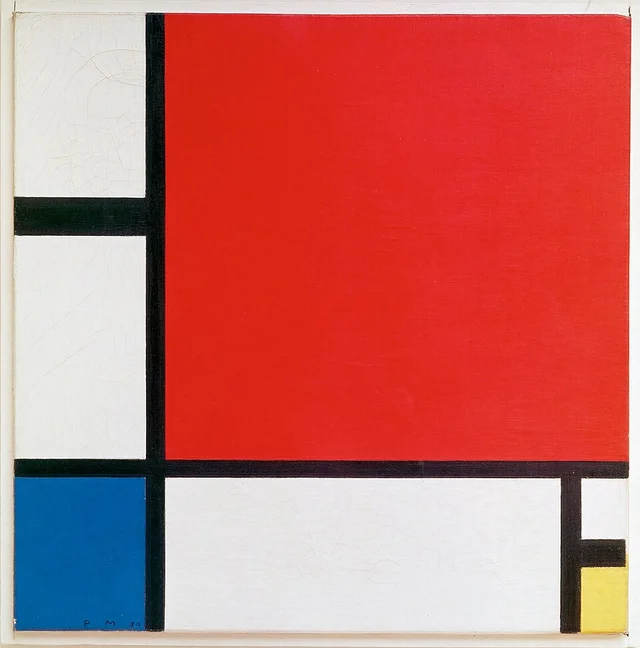
Composition with White and Red
Details
The story
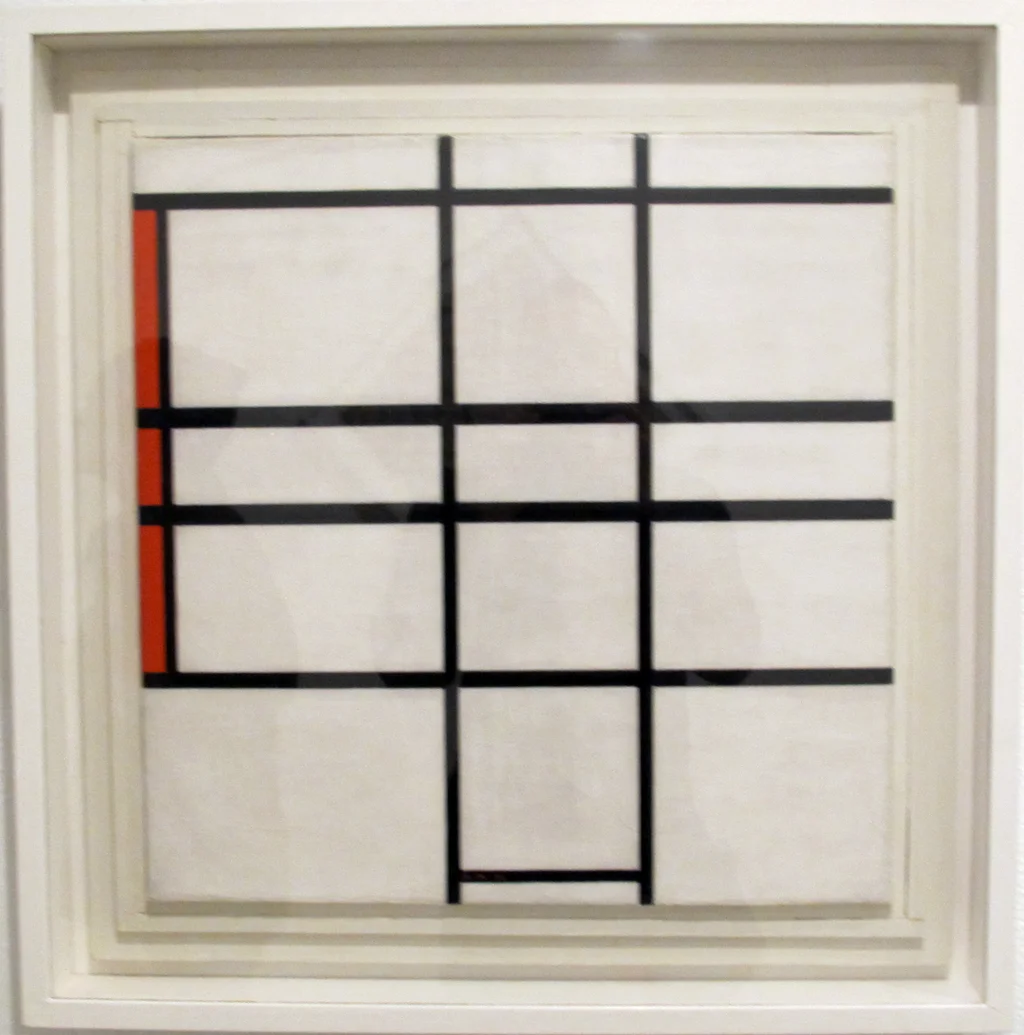
By 1936 Piet Mondrian had spent years in Paris paring painting down to black lines, a white ground and a few blocks of primary colour. The easiest thing to miss here is the edge. Mondrian had come to hate the ordinary picture frame, which he felt pressed a false sense of depth onto a flat surface, so he built his own. The canvas sits slightly forward of a thin double frame of plain wooden strips, and that in turn rests on a deeper wooden base, like a small pedestal. He wanted the painting to feel less like a window and more like an object reaching out into the room. That idea mattered to him well beyond the studio. He believed abstract art was heading toward a union with architecture, a day when this kind of pure balance would settle into ordinary rooms and streets. Two years after he made this he left Paris for London, and by 1940 for New York.