Claude Monet · CC-BY-SA-4.0
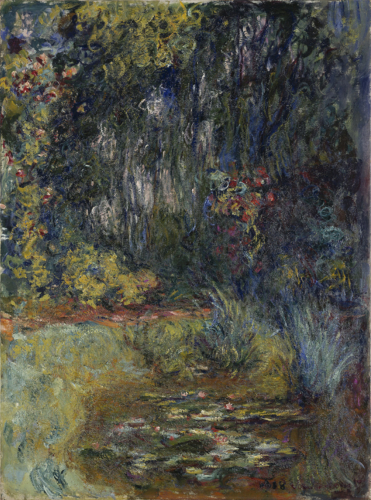
Corner of the basin of the Nymphéas
Details
The story
By the spring of 1918 the front had come close enough to Giverny for the guns to be heard in the garden, and people were leaving the village. Monet was 77 and stayed, with a son and a stepson in uniform and a studio full of unsold water-lily canvases. He went on painting the same corner of the same pond he had been digging, diverting and replanting since the 1890s, and this is one of that year's. On 12 November 1918, the day after the armistice, he wrote to his old friend Georges Clemenceau, by then the prime minister who had just won the war, offering two of the paintings to France to mark the victory. He was working with cataracts thickening in both eyes, and put off the operation until 1923.