Funerary Stela of Iti and Neferu
Details
The story
When this stela was carved, Egypt had no single ruler. The old monarchy based at Memphis had broken apart, a line of kings at Herakleopolis held the north, and a family of rulers at Thebes was building a kingdom of its own in the south. Gebelein, about 30 kilometres upriver from Thebes, lay in that southern world. The museum dates the tomb to between 2118 and 1980 BC, the last stretch of what is now called the First Intermediate Period, before the country was joined together again.
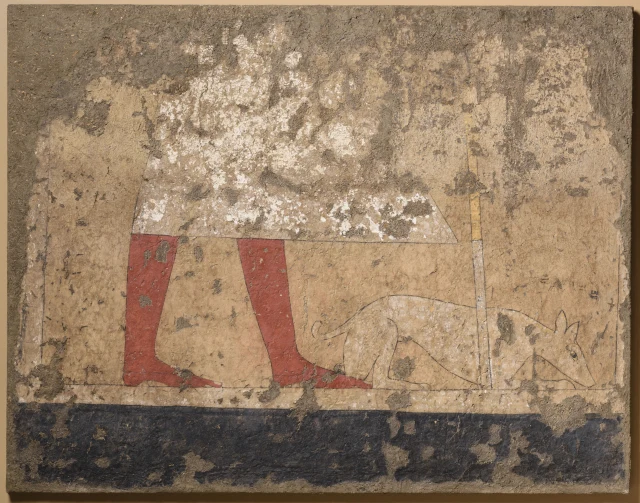
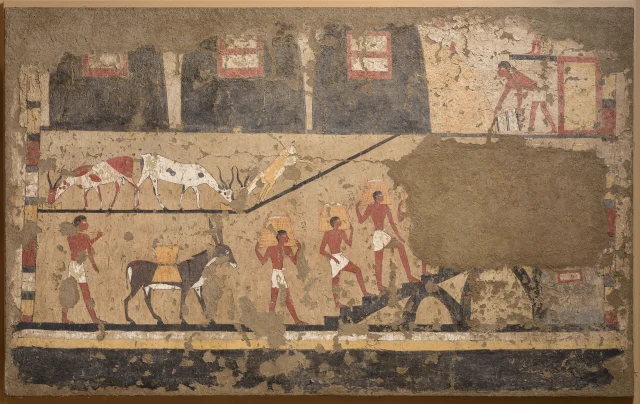
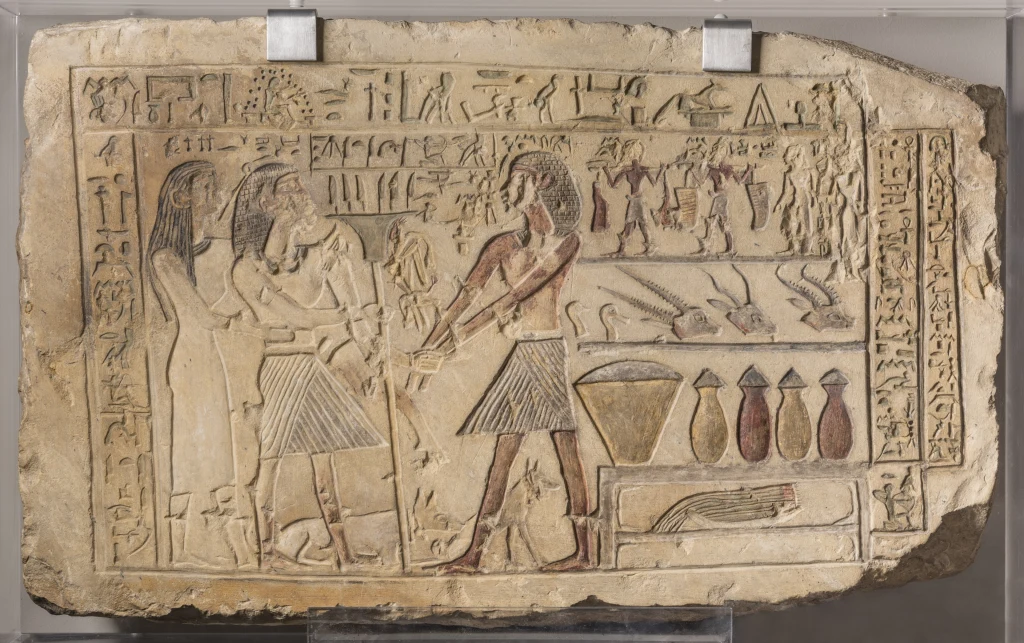
Iti, the owner, called himself chief of the troops and treasurer of the king, titles that put both soldiers and stores in his hands. His tomb was cut into the hillside behind a portico of 14 pillars, with painted walls inside. On this limestone stela he appears with his wife Neferu, whose name has to do with beauty, the two of them receiving offerings of food, and the hieroglyphs beside them give both their names.