Tomb of Iti and Neferu: Transport and Storing of Grain
Details
The story
In the First Intermediate Period, grain meant power. With no strong central government to move supplies around the country, a poor Nile flood could bring hunger, and local leaders made a point of saying that they had fed their people. Ankhtifi, a provincial governor whose tomb is at Mo'alla, not far upriver from Gebelein, had it written on his walls that all of Upper Egypt was dying of hunger and that he had let no one in his province starve.
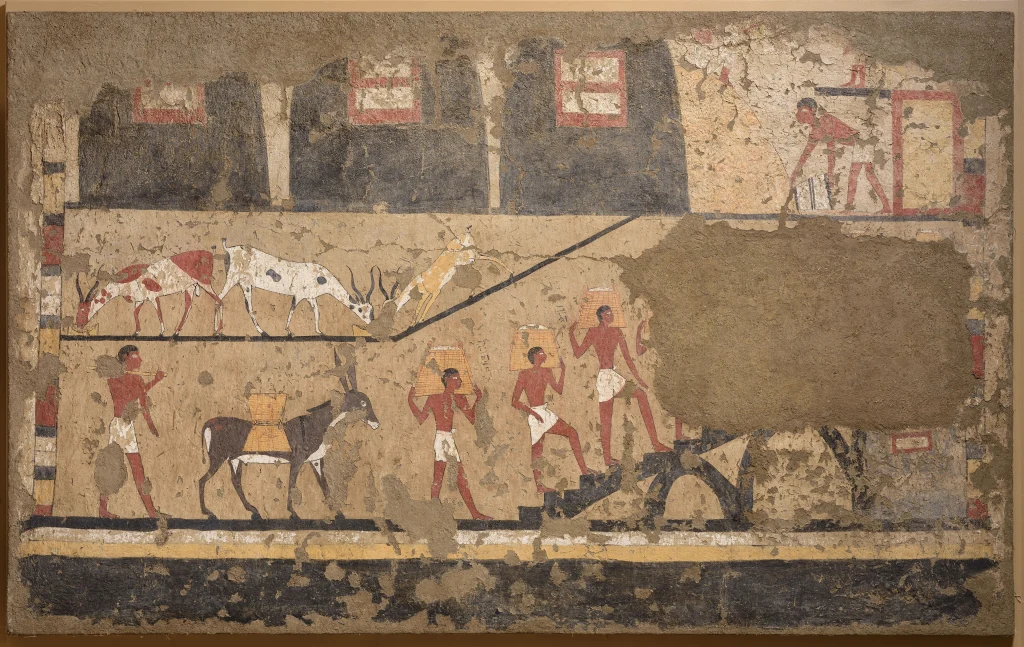
This is the largest surviving panel from Iti's tomb, more than two metres wide, and its subject is grain on the move. Donkeys carry sacks of it towards the granaries, and the loads are hauled up to be stored. In a tomb, a harvest painted and safely put away was meant to keep its owner supplied for ever. Iti had a personal claim to scenes like this one, since among his titles was treasurer of the king, the official responsible for stores of exactly this kind.