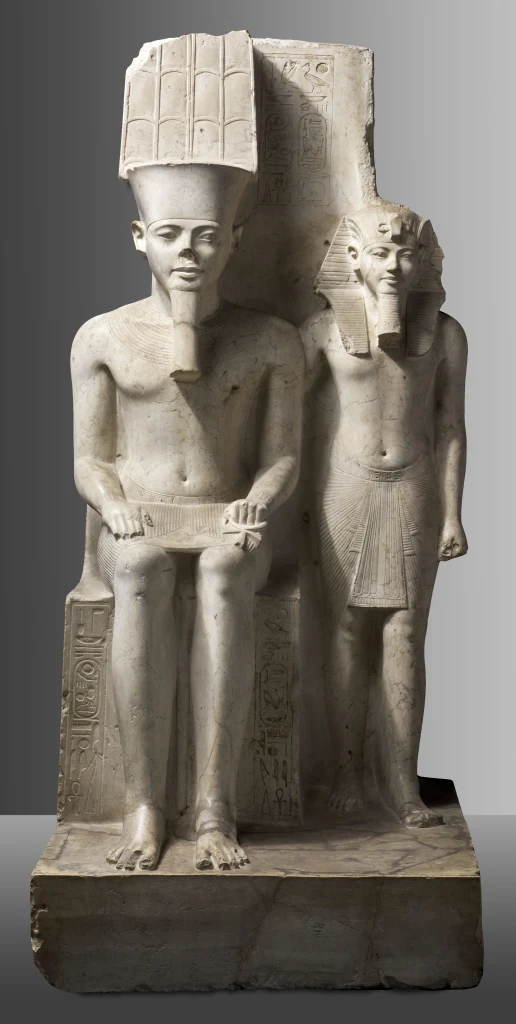
Group Statue of Amun and Tutankhamun, Inscribed for Horemheb
Details
The story
When Akhenaten died, around 1336 BC, he left Egypt with temples whose old god he had tried to push aside. Under the boy king Tutankhamun the court returned to Amun, the god of Thebes, and statues like this one made that return visible in stone. Amun stands beside the king a head taller, and his size alone says who ranks higher.
The style belongs to the years just after Akhenaten. The museum notes the soft outlines, the muscles left unstressed, the rounded bellies and hips, the youthful faces with almond eyes and full lips. Whose face the king wears is a harder question. The inscription names Horemheb, the army commander who took the throne a few years after Tutankhamun's death and ruled from 1319 to 1292 BC, and who is known to have put his own name on many of Tutankhamun's monuments. Some scholars think this was one of them. The museum points out that the faces of the two kings are especially hard to tell apart, and that the inscription shows no trace of having been erased and rewritten.
More works by Unknown Egyptian artist (18th Dynasty)
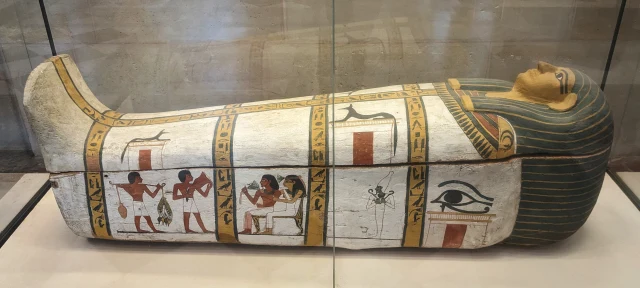 Anthropoid Coffin of MadjaUnknown Egyptian artist (18th Dynasty), -1452
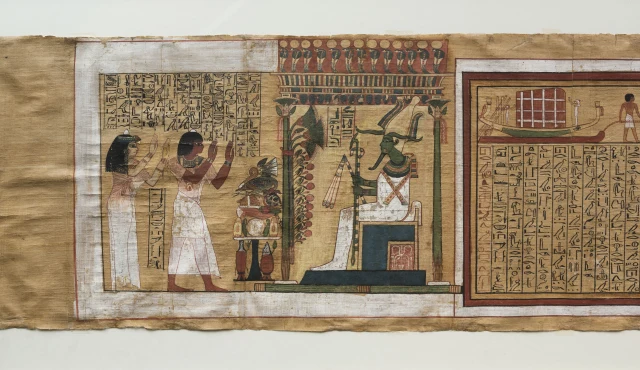 Book of the Dead of KhaUnknown Egyptian artist (18th Dynasty), -1389
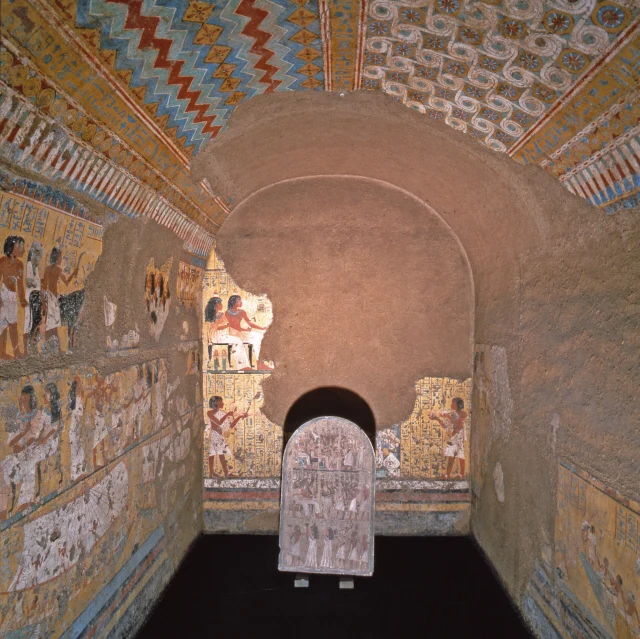 Chapel of MayaUnknown Egyptian artist (18th Dynasty), -1322
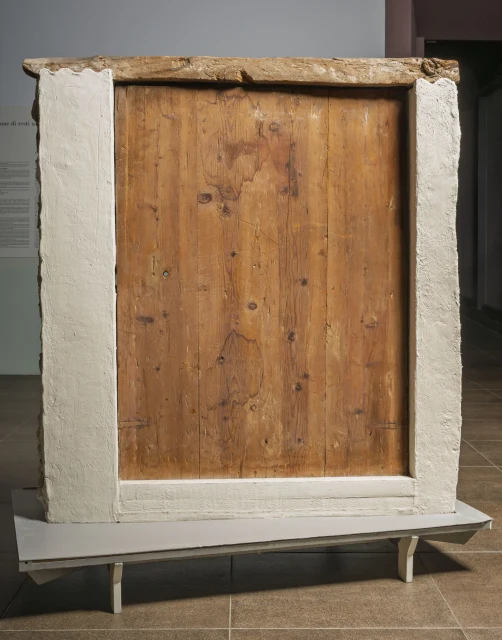 Door of the Burial Chamber of Kha and MeritUnknown Egyptian artist (18th Dynasty), -1389
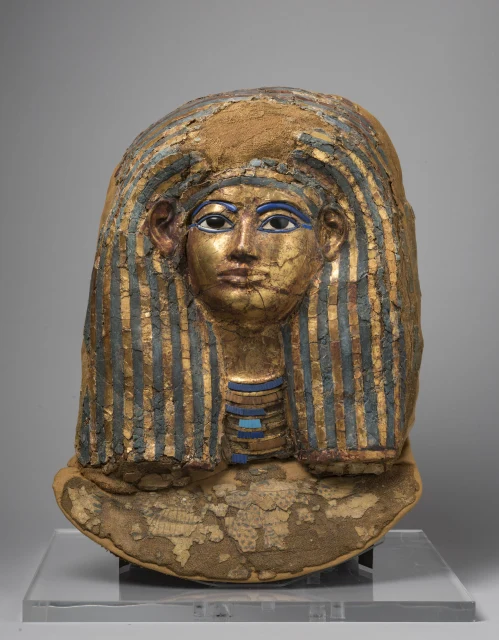 Funerary Mask of MeritUnknown Egyptian artist (18th Dynasty), -1389