Hercules and Achelous
Details
The story
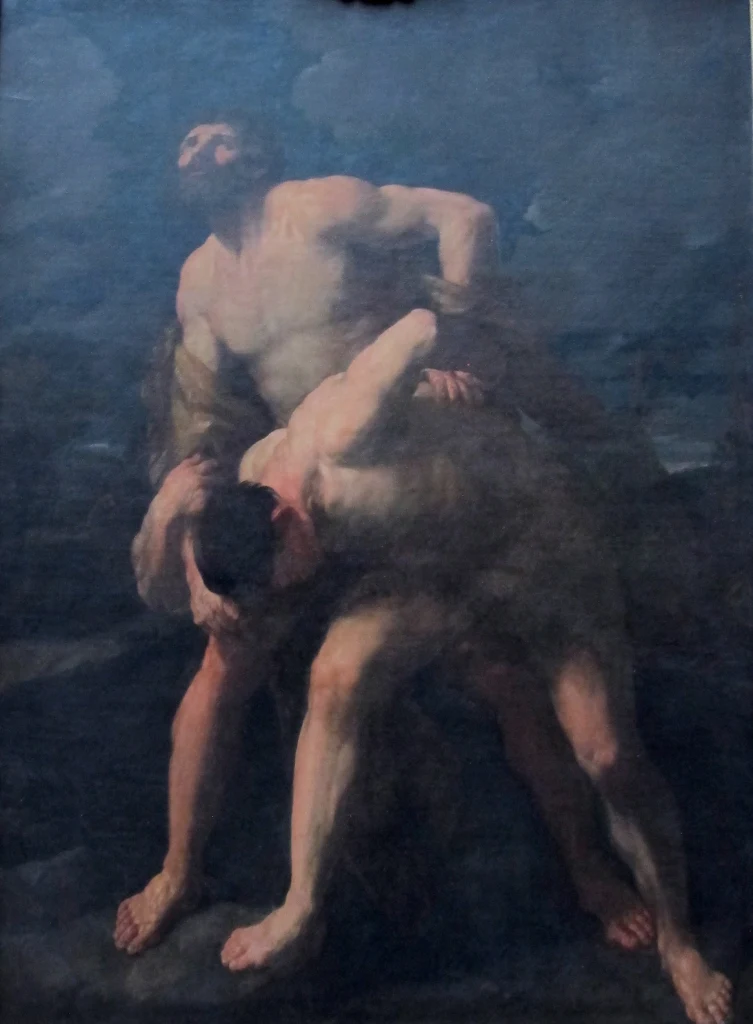
Ferdinando Gonzaga, duke of Mantua, was building a country retreat outside his city, the Villa Favorita, and between 1617 and 1621 Reni painted four Labours of Hercules for one of its rooms. This one is the wrestling match with Achelous, a river god, for the hand of Deianira. In Ovid's telling Achelous changes shape to escape, first into a snake and then into a bull, and Hercules tears off one of his horns. Reni paints the fight while both are still men, two naked bodies locked together under a dark sky. The four canvases then stayed together through a remarkable run of owners. When the Gonzaga collections were dispersed in 1627, the series went to Charles I of England. After his execution Parliament sold his pictures, and in 1651 a buyer paid 400 pounds for all four. The banker Everhard Jabach owned them next, and in 1662 Louis XIV bought them from him. By 1682 they hung in the throne room at Versailles.