Iconostasis of the Cotroceni Monastery
Details
The story
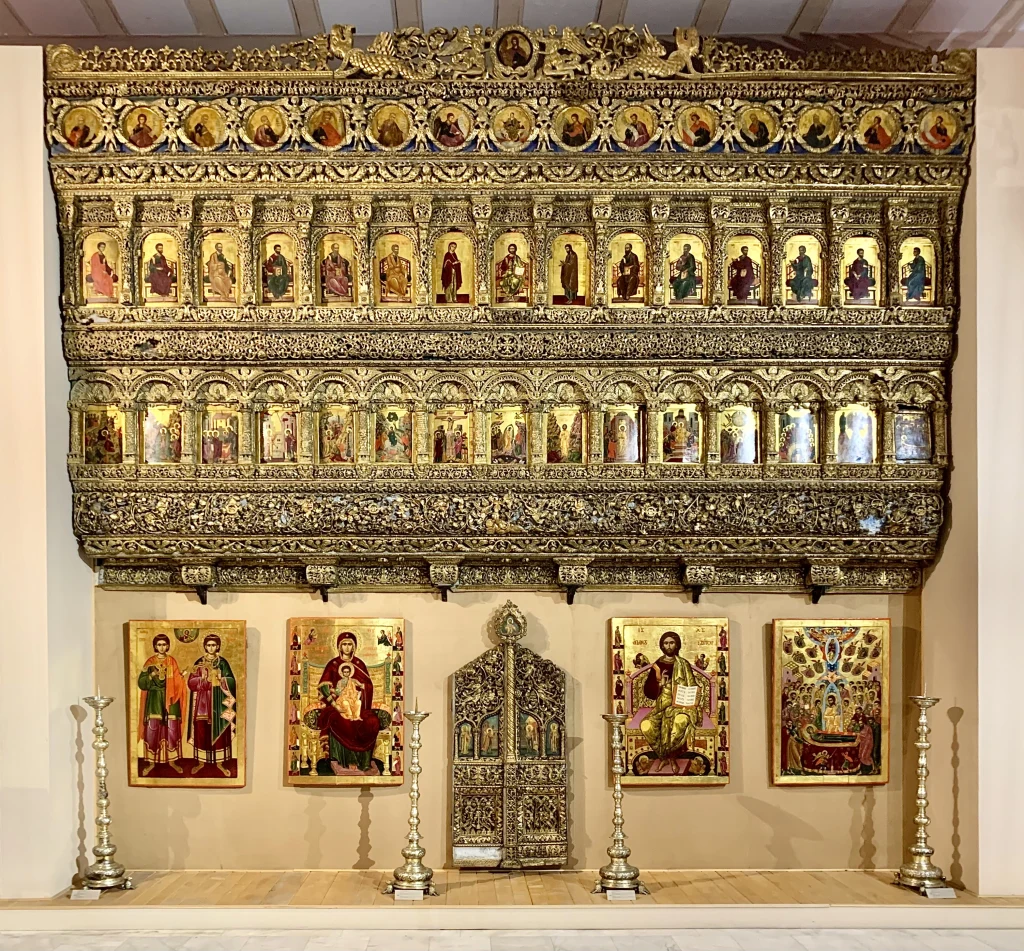
The church this screen was made for no longer exists. Prince Șerban Cantacuzino, ruler of Wallachia, completed his monastery at Cotroceni, then just outside Bucharest, in 1682, and this iconostasis separated its altar from the nave. A local workshop carved the gilded wood as a Tree of Jesse, a vine that grows from the reclining figure of Jesse above the central doors and spreads across the whole wall, tracing Christ's descent from King David. The icons are by a painter named Constantinos, probably the Greek master who later led the painters at Hurezi Monastery. In March 1977 an earthquake damaged the church's walls, and staff from the national art museum took the iconostasis down and carried it off for safekeeping, along with the church's treasury. In 1984 Ceaușescu had the church demolished. Five years later, in December 1989, the museum's building, the former royal palace, stood in the crossfire of the revolution, and the iconostasis was hit by bullets. It was restored and put back up in 2002 and has stayed in the museum's care. When the rebuilt church at Cotroceni received a new iconostasis in 2015, it was a faithful copy of this one.