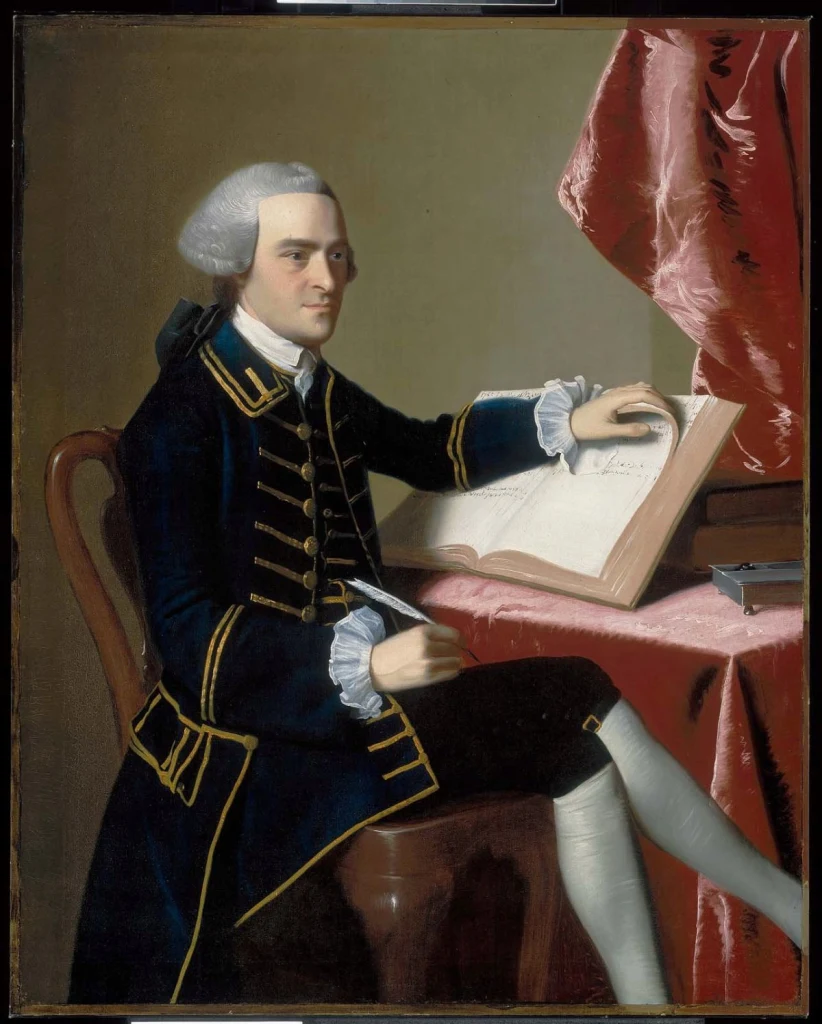
John Hancock
Details
The story
Copley put the year on this portrait twice, beside his signature and on the open page of the ledger, and both times it is 1765. That was the year of the Stamp Act, a tax Parliament laid on newspapers, deeds and legal papers across the colonies, and in August Boston crowds answered it by ransacking the houses of some of the town's richest men. John Hancock was 28 and had just become one of them. His uncle Thomas, the wealthiest merchant in Boston, had raised him, made him a partner, and died the year before, leaving him the business and a mansion on Beacon Hill. Hancock was known for silk-velvet suits and a bright yellow carriage. Here he wears a plain dark blue coat with a little gold braid and a modest wig, sits on an old-fashioned chair, and holds a quill over his accounts, though by most reports he neglected the books. Scholars have read the sober image as a deliberate choice, a rich young man presenting himself as a working citizen in a year when display had become dangerous. Hancock ordered it for his own house. Some five years later he sat to Copley again, for smaller portraits just as plain, by then known as a radical Whig.
More works by John Singleton Copley
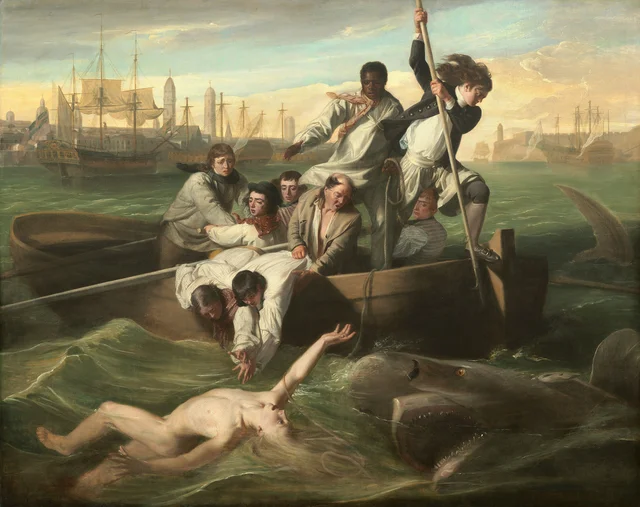 Watson and the SharkJohn Singleton Copley, 1778
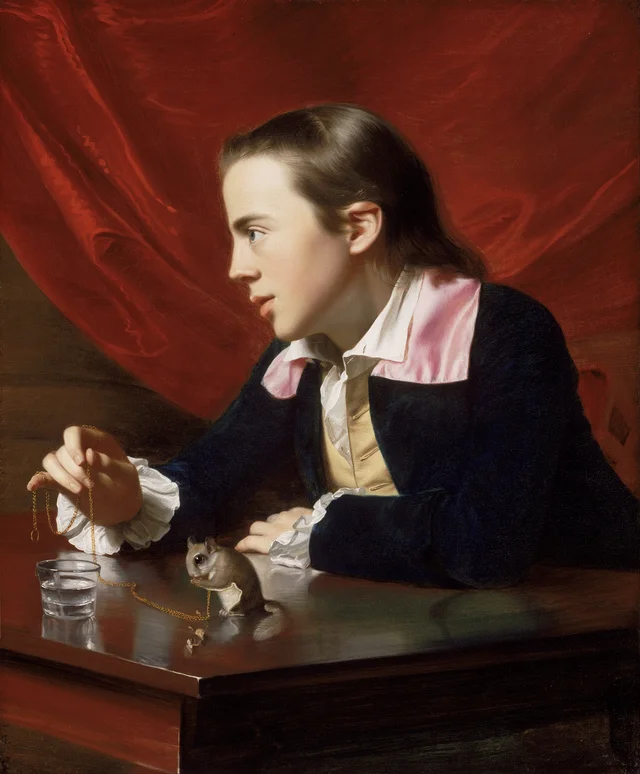 A Boy with a Flying Squirrel (Henry Pelham)John Singleton Copley, 1765
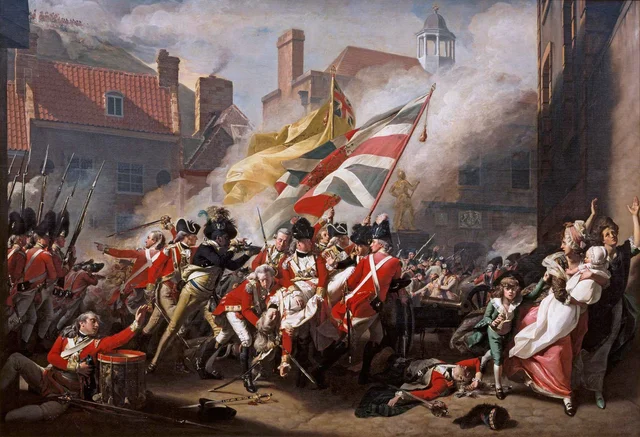 The Death of Major Peirson, 6 January 1781John Singleton Copley, 1783
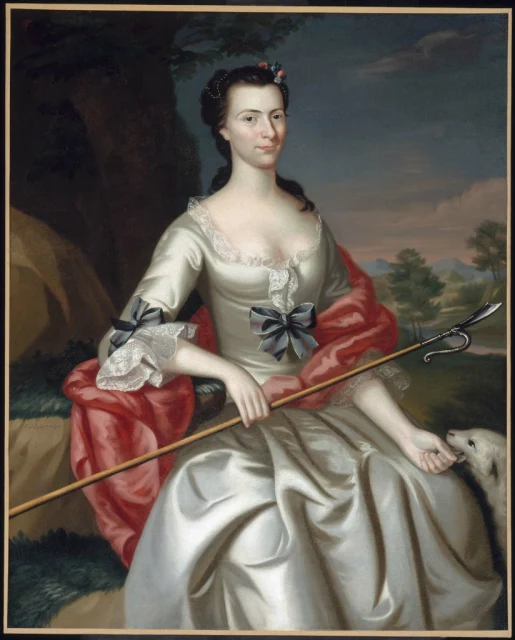 Ann Tyng (Mrs. Thomas Smelt)John Singleton Copley, 1756
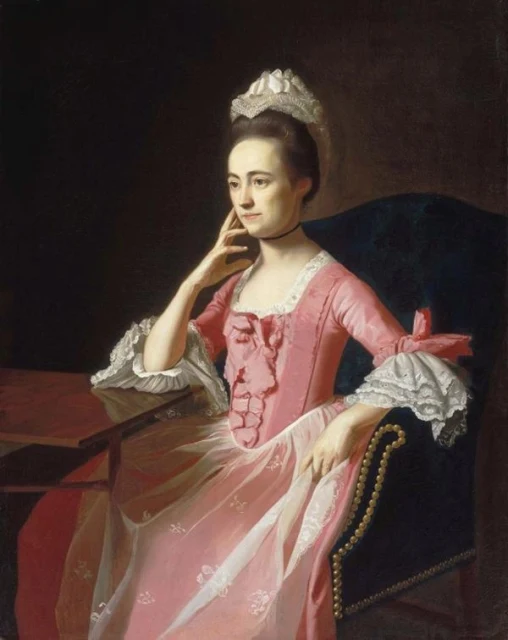 Dorothy Quincy (Mrs. John Hancock)John Singleton Copley, 1772