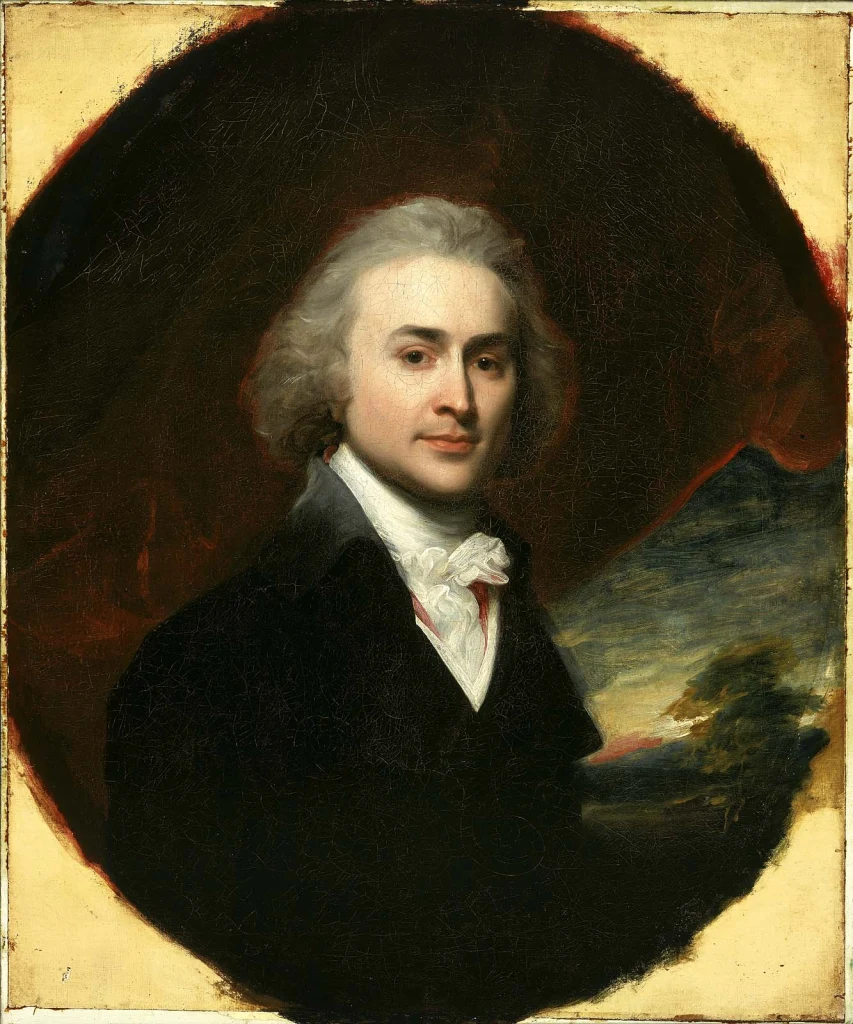
John Quincy Adams
Details
The story
Between February and April 1796, John Quincy Adams went to Copley's house in London seven times to sit for this portrait, and he noted the sittings in his diary. He was 28, the American minister to the Netherlands, spending several months in London on business over the Jay Treaty, the agreement that settled questions left open since the Revolution. On 4 March he sat all morning and wrote that the talk had been political, metaphysical and critical, and that Copley's opinions were not accurate, but well meaning. On 28 March he admitted staying too long gazing at the pictures in the studio, Copley's large canvas of King Charles I demanding the arrest of five members of Parliament, and a portrait of the three youngest daughters of George III, which he called a finely finished thing. The portrait was not his idea. Susanna Copley, the painter's wife, had long wished to send his mother, Abigail Adams, a token of friendship, and a likeness of her son seemed the right one. It reached Abigail in March 1797, the month her husband became the second president, and she wrote that no present could have been more acceptable. Copley drew the face with care and painted the rest quickly, a red curtain and a small dusky landscape laid in with loose sweeps of colour. Over the following half century Adams sat for at least 60 likenesses, and of the painted ones he judged only three worth preserving, this one, a head by Gilbert Stuart from 1825 and one by Asher Durand from 1836.
More works by John Singleton Copley
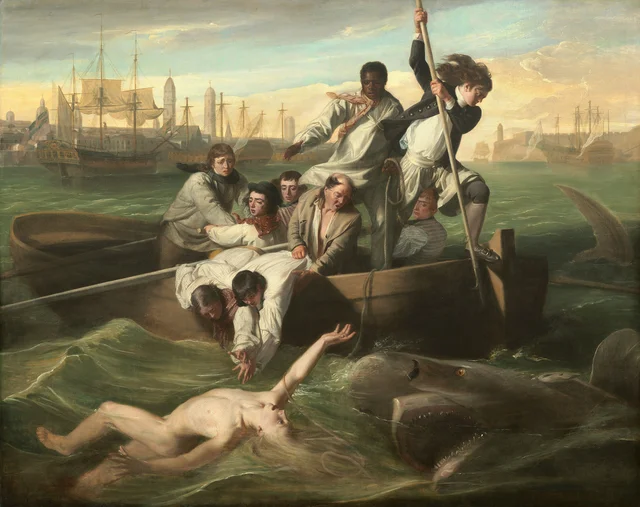 Watson and the SharkJohn Singleton Copley, 1778
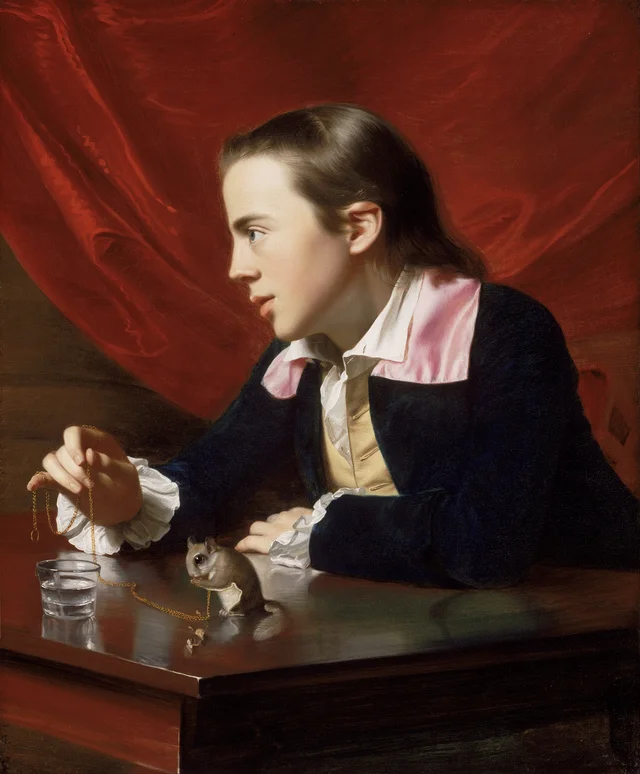 A Boy with a Flying Squirrel (Henry Pelham)John Singleton Copley, 1765
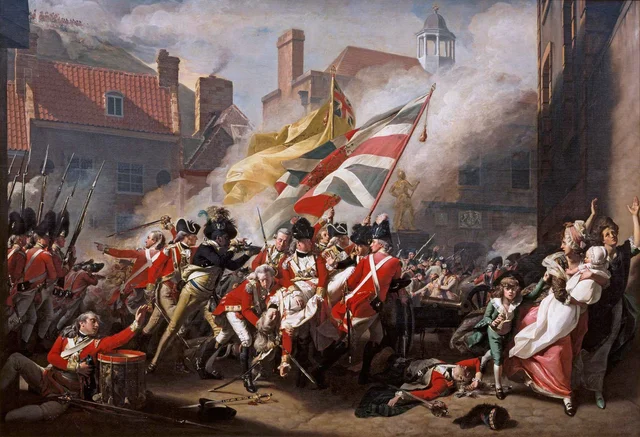 The Death of Major Peirson, 6 January 1781John Singleton Copley, 1783
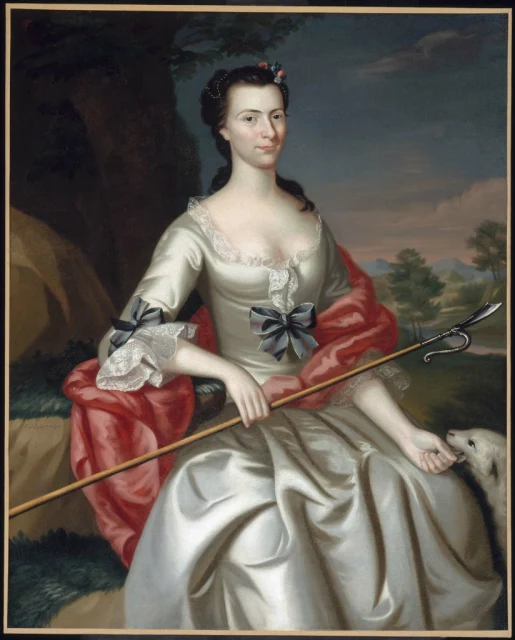 Ann Tyng (Mrs. Thomas Smelt)John Singleton Copley, 1756
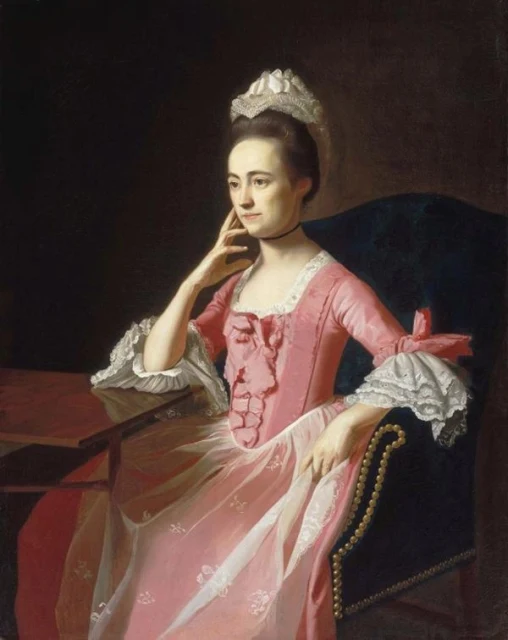 Dorothy Quincy (Mrs. John Hancock)John Singleton Copley, 1772