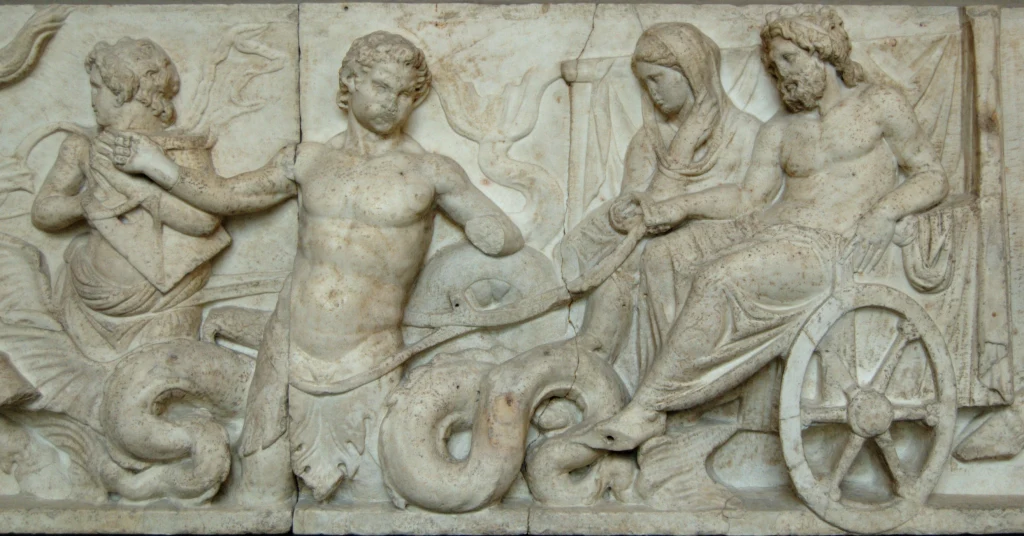
Marine Thiasos Frieze from the So-called Altar of Domitius Ahenobarbus
Details
The story
On 17 June 1816, a year after Waterloo, a long marble relief was offered for sale in Paris. It belonged to Cardinal Joseph Fesch, Napoleon's uncle, who had bought it in Rome in 1811 from the palace of the Santacroce family, together with a second frieze of about the same length. The two were sold separately. This one was bought for the Glyptothek in Munich, which was then still being built. The other went to the Louvre, where it remains.
The Paris frieze shows Romans at a civic ceremony, usually read as a census, with citizens being registered and an animal sacrifice. The Munich frieze tells a Greek myth. The sea god Neptune and his bride Amphitrite ride in a chariot drawn by two tritons, among sea nymphs and sea creatures, and Amphitrite's mother Doris rides a sea horse, holding the wedding torches. On the third slab two metal pins probably held Neptune's trident, which was made of bronze.
The traditional name ties the reliefs to an altar of the Domitius Ahenobarbus family and to a temple of Neptune in Rome, and both links are disputed. So is the date. Proposals run from the middle of the 2nd century BC to after 40 BC, and some scholars think the two friezes were not carved at the same time.
More works by Unknown Roman sculptor (Republican period)
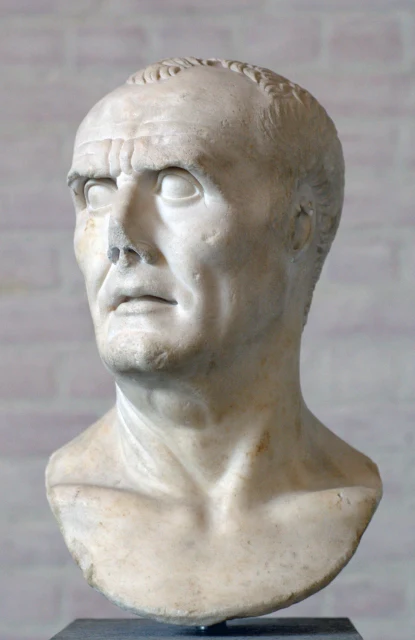 Bust of a Roman, the So-called "Marius"Unknown Roman sculptor (Republican period), -30
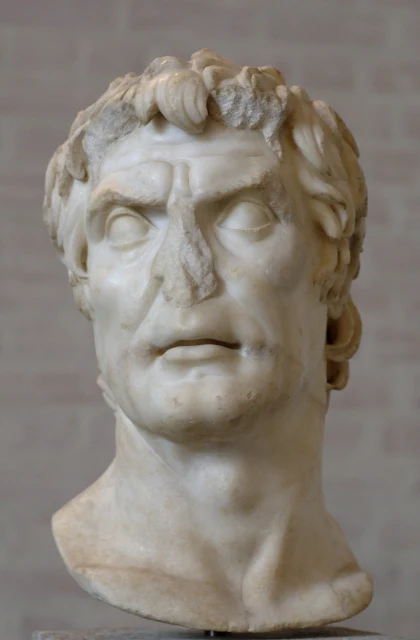 Bust of a Roman, the So-called "Sulla"Unknown Roman sculptor (Republican period), -30
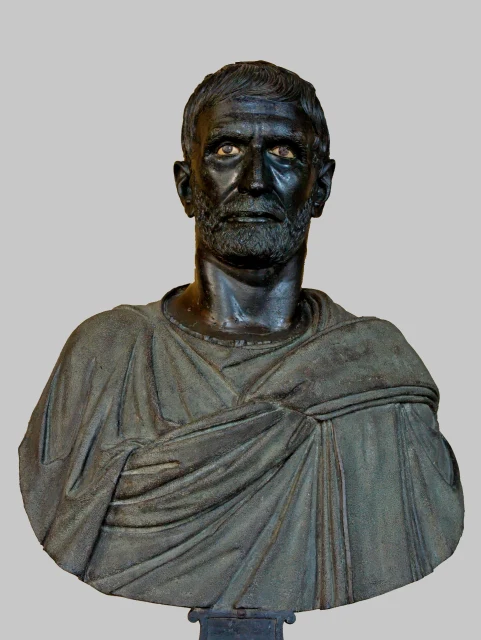 Capitoline BrutusUnknown Roman sculptor (Republican period), -300
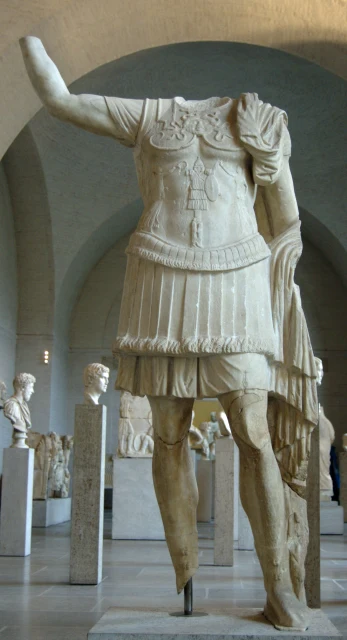 Cuirassed Statue of a Roman GeneralUnknown Roman sculptor (Republican period)
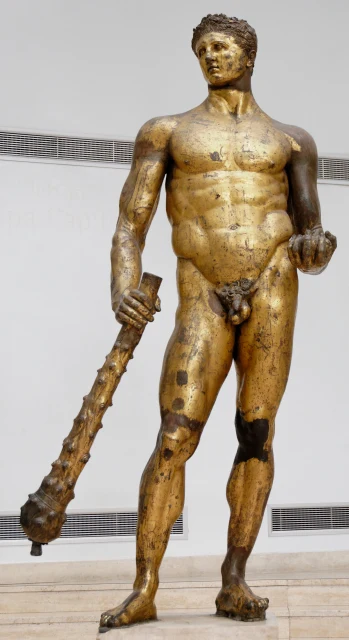 Gilded Bronze Statue of HerculesUnknown Roman sculptor (Republican period), -150