Marquis de Pastoret
Details
The story
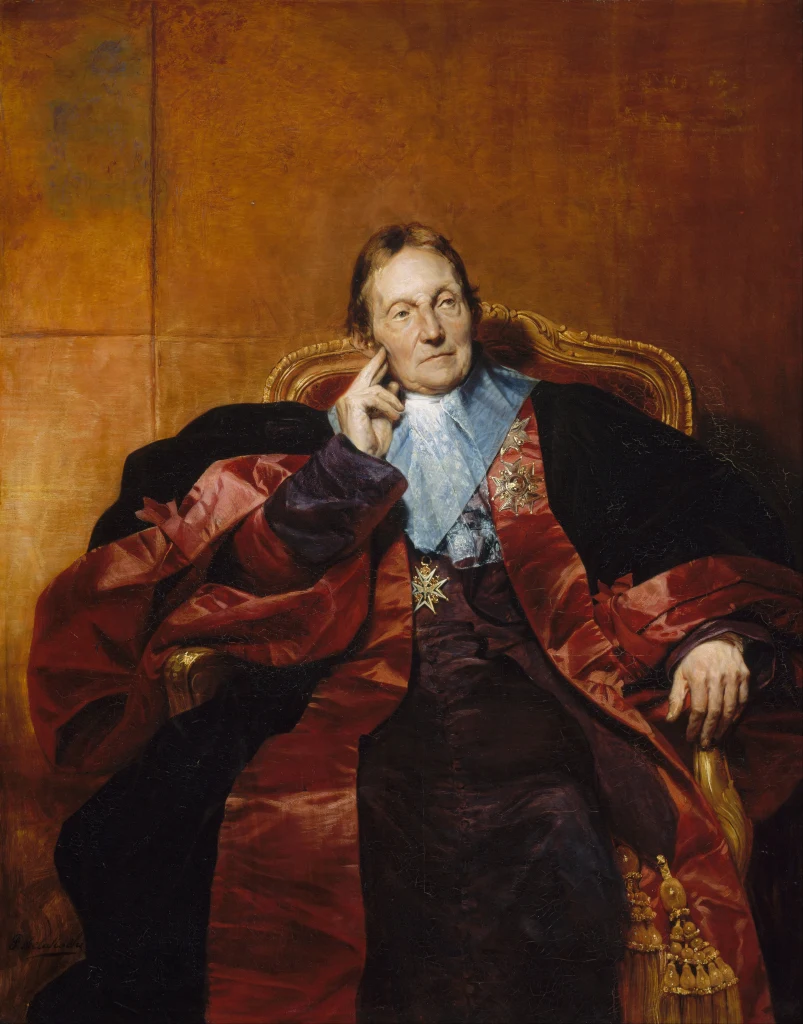
Claude-Emmanuel de Pastoret had spent some 40 years in public life when he sat for this, and 1829 was the year he reached the top of it. That December King Charles the Tenth made him Chancellor of France, the head of the royal system of justice, and Delaroche paints him swathed in the crimson robes of the office. Pastoret's career went back to the first years of the Revolution. In 1791 it was he who proposed turning the new church of Sainte-Geneviève in Paris into the Panthéon, a resting place for great men. Here he sits at ease, a finger raised to his temple, the cross of the Order of the Holy Spirit at his neck. The commission came from his son Amédée, a friend of the painter, who was then known for scenes from history far more than for portraits. Pastoret held the post for less than a year. After the July Revolution of 1830 he refused to swear loyalty to the new king, Louis-Philippe, and lost all his offices. In 1897 the canvas was sold in Paris from the estate of his granddaughter, possibly to Edgar Degas.