Jusepe de Ribera · PD
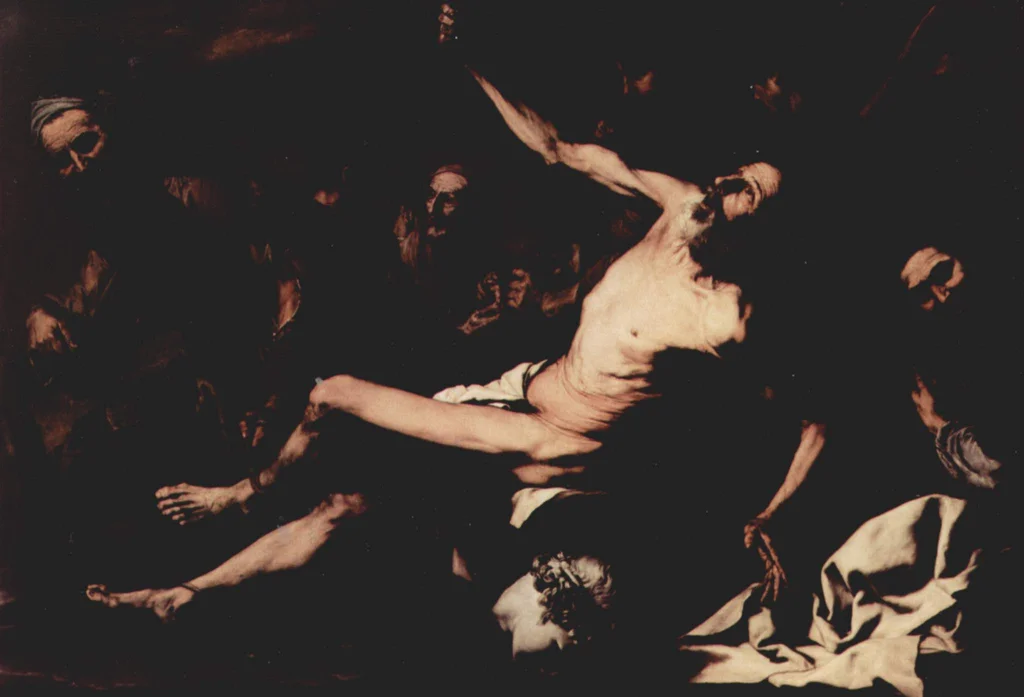
Martyrdom of St. Bartholomew
Details
The story
Bartholomew was one of Christ's apostles, and tradition held that he was put to death by being flayed alive, his skin stripped from his body. Jusepe de Ribera painted this around 1635 in Naples, then ruled by Spain, where he had made his name as the fiercest of the painters who followed Caravaggio into deep shadow and unsparing realism. He catches the saint in the moment just before the knives, hauled up by ropes, his aging body pushed close to us out of the dark. Ribera does not spare the viewer the muscle and strain of a real old man's frame. This kind of raw, physical suffering was exactly what the Catholic Church wanted from religious art after the Reformation, images that made faith feel bodily and immediate rather than distant. The instruments of the coming torture lie near his hand, arranged so they cross like the sign he died for.