Our Mothers Always Wear Black
Details
The story
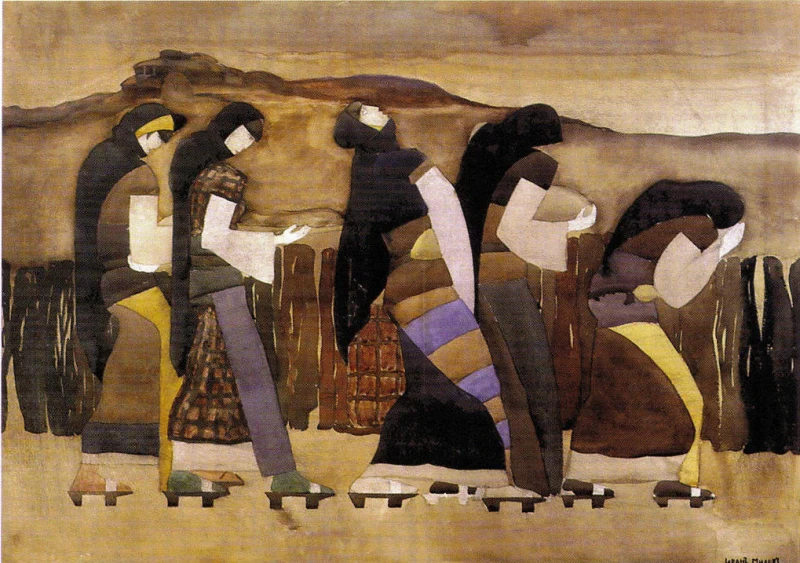
By the time Milev painted this in 1926, Bulgaria had buried an enormous share of its young men. Two Balkan wars and then the First World War, all inside about six years, had left the country defeated and in mourning, and Milev had served in that last war himself while still a teenager. He turns the loss into a row of women, all in black, arranged like a frieze across the sheet. One bows her head, one lifts her face to the sky, another doubles over in pain. The Bulgarian mother stands here for the whole grieving nation, and one figure carries a faint halo, the mark usually given to a saint or a martyr. The painting has a second title, 'All Souls' Day', after Zadushnitsa, the day Orthodox Bulgarians go to the graves to remember their dead.