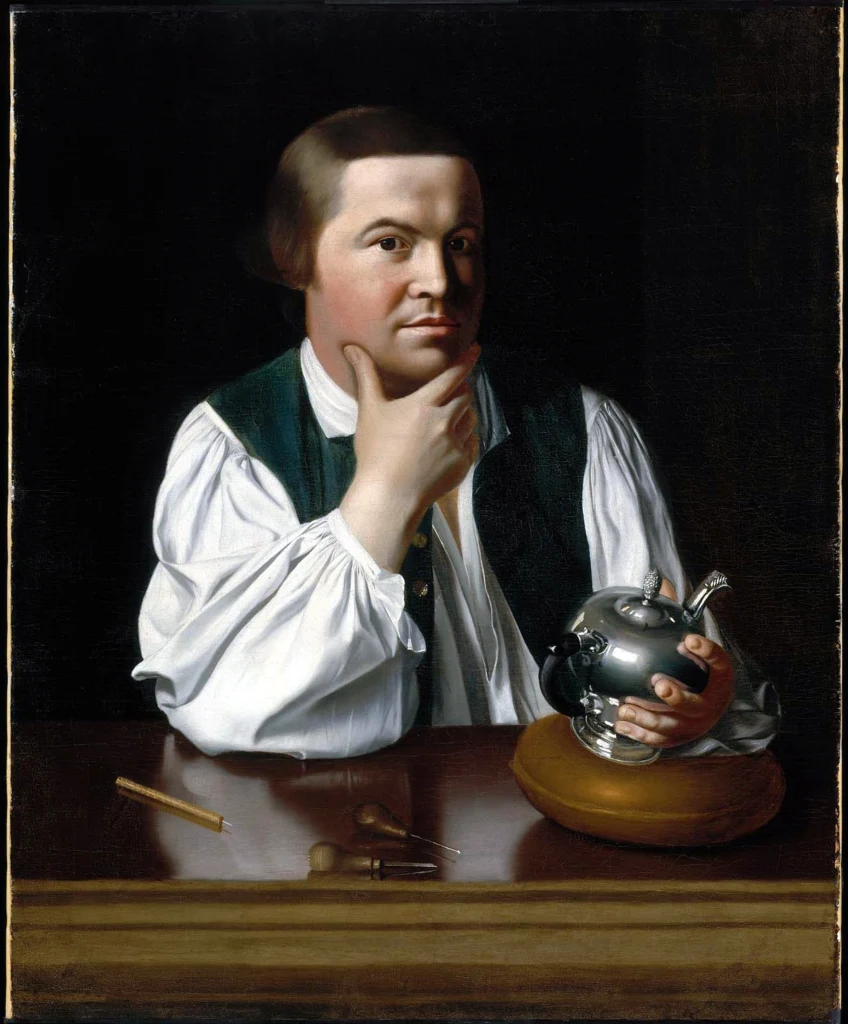
Paul Revere
Details
The story
Copley dated this portrait 1768, a year when tea had become political in Boston. The Townshend Acts, passed by Parliament the year before, put duties on tea and other imports, and the town answered by refusing to buy British goods. Paul Revere was a silversmith with radical Whig politics, and here he holds a teapot. His own account book records nine teapots made between 1762 and 1773, only one of them in 1768. The pot is finished but still plain, and the engraving tools at his elbow wait for the decoration to come. It is the only finished portrait Copley made of an artisan in shirtsleeves at his work, though the clean linen, the gold buttons and the polished tabletop are tidier than any workshop. Nobody knows who paid for it. The family seems not to have cared for it. It ended up in an attic, and Revere's daughter Harriet, by family tradition, had a nephew copy only the face onto a figure in military uniform. The original was first shown in public in 1928, on loan to the museum, and Revere's great-grandsons gave it two years later.
More works by John Singleton Copley
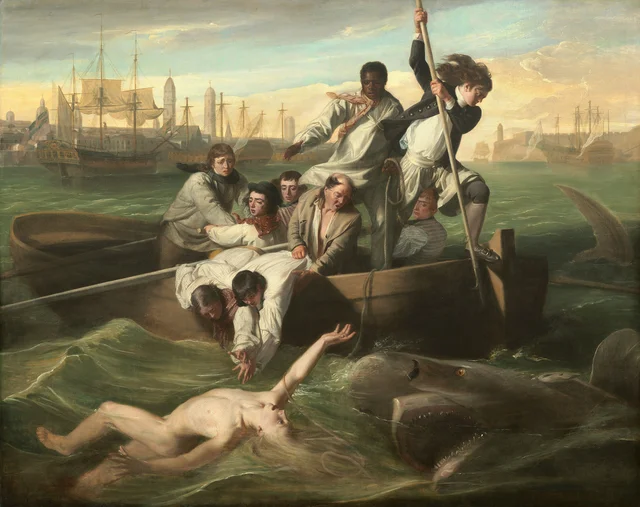 Watson and the SharkJohn Singleton Copley, 1778
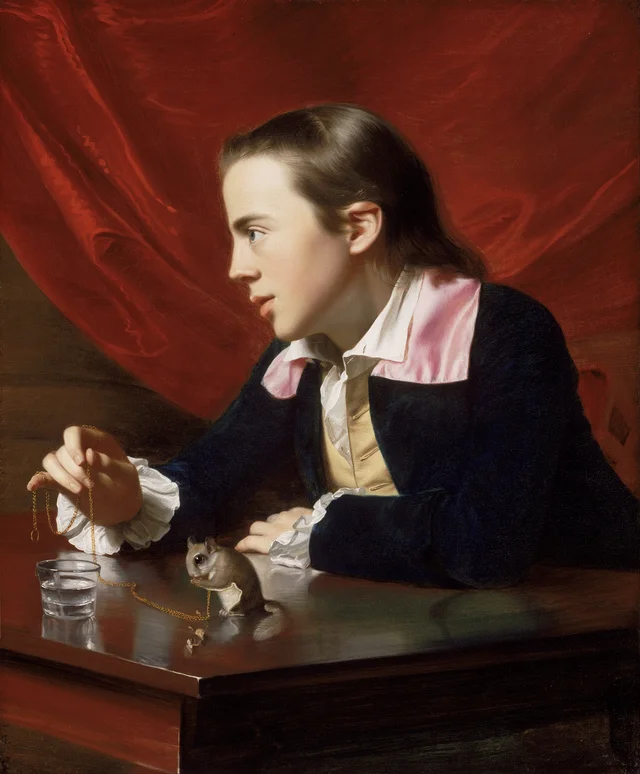 A Boy with a Flying Squirrel (Henry Pelham)John Singleton Copley, 1765
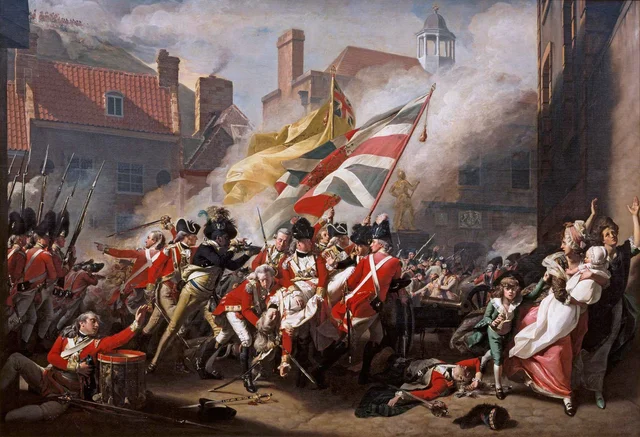 The Death of Major Peirson, 6 January 1781John Singleton Copley, 1783
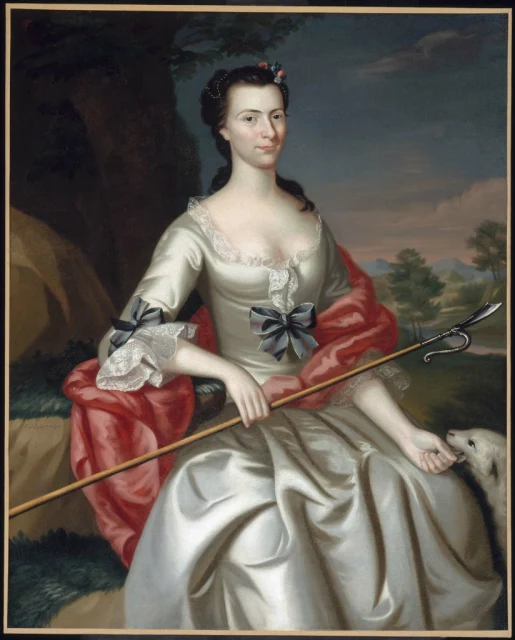 Ann Tyng (Mrs. Thomas Smelt)John Singleton Copley, 1756
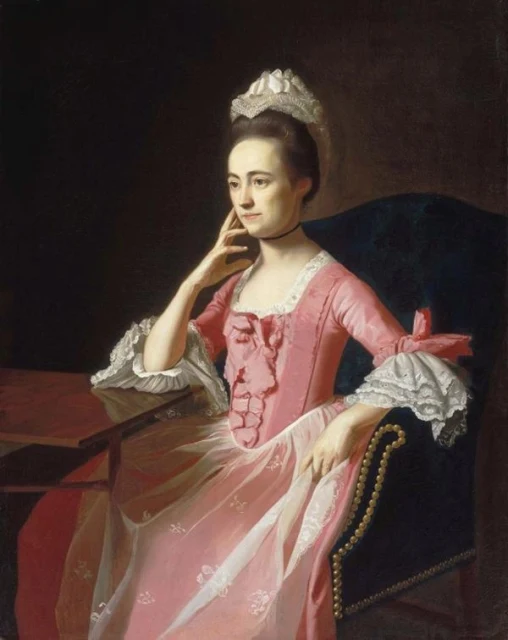 Dorothy Quincy (Mrs. John Hancock)John Singleton Copley, 1772