Anthony van Dyck · PD
Portrait of a Genoese Lady
Details
The story
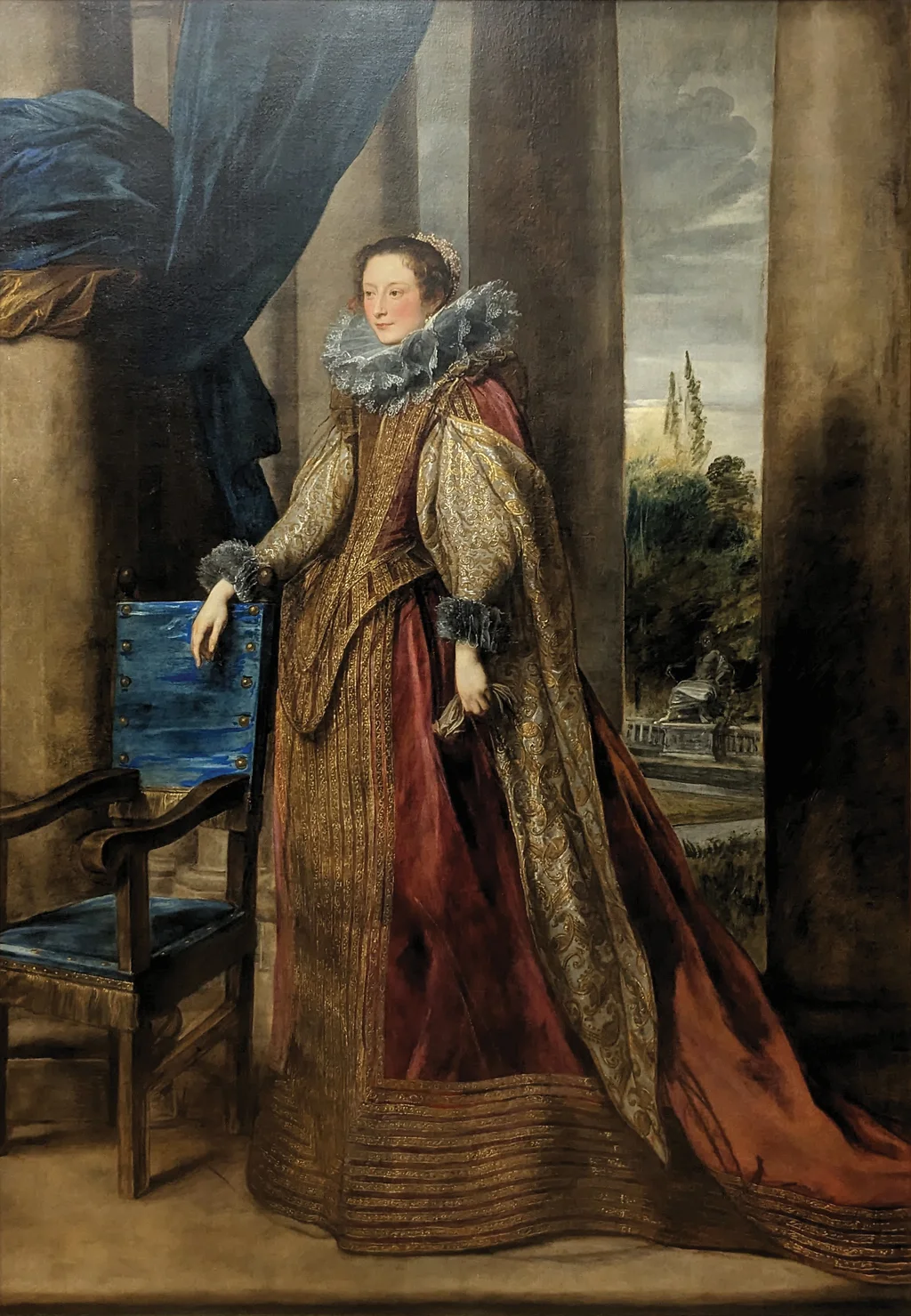
Nobody knows who she is. The Louvre calls her a Genoese noblewoman and offers two guesses, the Marchesa Geronima Spinola-Doria or a daughter of the De Mari family, neither of them settled. Van Dyck painted her at the end of his years in Genoa, around 1626 or 1627, when he was working his way through the city's ruling houses and giving each sitter the tall columned setting that had belonged to state portraiture. The canvas stayed in Genoese palaces into the 19th century, then went to the Paris Rothschilds. In 1941 German officials took it from the chateau de Reux in Normandy, where part of the collection had been stored, for Hermann Goering, and recorded it on his lists as R 89. It came back in 1948. The next year Baron Edouard's three children gave it to the Louvre in thanks for the commission that had tracked the family's pictures down. In the garden behind her, the statue is probably Jupiter.