Portrait of Filippo Agricola
Details
The story
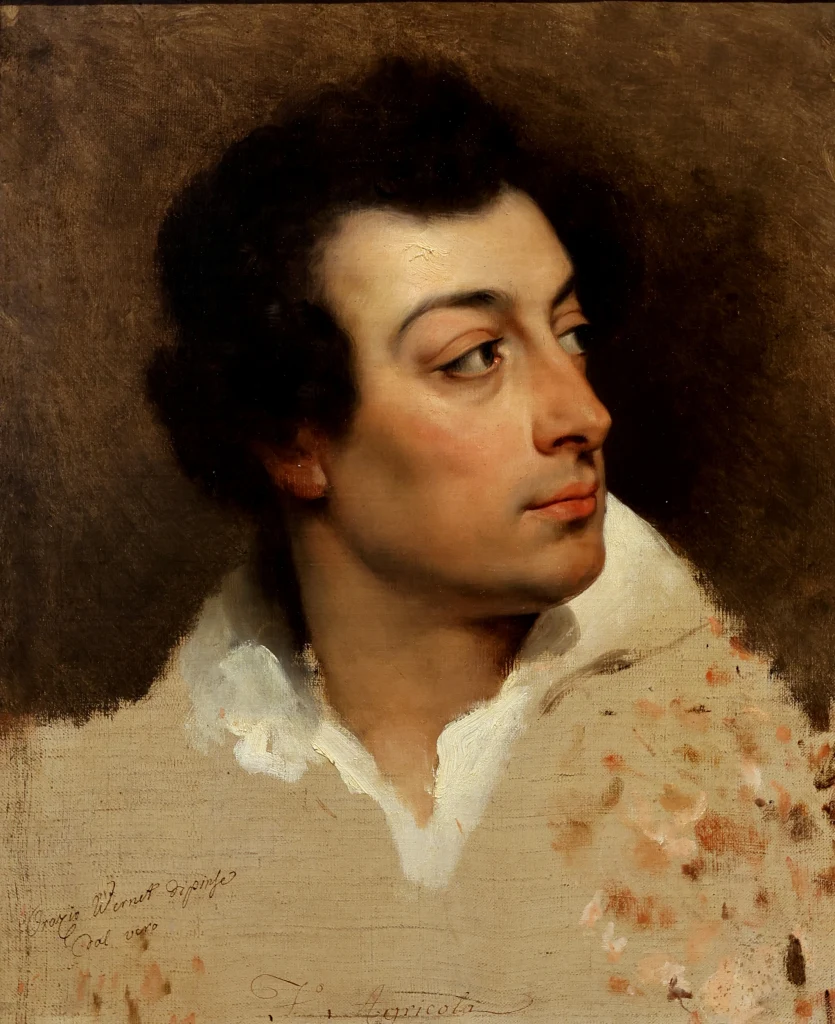
Horace Vernet first stayed in Rome in 1820, and the museum thinks this portrait was most probably painted then. He signed it at the lower left in Italian, Orazio Wernet dipinse dal vero, Horace Vernet painted it from life, writing his own name with a W, and in the middle he added the sitter's name, F. Agricola.
Filippo Agricola was a Roman painter, then 25. At 17 he had won a competition funded by the sculptor Antonio Canova, with a three-year stipend, and in 1821 he painted the portrait of Costanza Monti Perticari, daughter of the poet Vincenzo Monti, which remains one of his most admired works. The museum sees this picture either as an academic exercise or, more likely, as a tribute to a friend, and thinks it may have been left unfinished on purpose. Vernet keeps only the strong, sculpted face and leaves out every tool of his colleague's trade, so that the painter appears simply as a gentleman.
Agricola later ran the Vatican mosaic studio and served as president of the Academy of Saint Luke, the artists' academy of Rome. He died in Rome in December 1857. The next year this portrait from his collection was left as a pledge at the Monte di Pietà, the city's charitable pawn bank, and it came to the gallery in 1895, when the state bought the pawn bank's pictures.