Paul Gauguin · PD
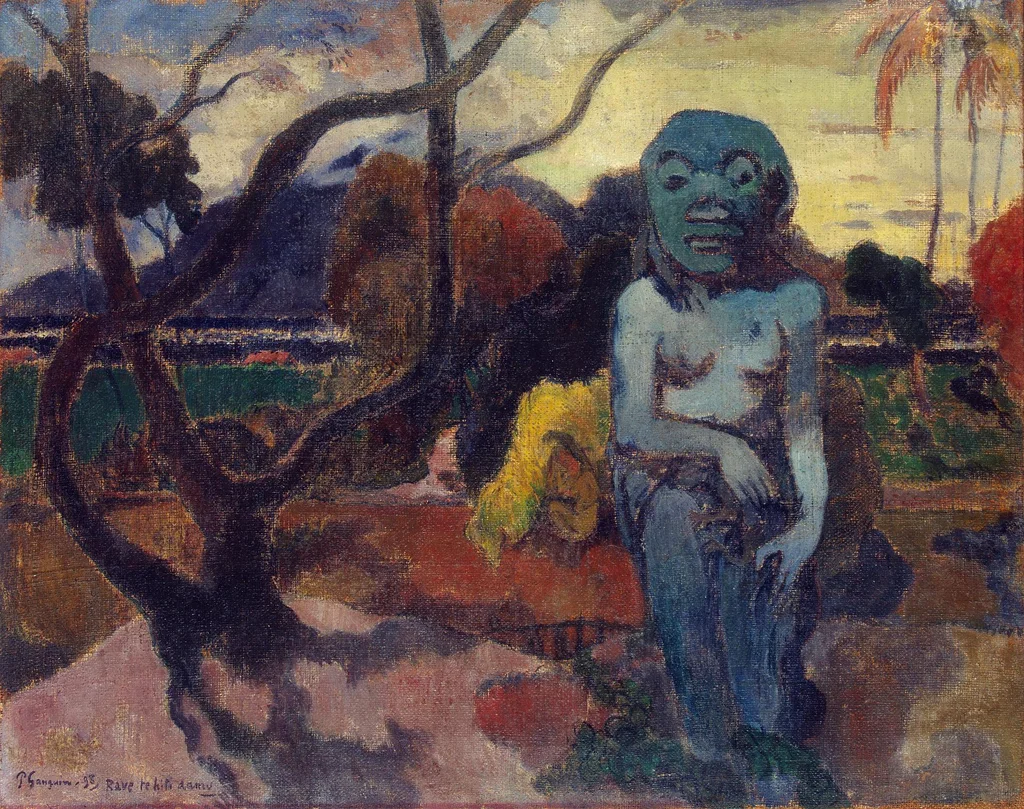
Rave te hiti aamu (The Idol)
Details
The story
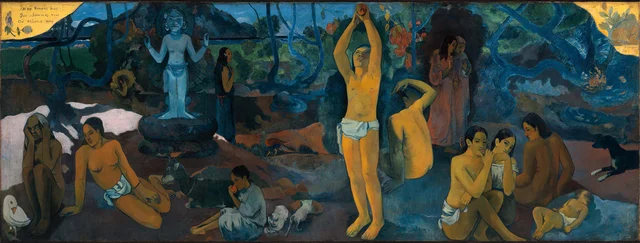
Gauguin painted this in Tahiti in 1898, at the lowest point of his years on the island. The season before, word had reached him that his favourite daughter, Aline, had died back in Europe. Deep in debt and ill, he finished his enormous canvas about where humanity comes from and then tried to take his own life. This idol belongs to that dark stretch. It is not a real Tahitian god. Gauguin invented much of the religion that fills his paintings, and this squatting figure, which he called Oviri, the savage, was his own emblem for the forces of nature, at once fertile and deadly. Two small figures stand beside her in a green half-light, their curves echoing the twisting tree trunks behind them. The same idol returns again and again through his late Tahitian work, a private deity he carried from canvas to canvas rather than anything the islanders would have known.