Rebecca and Eliezer at the Well
Details
The story
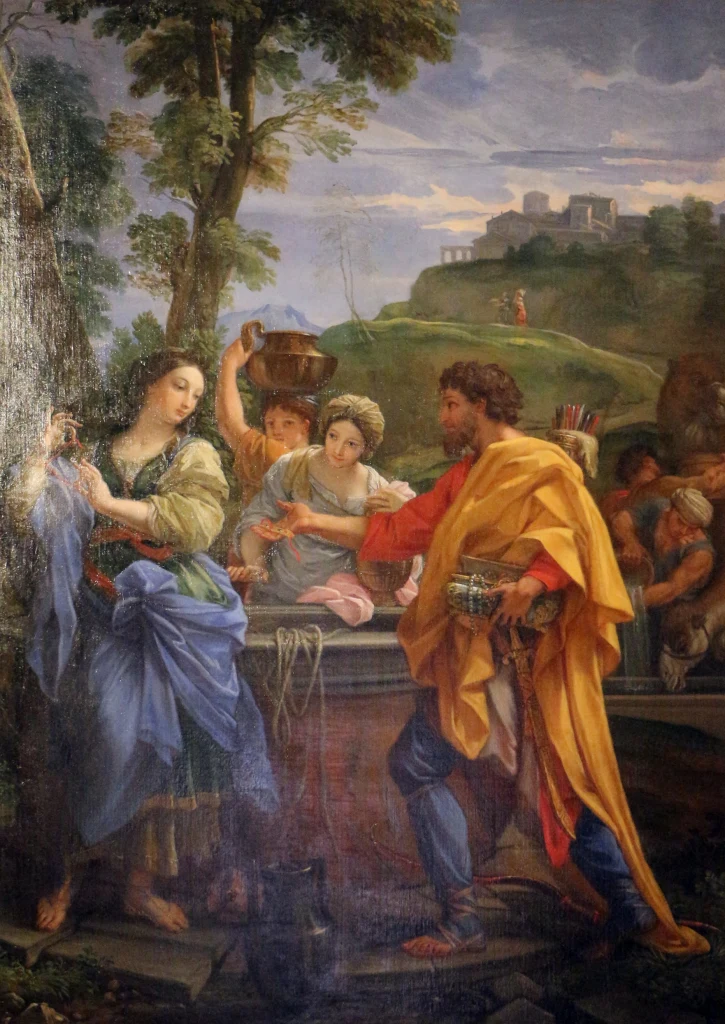
In December 1740 Giovanni Gaetano Bottari, the scholar who served the Corsini family as librarian and art adviser, wrote to Prince Bartolomeo Corsini with news. That day Cardinal Sacripanti had sent two paintings as a gift to Bartolomeo's brother, Cardinal Neri Maria Corsini. One, Bottari thought, was a Caravaggio with three musicians. The other was this Carlo Maratta, showing Abraham's servant on his way to find a bride for Isaac. He valued the Maratta at 400 scudi at least and the supposed Caravaggio at 100. A portrait of Pope Julius II then believed to be by Raphael was valued at only 50 scudi more.
The giver, Carlo Maria Sacripanti, had been treasurer under the Corsini pope, Clement XII, who had made him a cardinal in 1739 and had died early in 1740. The subject suited him well. In Genesis, Abraham's steward Eliezer prays at a well that the girl who offers water to him and to his camels will be the one chosen for Isaac, and Rebecca does exactly that. The picture has been read as the papal treasurer's compliment to himself, the faithful servant who carries out his master's will.
Maratta painted it around 1695, when he was about 70, and a preparatory sketch survives in Munich. Rebecca is trying on the gold bracelets Eliezer has just given her, while he stands in strict profile, his great yellow cloak falling to the ground.