Jusepe de Ribera · PD
Saint Paul
Details
The story
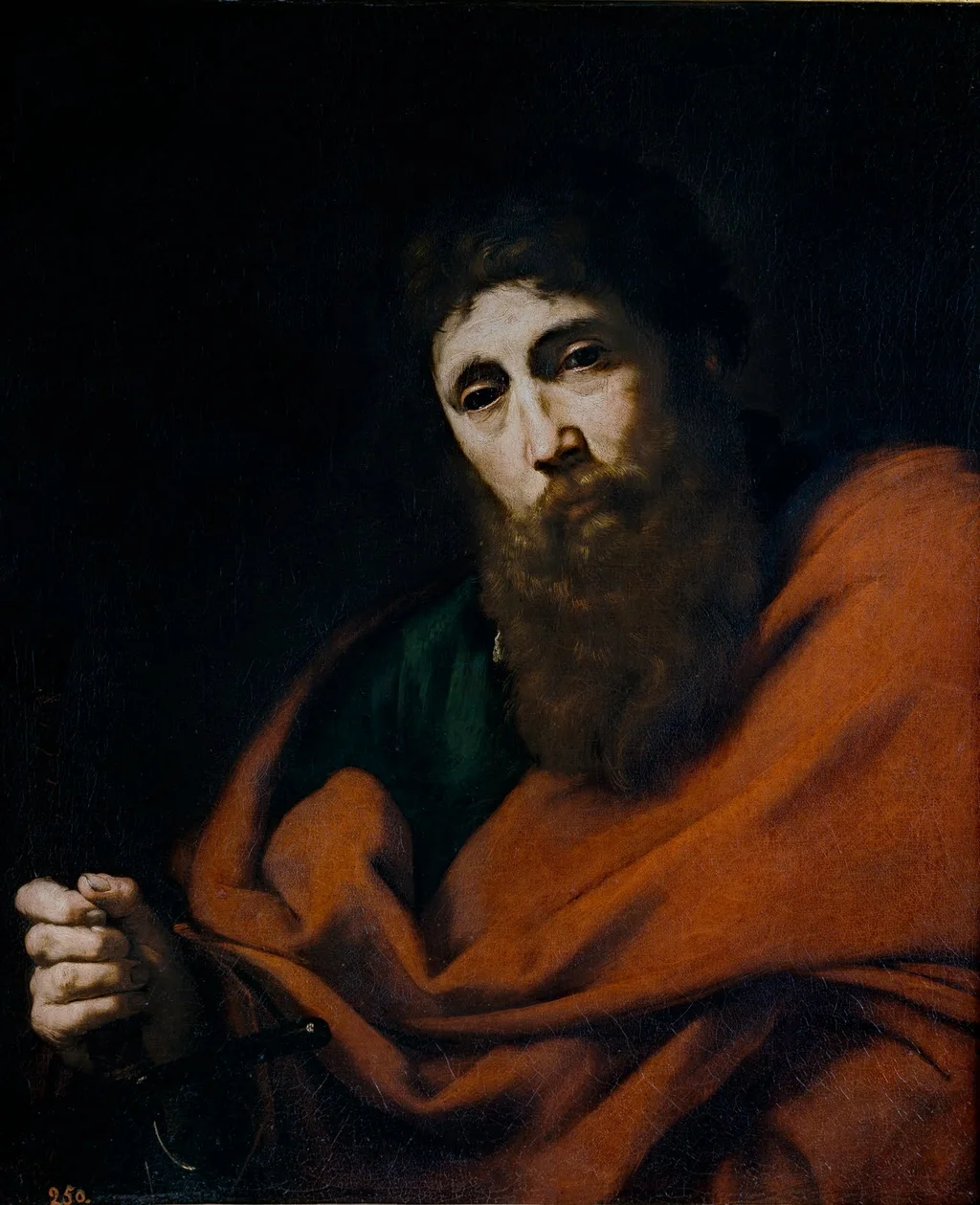
Sets of apostles sold steadily in Naples in the early 1630s. The Counter-Reformation had made them ordinary furnishing for a religious interior: half-length figures on a plain dark ground, each man known by the object in his hands. Ribera's set runs to 13 canvases, and the Prado, which owns them all, states plainly that their quality is very uneven, some carrying a great deal of workshop labour, others worked up as close studies from life. This Paul is one the museum counts among the strongest, with its Peter and its Bartholomew. He fills the canvas in a rust-red cloak over green, and what the left hand grips is the hilt of a sword, the weapon he was beheaded with. The museum dates the group between 1630 and 1635. It surfaces in the royal inventories only at the end of the 18th century, when Carlos IV had it at the prince's lodge at El Escorial.