Sea Harbor, Fog Effect
Details
The story
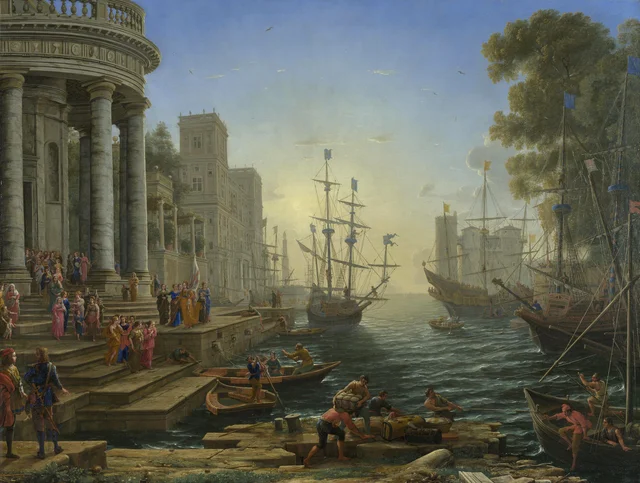
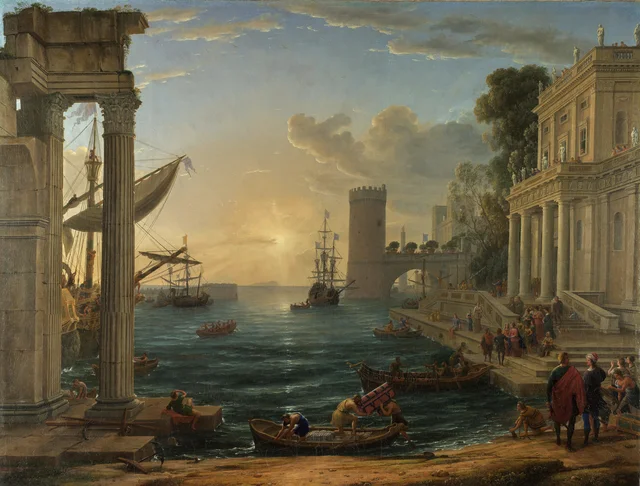
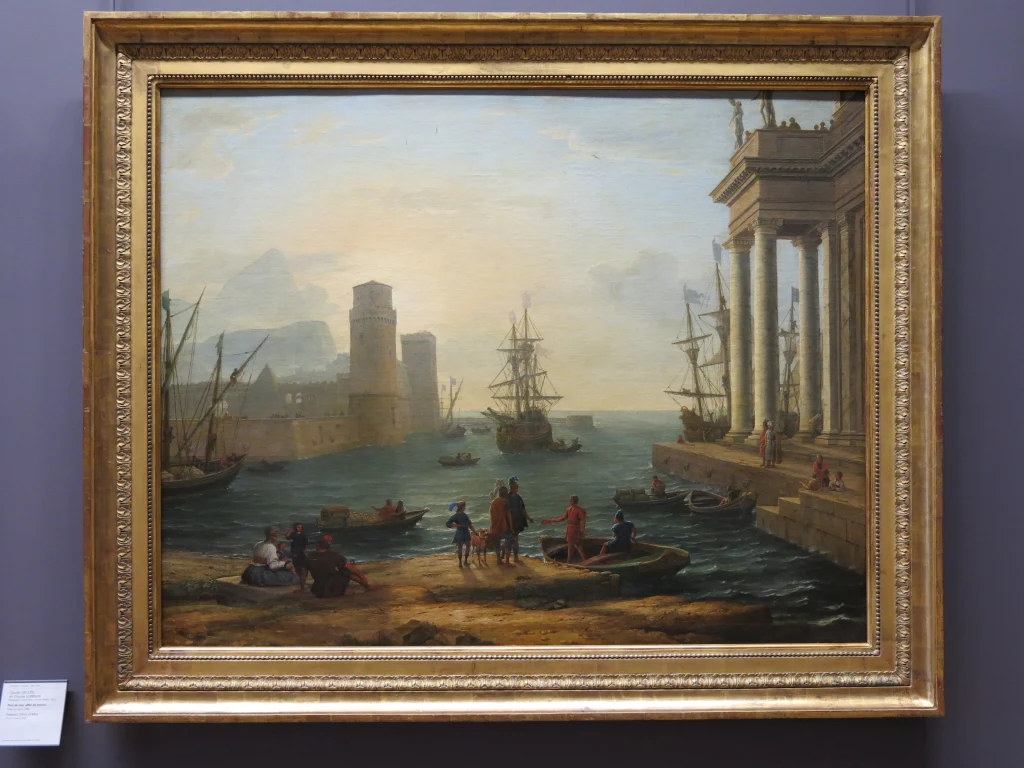
Rome sits inland, and the working port of the papal state in Claude's day was Civitavecchia, up the coast, where the pope's galleys were based. The Louvre suggests that the lighthouse and jetty in this harbour may come from there. The rest is invented, above all the portico of columns standing out on the right, which the museum counts among the most striking pieces of architecture Claude ever painted. He signed and dated it in Rome in 1646, and the French title, effet de brume, names what sets it apart, a harbour whose air is thick with haze.
Nobody is sure what story it tells. The scholar Marcel Röthlisberger proposed Ulysses about to leave the island of the Phaeacians, the seafaring people who in Homer's Odyssey carry him home to Ithaca, and the museum calls that very hypothetical. The figures on the quay beside a rowing boat, with a dog among them, give no firm answer. Louis XIV bought the canvas in 1695 from the collection of François Rappe for 1000 livres.