Paul Gauguin · PD
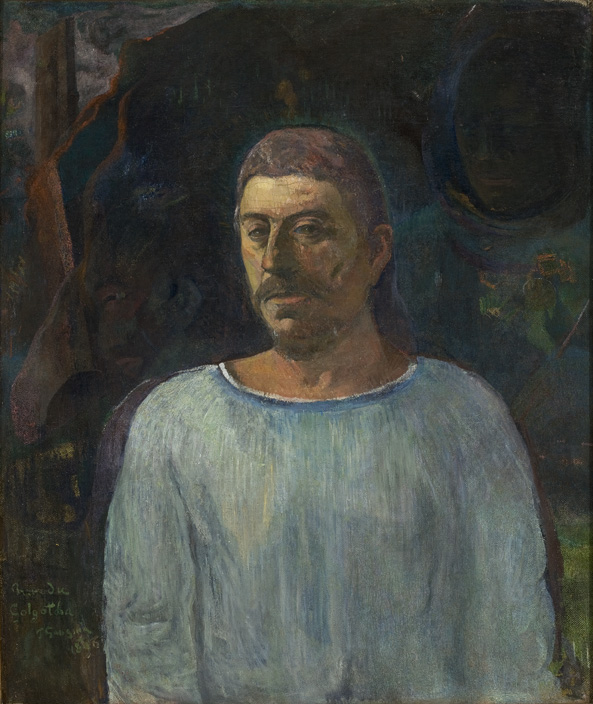
Self-portrait (Near Golgotha)
Details
The story
By 1896 Gauguin had been back in Tahiti for a year, and things were going badly. He was ill, out of money, and writing to a friend in Paris that he felt beaten down and ready to give up. That mood is what he painted here. He set his own face against a dark ground, with a faint halo above his head and two shadowy figures behind him, and cast himself in a role he returned to often, the artist as a kind of martyr. The reference to Golgotha, the hill where Christ was crucified, belongs to that same self-image. He never sold it. The canvas stayed with him, and it was found among his belongings after he died in the Marquesas in 1903.