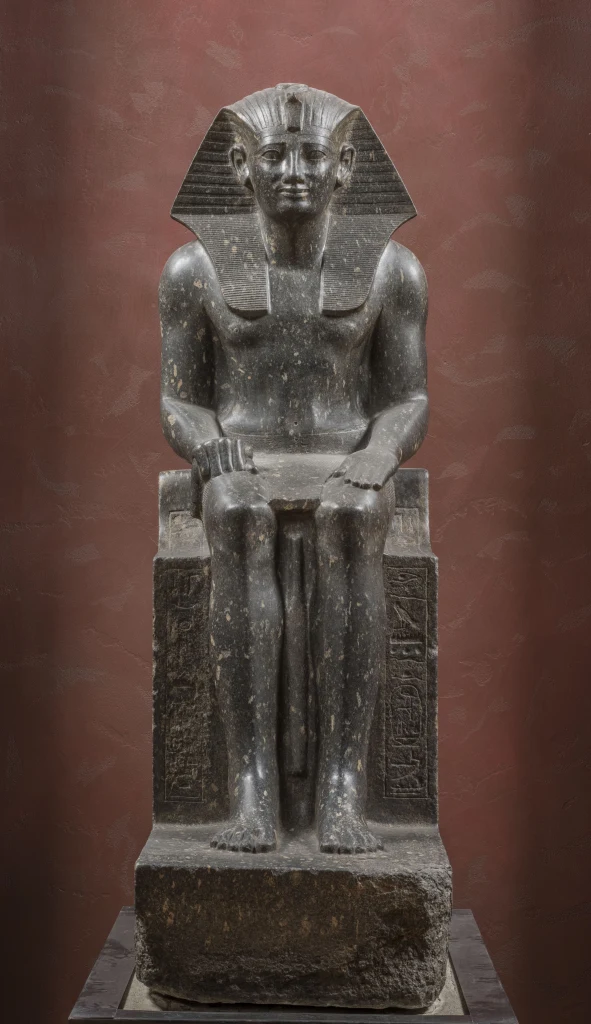
Statue of Senusret I Reinscribed for Thutmose I
Details
The story
The name on this seated king is Thutmose I, one of the early rulers of the 18th Dynasty. The museum dates the inscription to between 1482 and 1480 BC and, with a question mark, to the short reign of his son, Thutmose II. The statue itself is older. The museum's records identify it as a work of the 12th Dynasty, made for Senusret I more than four centuries before the new name was cut.
Egypt's kings had driven out the Hyksos, the foreign rulers of the north, only a few decades before Thutmose I, and the new dynasty often looked back to the Middle Kingdom for its models. At Karnak that past was still standing, and it was reused. Cutting a new name into an old statue was a familiar practice in Egypt, and it made the figure an image of the king it now named.
Senusret's own buildings at Karnak had afterlives too. His small limestone shrine, known today as the White Chapel, was later taken apart and used as fill inside a pylon of Amenhotep III, where its blocks were found from 1927 onwards and put back together.
More works by Unknown Egyptian artist (18th Dynasty)
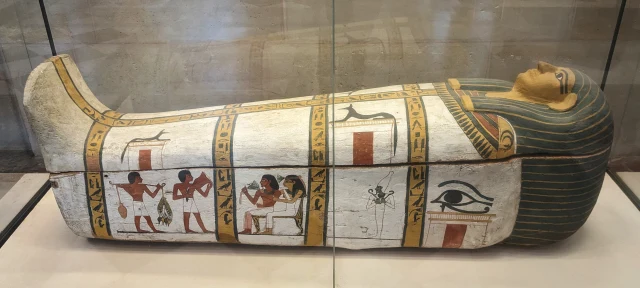 Anthropoid Coffin of MadjaUnknown Egyptian artist (18th Dynasty), -1452
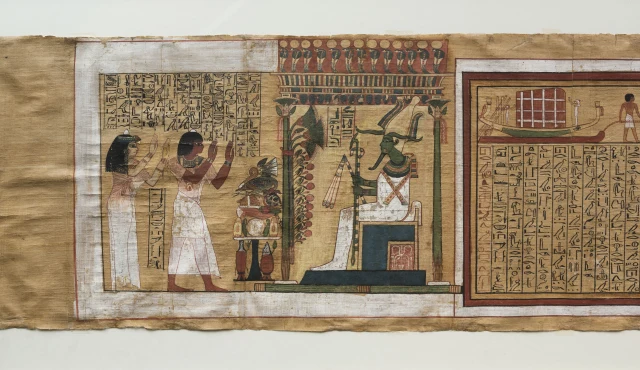 Book of the Dead of KhaUnknown Egyptian artist (18th Dynasty), -1389
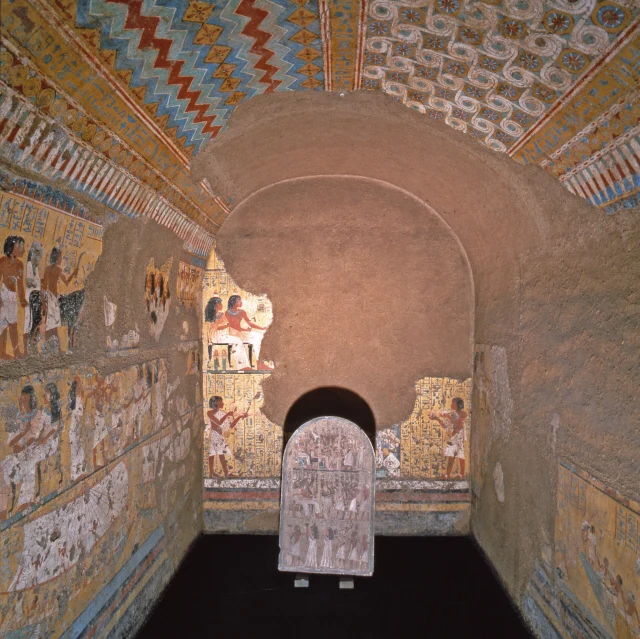 Chapel of MayaUnknown Egyptian artist (18th Dynasty), -1322
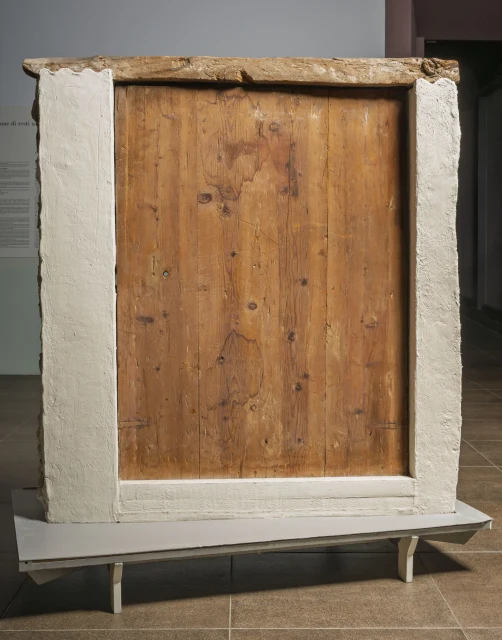 Door of the Burial Chamber of Kha and MeritUnknown Egyptian artist (18th Dynasty), -1389
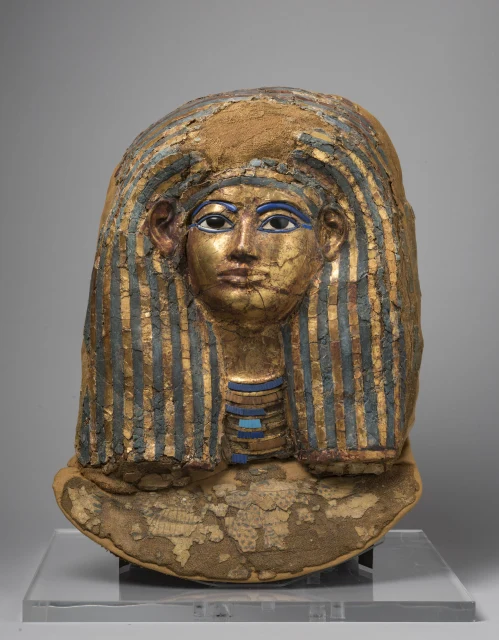 Funerary Mask of MeritUnknown Egyptian artist (18th Dynasty), -1389