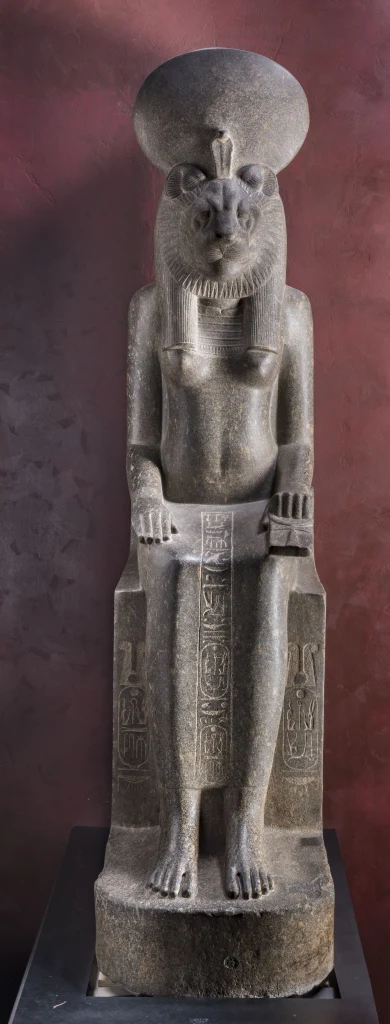
Statue of the Goddess Sekhmet
Details
The story
Sekhmet was the lion goddess whose anger could bring war and epidemics, and Amenhotep III, who ruled from 1390 to 1353 BC, had her carved in dark stone hundreds of times. About 600 of his Sekhmet statues still stand at Thebes or can be traced back there, and they are now spread across museums around the world. One widely cited explanation calls them a litany in stone, with each statue standing for one of the goddess's names, so that daily rites before them could keep her fury calm. Many scholars think most of them first stood in the king's funerary temple on the west bank of the Nile and were later moved across the river to the precinct of Mut at Karnak. That is where this one was found.
Turin holds 21 of them, ten seated and eleven standing, and about 20 of them are in this room. The first was found in 1759 by Vitaliano Donati, a naturalist sent to Egypt by the king of Sardinia. Most of the others were dug up at Karnak in 1818 by Jean-Jacques Rifaud, who was collecting for Bernardino Drovetti, and they reached Turin with his collection in 1824. This seated goddess has the head of a lioness, crowned with a sun disc and a cobra.
More works by Unknown Egyptian artist (18th Dynasty)
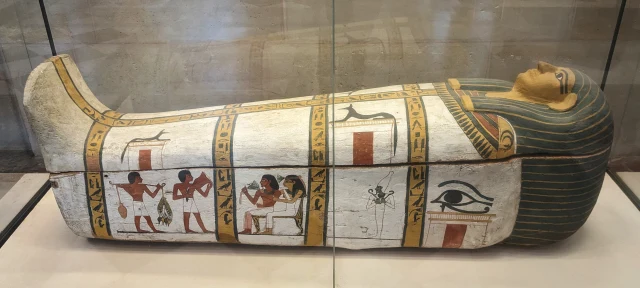 Anthropoid Coffin of MadjaUnknown Egyptian artist (18th Dynasty), -1452
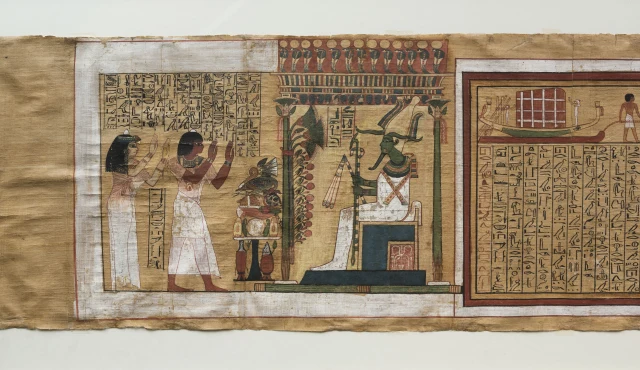 Book of the Dead of KhaUnknown Egyptian artist (18th Dynasty), -1389
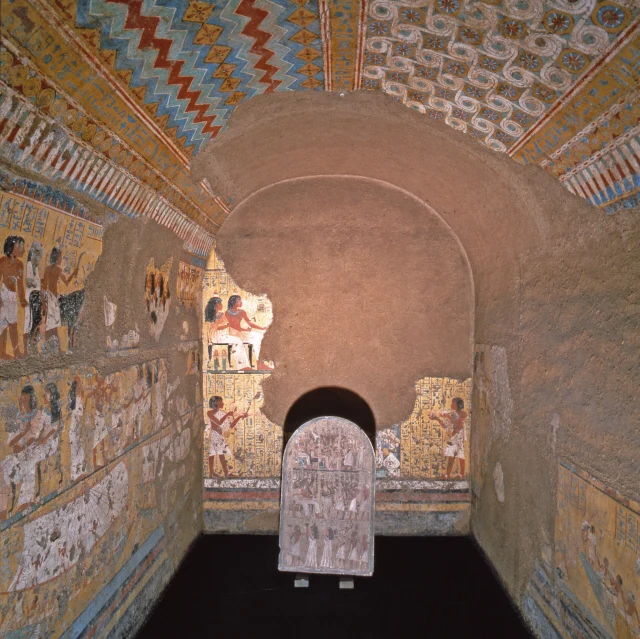 Chapel of MayaUnknown Egyptian artist (18th Dynasty), -1322
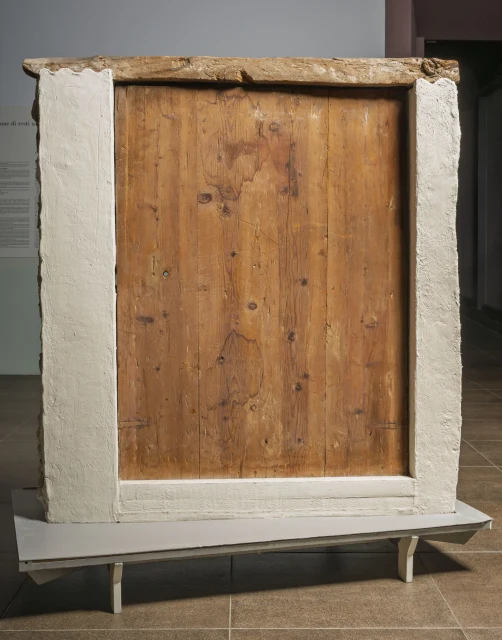 Door of the Burial Chamber of Kha and MeritUnknown Egyptian artist (18th Dynasty), -1389
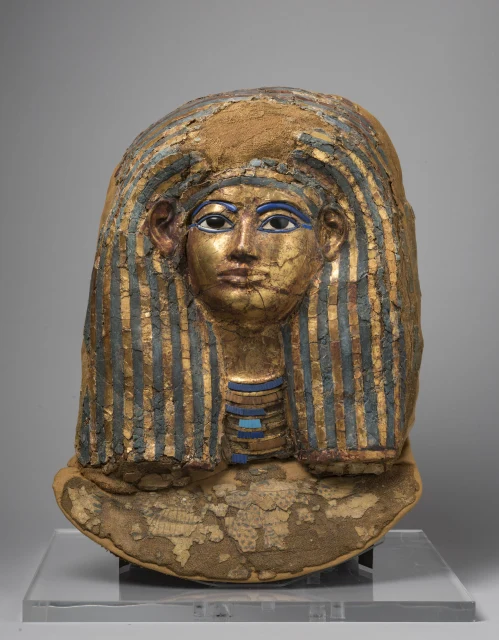 Funerary Mask of MeritUnknown Egyptian artist (18th Dynasty), -1389