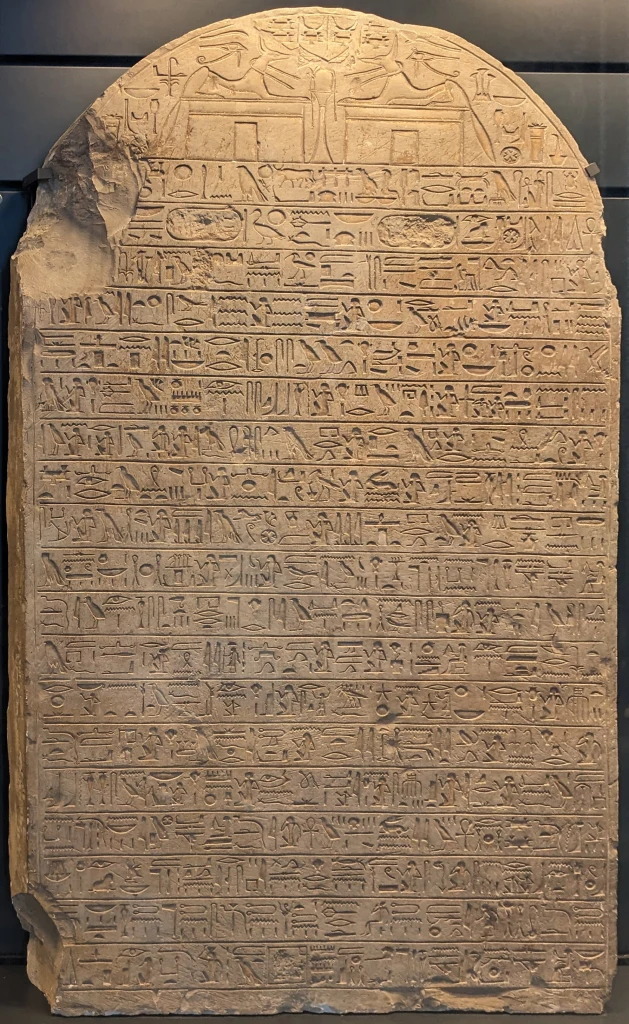
Stela of Minnakht
Details
The story
When Tutankhamun died young, an elderly courtier named Ay took the throne of Egypt, and he reigned only about four years. This stone is dated to year 4 of his reign. Its owner served in Akhmim, the Upper Egyptian town with which Ay's family is usually linked, and his titles bind him to the king. He was first prophet of Min and Isis, head of the priests of all the gods of Akhmim, and overseer of works in a sanctuary that bore Ay's own throne name. The Louvre reads his name as Nakhtmin. It has long been catalogued as Minnakht, because scribes wrote the god's name first out of respect, and the name can be read in either order.
At the top, two jackals lie on pedestals, Wepwawet of the North and Wepwawet of the South, the god whose name means opener of the ways. Below, the sunk hieroglyphs, once painted yellow, ask that he may go in and out of his tomb, cool himself in its shade, drink from his canal every day and walk beside his lake. Then he turns to the living. I gave bread to the hungry, he says, and filled the one who had nothing. The stela reached the Louvre in 1827, bought with the collection of Bernardino Drovetti, consul general of France in Egypt.
More works by Unknown Egyptian artist (18th Dynasty)
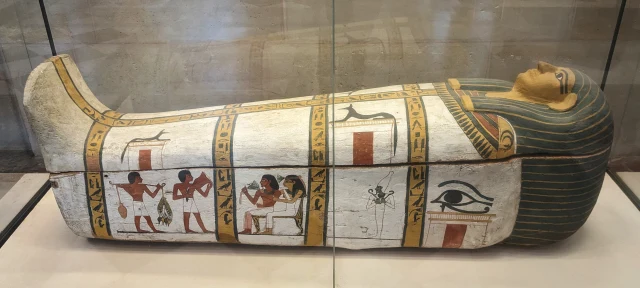 Anthropoid Coffin of MadjaUnknown Egyptian artist (18th Dynasty), -1452
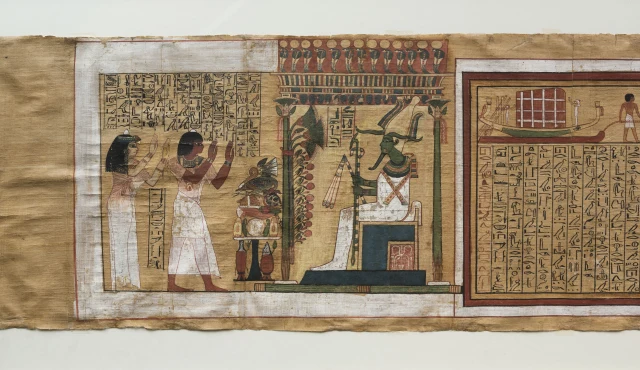 Book of the Dead of KhaUnknown Egyptian artist (18th Dynasty), -1389
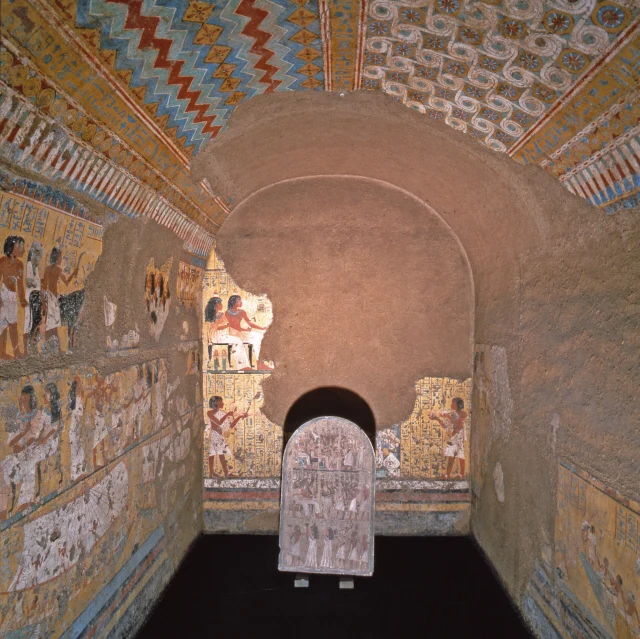 Chapel of MayaUnknown Egyptian artist (18th Dynasty), -1322
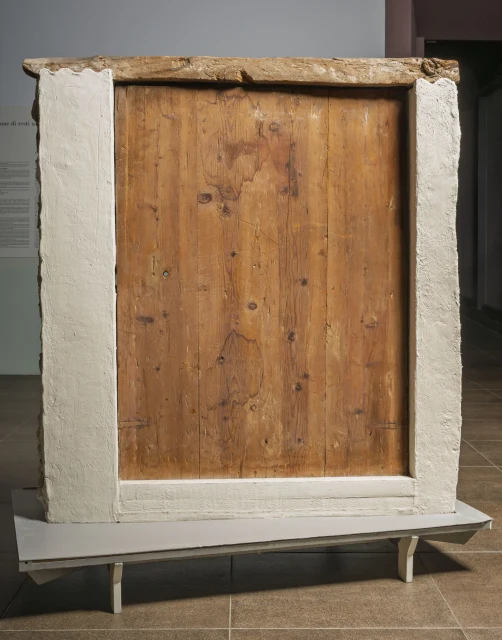 Door of the Burial Chamber of Kha and MeritUnknown Egyptian artist (18th Dynasty), -1389
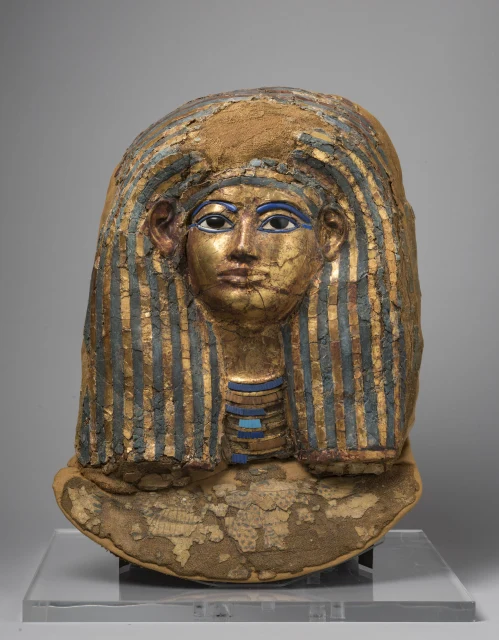 Funerary Mask of MeritUnknown Egyptian artist (18th Dynasty), -1389