The Cumaean Sibyl
Details
The story
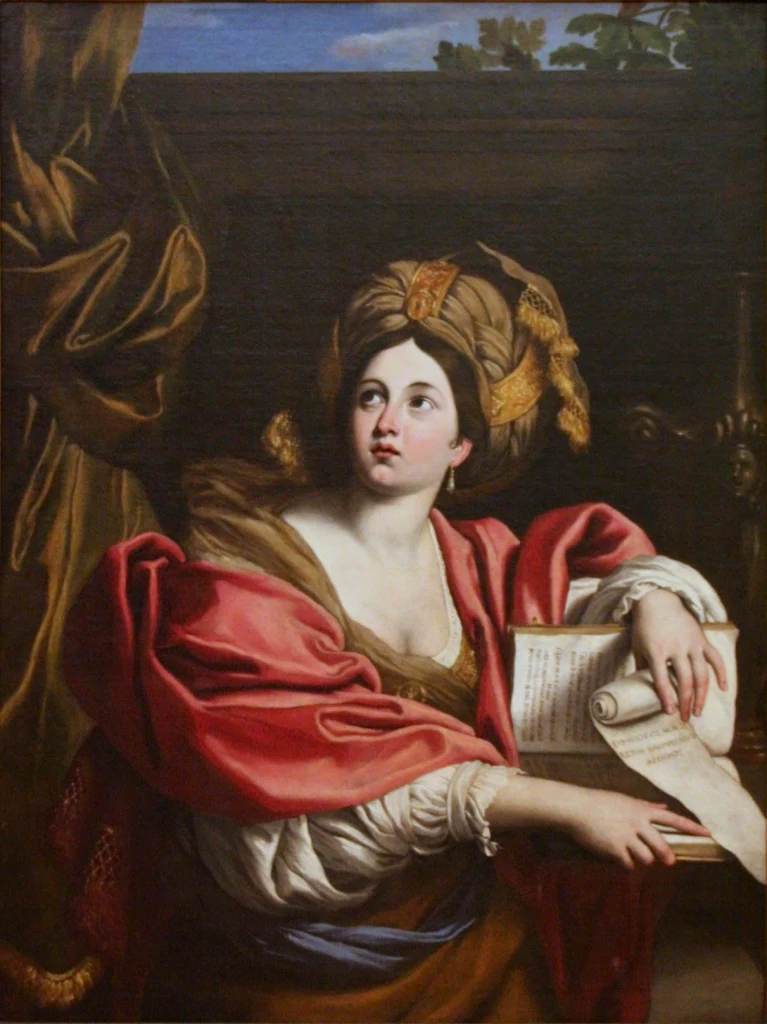
The Greek words on her scroll say that there is only one God, infinite and unbegotten. Sibyls were the prophetesses of the pagan world, and Christians had long held that some of them, like the Hebrew prophets, had foretold the coming of Christ. That is why a pagan seer can be shown here proclaiming a single God. This one takes her name from Cumae, an ancient Greek settlement on the coast near Naples. For painters in 17th-century Rome a sibyl was also a chance to paint an elegant woman, and the museum describes this one as a classical pose joined to a soft sensuality. Domenichino painted her in Rome, and the museum dates the canvas to 1622. Through the 17th century and the first half of the 18th it belonged to the Pio, a Roman noble family. In 1750 they sold it, with many other masterpieces from their collection, to Pope Benedict XIV, who gave it to the public picture gallery he had just founded on the Capitoline.