Théodore Géricault · PD
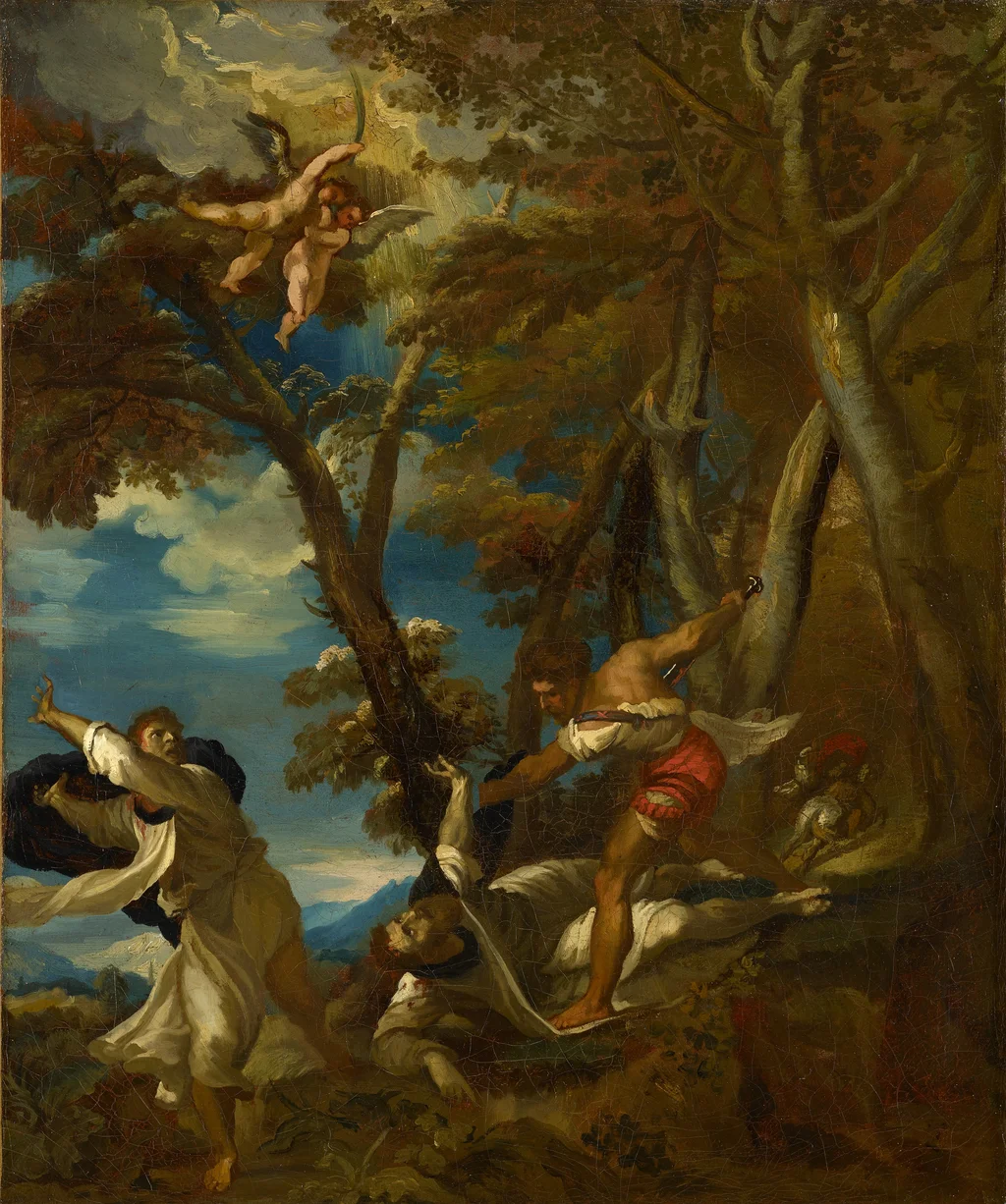
The Martyrdom of Saint Peter
Details
The story
When Géricault set up his easel in front of this scene around 1814, he was copying one of the most famous paintings in Europe: Titian's altarpiece of the death of Saint Peter Martyr, a Dominican friar cut down by an assassin on a wooded road. Titian had painted it in the late 1520s for a church in Venice, but for a few years it hung in Paris, brought to the Louvre during the Napoleonic period, and in 1815 it went back to Venice. Géricault, then just past twenty and still teaching himself by copying Rubens, Velázquez and Rembrandt in the same galleries, caught it during its brief Paris exile. He didn't copy it slavishly. He replaced the rounded top of the altarpiece with a plain rectangle, opened the composition out wider, and changed the position of the killer's hand. What gives this small canvas its importance now is the fate of the original. On 16 August 1867 a fire in the Venice church destroyed Titian's painting completely, and copies like this one are among the things that still keep the memory of how it looked.