The Martyrdom of Saints Rufina and Secunda (The Painting of the Three Hands)
Details
The story
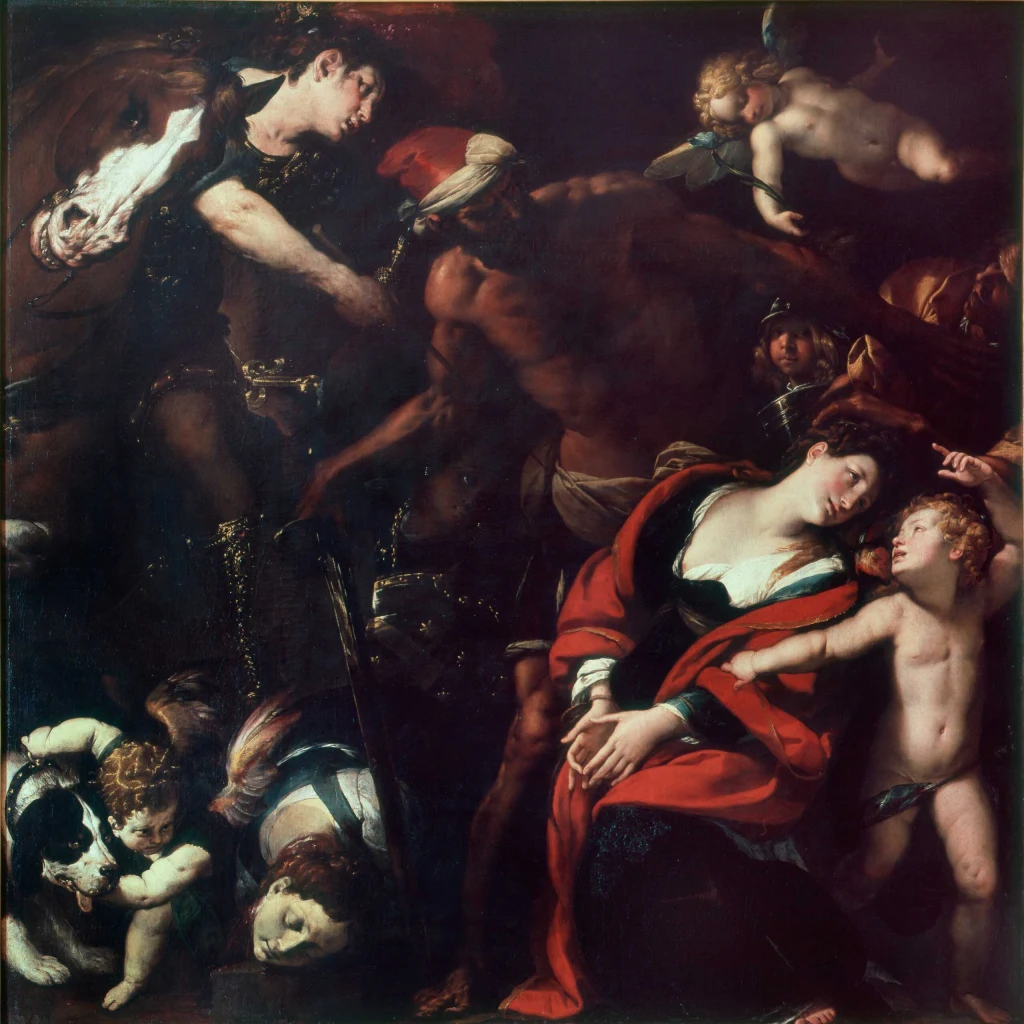
This canvas was a test, set up on purpose. A Milanese collector named Scipione Toso wanted the city's three leading painters measured against one another, so he commissioned a single picture between 1620 and 1624 and handed each of them a part of it. Milan has called it ever since the Quadro delle tre mani, the painting of the three hands.
The subject is the martyrdom of Rufina and Secunda, two Roman sisters put to death in the persecutions of the 3rd century. The canvas is square, 192 centimetres each way.
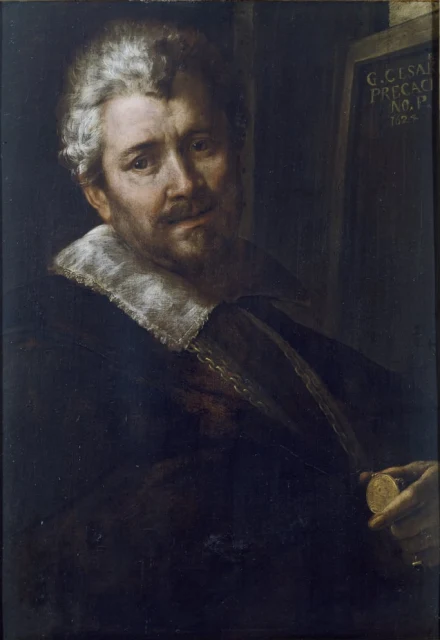
Toso asked each man for what he was known for. Cerano, Giovanni Battista Crespi, had a name for the macabre and for animals, and he painted the beheaded Secunda, the horseman, the putto and the dog. Morazzone, Pier Francesco Mazzucchelli, was the battle painter, and he took the executioner, the soldier and the angel carrying the martyr's palm. Giulio Cesare Procaccini, the tender one of the three, painted Rufina herself and the angel bending over her to comfort her.
All three were dead within eight years. Procaccini died in 1625, Morazzone the year after that, and Cerano in 1632, and the painting never left Milan. It hangs in Room 30.