The Mourning Virgin
Details
The story
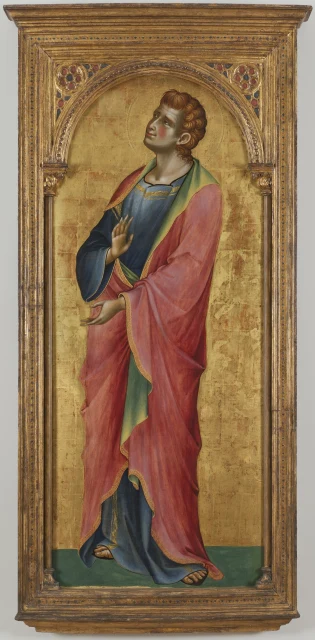
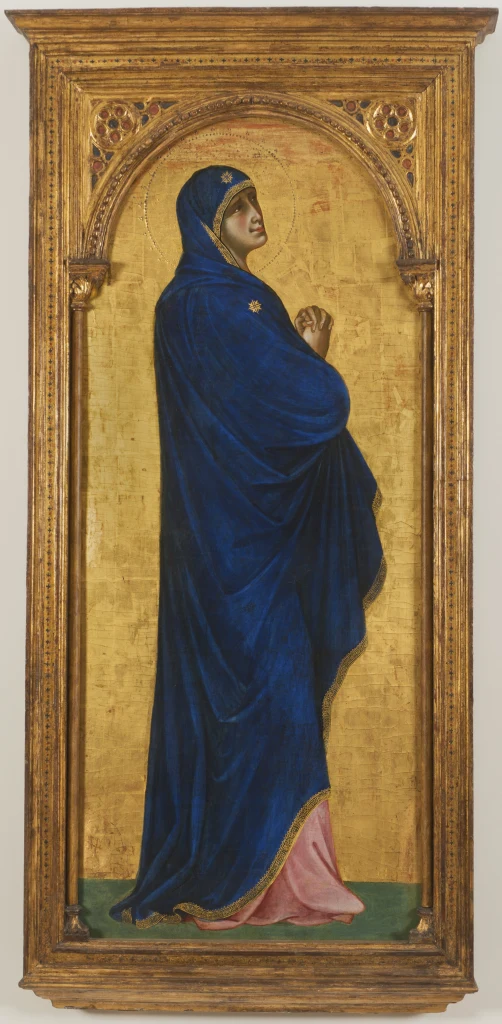
This Virgin was made to be seen high up in a church, beside a cross. She and her companion panel, Saint John, were most likely the side figures of a Crucifixion built from three separate pieces, with the crucified Christ in the middle. Lionello Venturi, the critic who first published the pair in 1926, placed her on the left, at Christ's right hand. Scholars connect the arrangement with a Byzantine custom that had spread widely in 14th-century Venice, in which such groups were put up on the screen between the nave and the choir during Holy Week. The model usually cited is the large Crucifixion Paolo Veneziano painted for the Dominican church of Ragusa, today Dubrovnik on the Dalmatian coast, begun around 1348. The scene itself comes from the Gospel of John, where the dying Jesus gives his mother and his beloved disciple into each other's care. The museum dates the pair to about 1355 to 1357 and names both Paolo and Lorenzo Veneziano as their painters.