Paolo Veneziano
Republic of Venice · Venetian School, Gothic, Early Italian Renaissance
The story
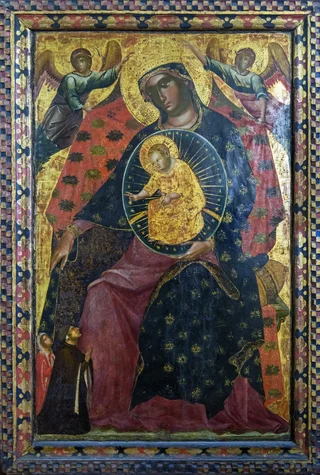
In the Venice of the early 1300s, the city still looked east for its art. Its mosaics and gold-ground panels followed Byzantine models from Constantinople, solemn and unchanging, and the man who ran the busiest painting workshop in town worked squarely in that tradition. Paolo Veneziano was effectively the republic's official painter, trusted with its most sacred commissions.
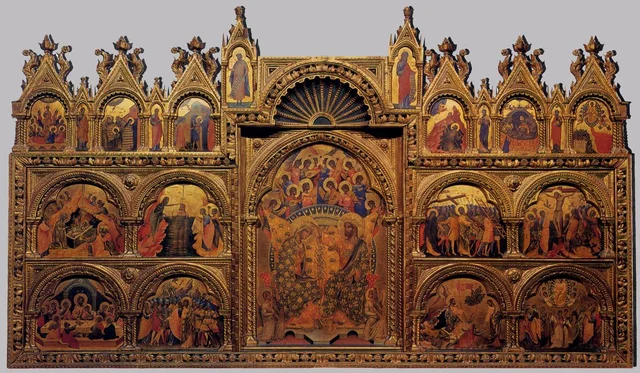
Inside St Mark's Basilica stood the Pala d'Oro, a dazzling altar screen of gold and enamel that was uncovered only on Sundays and feast days. For ordinary weekdays the doge Andrea Dandolo, the elected ruler of Venice, asked Paolo and his sons to paint a cover for it. Finished around 1345 and known as the Pala Feriale, the weekday altarpiece, it lines up saints and scenes from the life of Saint Mark in rows of glowing panels.
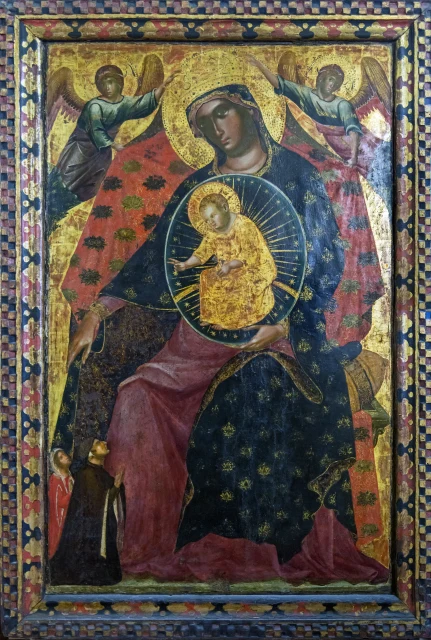
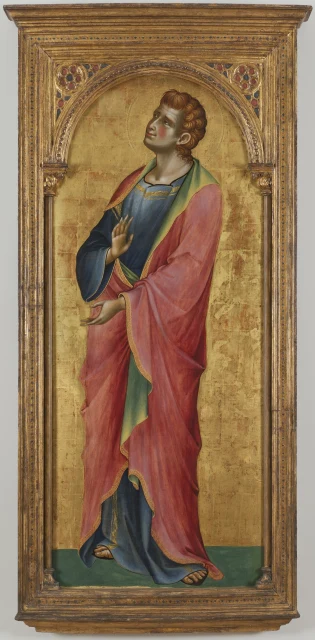
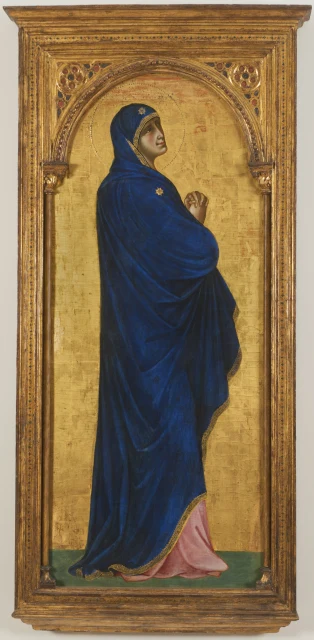
What sets Paolo apart is a softening you can watch happening across his work. The rigid Byzantine faces begin to turn and gesture, warmed by the newer Gothic manner drifting up from central Italy. He signed and dated several of his altarpieces, still unusual at the time, and trained the sons who kept the workshop going after him. His panels of the Coronation of the Virgin, scattered now among museums, still set figures just learning to move like people against that deep Venetian gold.