https://www.museodelprado.es/en/the-collection/art-work/the-purification-of-the-midianite-virgins/6f60b6af-4db1-412c-8379-9d8bb8c413f3 · CC-BY-SA-4.0
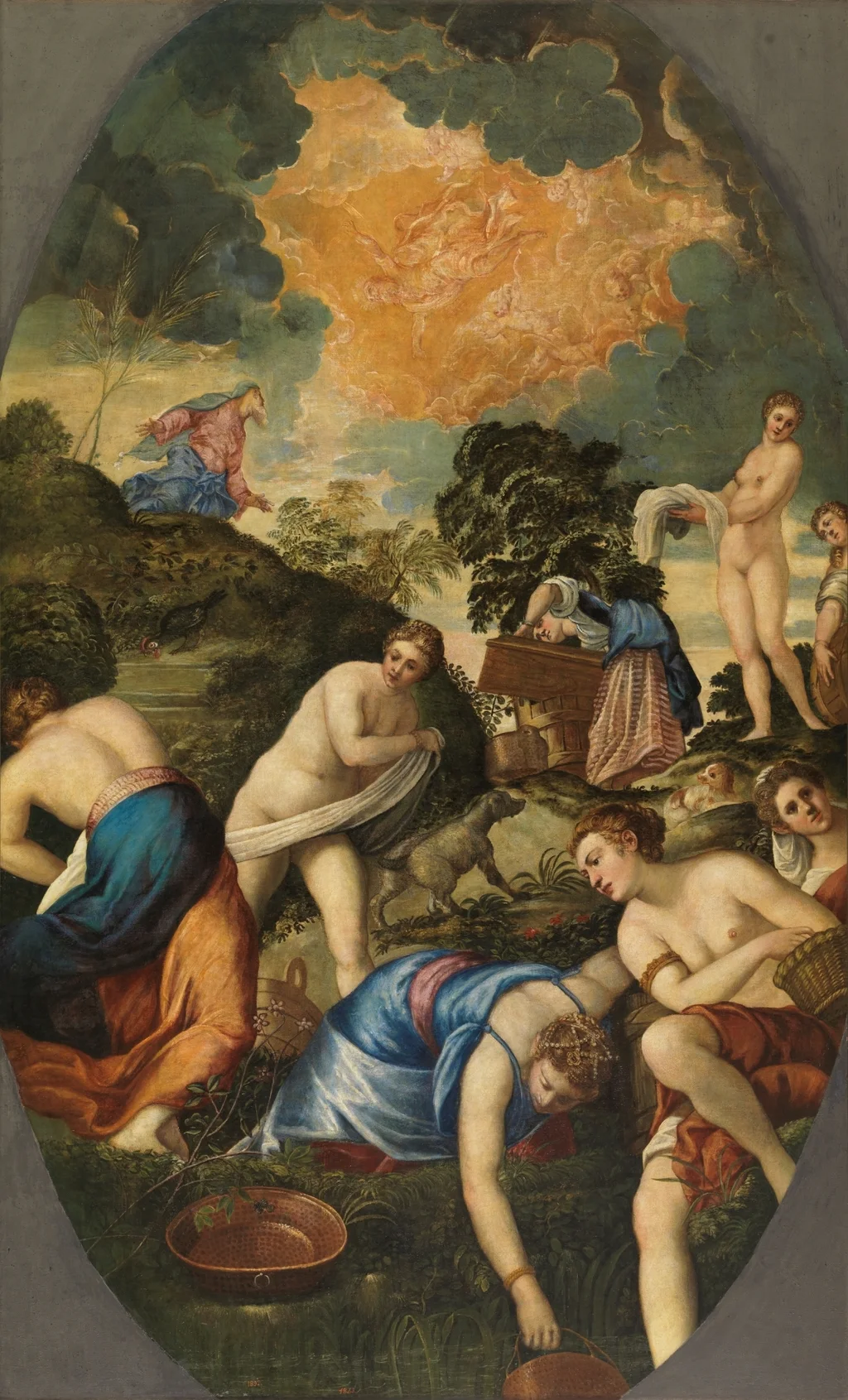
The Purification of the Midianite Virgins
Details
The story
In 1651 Velázquez bought seven canvases in Venice for Felipe IV and they reached Madrid as a set. The Prado's own catalogue says they were probably never made as one. Six of them are long and low, around 58 centimetres high, meant to run along a wall. This is the seventh, an oval more than three metres tall. It is later than the rest as well: the museum places it in the last quarter of the 16th century and gives most of the actual execution to Domenico Tintoretto, Jacopo's son, who worked in the same shop. The subject comes from the Book of Numbers. After the campaign against Midian everything taken had to be cleansed, metal through fire and water, people by waiting seven days outside the camp. The Prado's title names the botín, the plunder itself, which shorter versions of the title leave out, and the museum indexes the canvas by a kettle, a basket and jewellery.