The Satyr and the Peasant
Details
The story
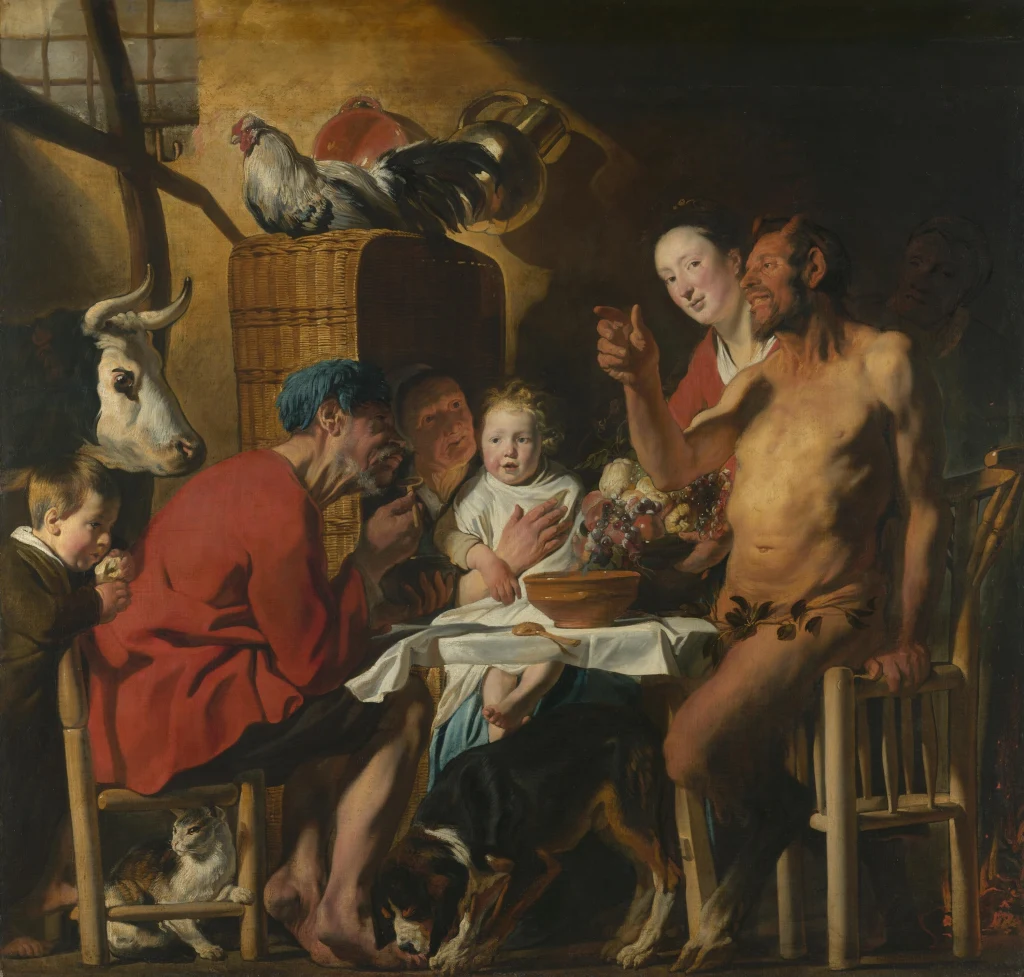
The story is one of Aesop's fables, and in the Low Countries it had just been retold. In 1617 the Amsterdam poet Joost van den Vondel put it into Dutch verse, reusing etchings made for the first illustrated Aesop in Dutch, printed in Bruges in 1567. A satyr takes in a peasant on a cold day and watches him blow on his fingers to warm them. Then, at table, the man blows on his gruel to cool it, and the satyr wants nothing more to do with someone who can blow hot and cold with the same breath. Jordaens painted the fable again and again. In this canvas, which the museum dates to around 1620 or 1621, the satyr is caught in the moment of surprise and alarm, his face and hands working as he gets ready to leave the peasant's family. In later versions he grows greyer and heavier, and starts to smile at the lesson. This one is about two metres wide, painted on canvas that was later laid down on oak.