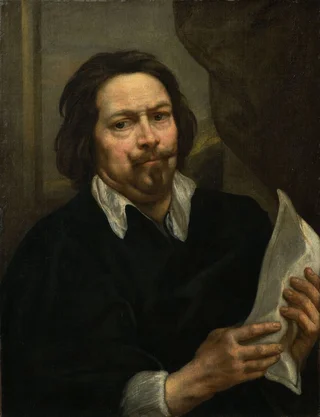
Jacob Jordaens
1593–1678 · Spanish Netherlands · Flemish Baroque painting
The story
When Rubens died in 1640 and Van Dyck a year later, Jacob Jordaens became the leading painter of Antwerp almost by default, and he filled the role with noise, food and laughter. Where Rubens had grandeur and Van Dyck elegance, Jordaens brought a rowdy, earthy warmth, crowding his canvases with fat, red-faced revellers close enough to touch.
His favourite subjects were Flemish proverbs turned into feasts. In The King Drinks he shows the old Twelfth Night custom where whoever finds the bean in the cake is crowned king for the night, and the whole table roars and drinks as the paper king raises his glass. In another he paints an old couple singing while children pipe along, illustrating the saying that the young imitate the old.
Unlike most ambitious Flemish painters he never went to Italy, staying his whole life in Antwerp and learning from Rubens close at hand. Late in life he converted to Protestantism in a Catholic city, which brought him trouble, and he kept painting into his eighties. He died in 1678 of an illness that also killed his daughter, the two buried together.
Works
39 works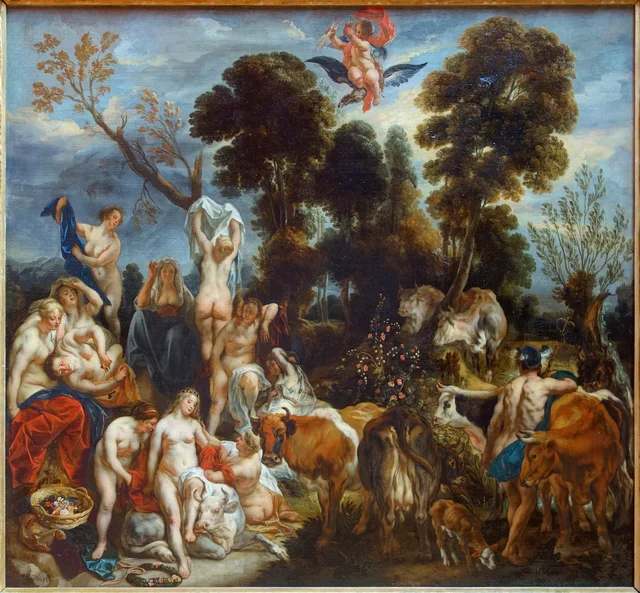 The Abduction of EuropaJacob Jordaens, 1643
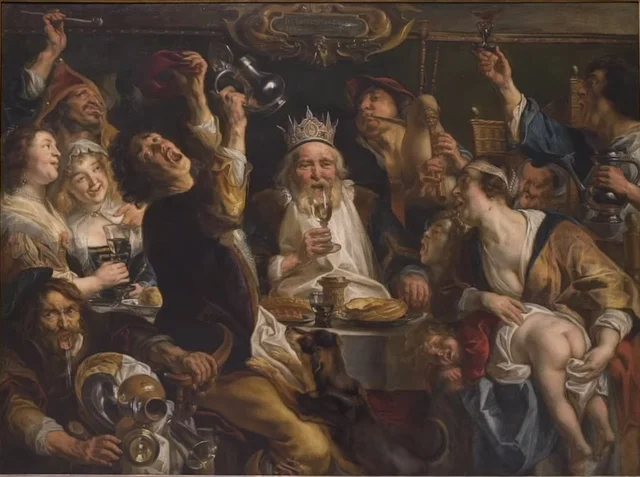 The King DrinksJacob Jordaens, 1640
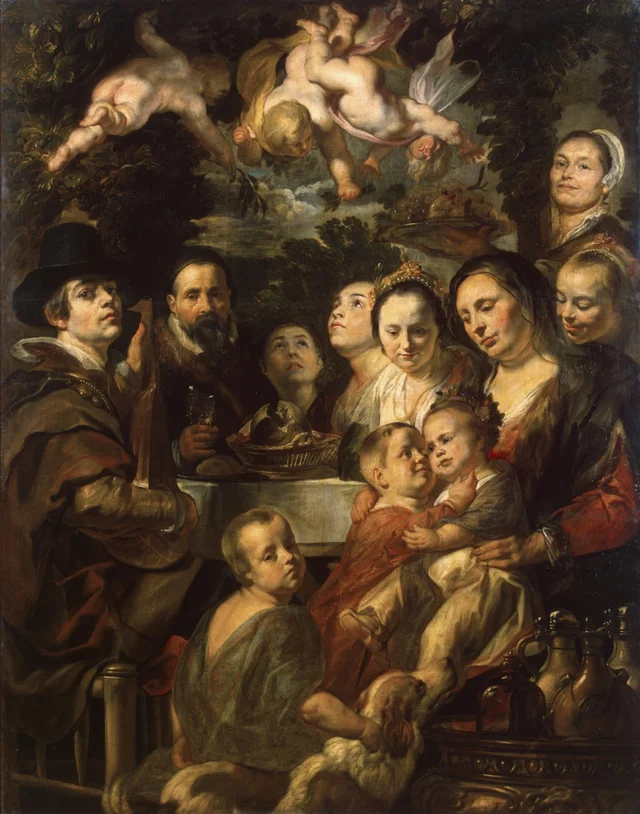 Self-Portrait with Parents, Brothers and SistersJacob Jordaens, 1615
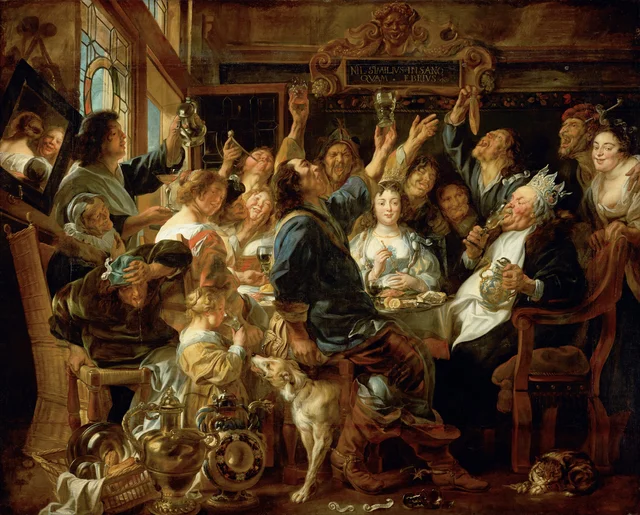 The Bean KingJacob Jordaens, 1640
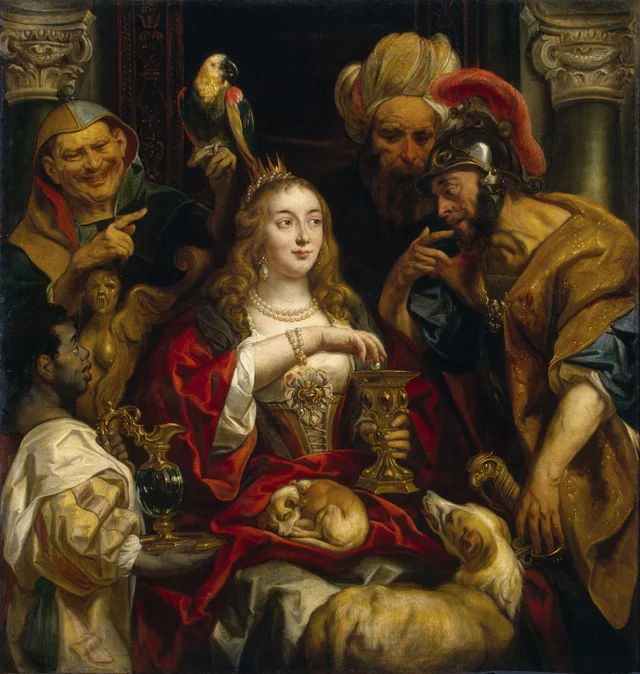 Cleopatra's FeastJacob Jordaens, 1653
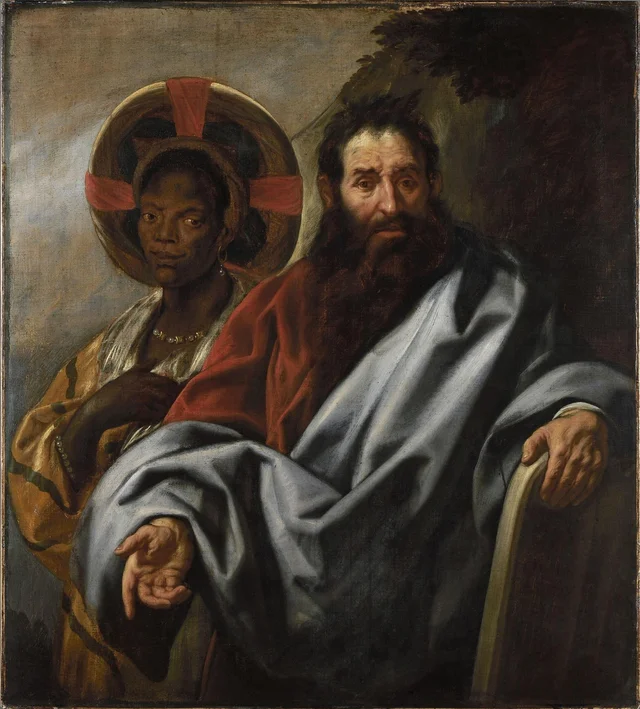 Moses and His Ethiopian Wife ZipporahJacob Jordaens, 1650
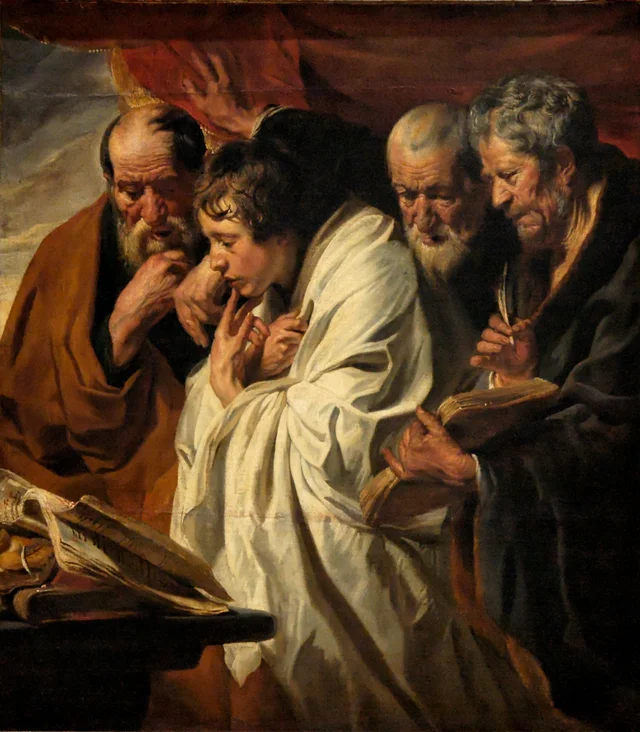 The Four EvangelistsJacob Jordaens, 1625
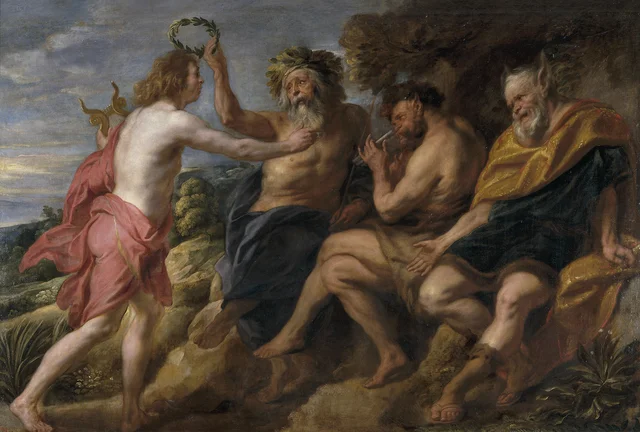 Apollo as Victor over PanJacob Jordaens, 1637
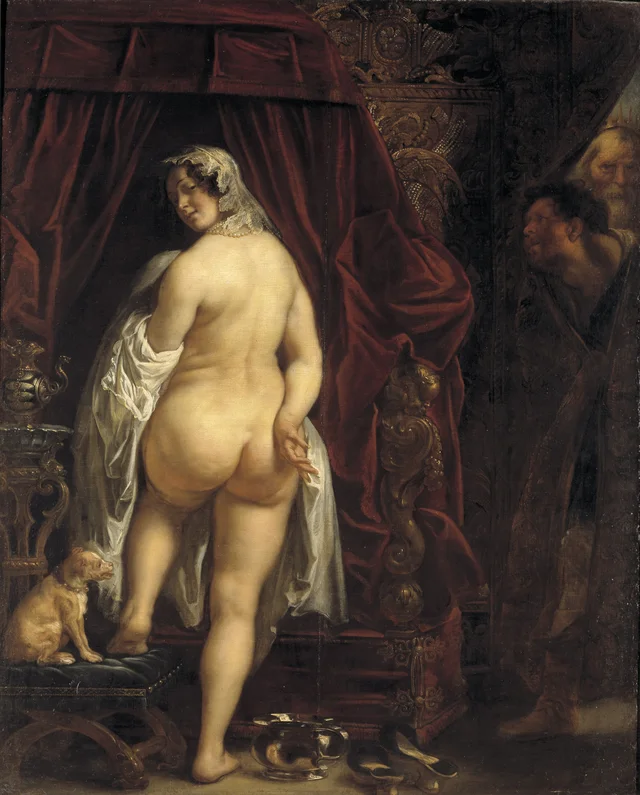 King Candaules of Lydia Showing his Wife to GygesJacob Jordaens, 1646
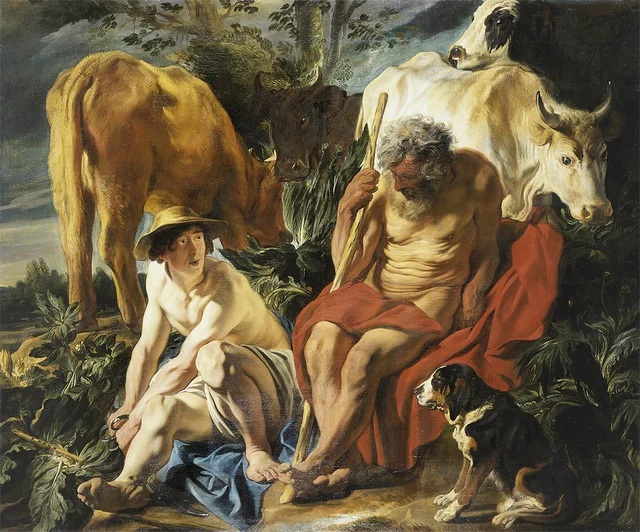 Mercury and ArgusJacob Jordaens, 1620
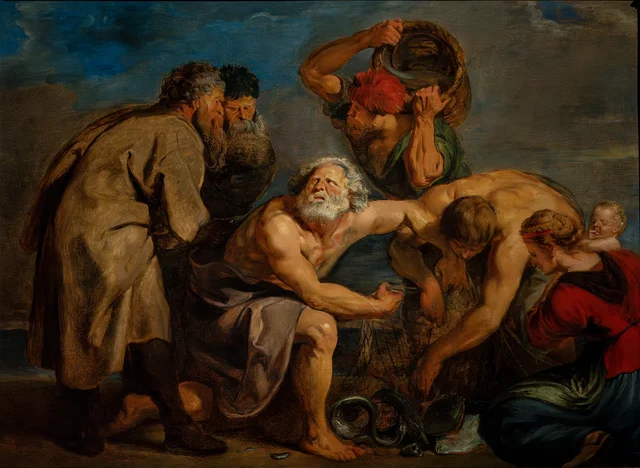 Miraculous Draught of FishJacob Jordaens, 1619
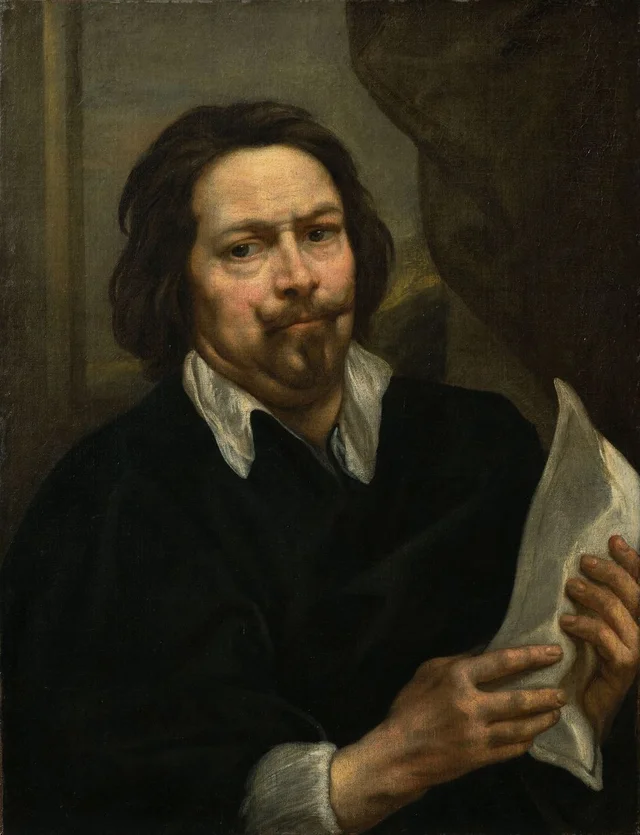 Self-portraitJacob Jordaens, 1649
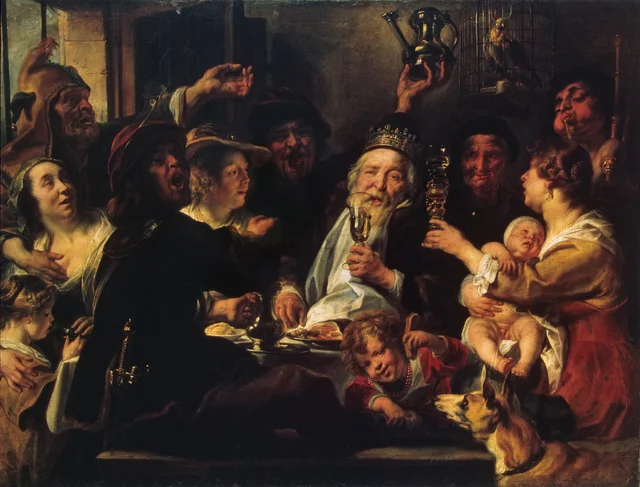 The Bean kingJacob Jordaens, 1638
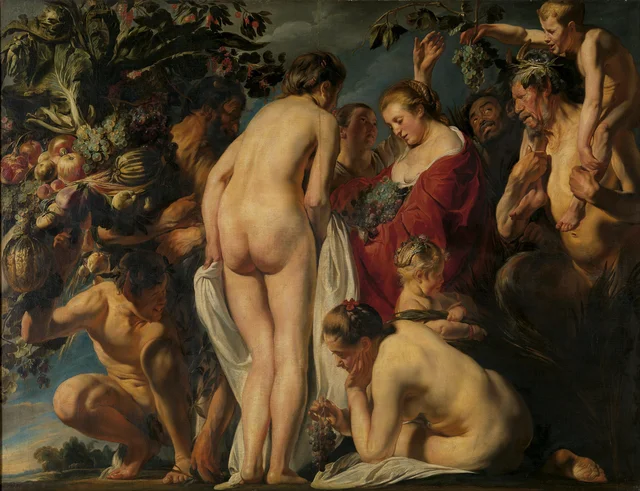 Allegory of FertilityJacob Jordaens, 1623
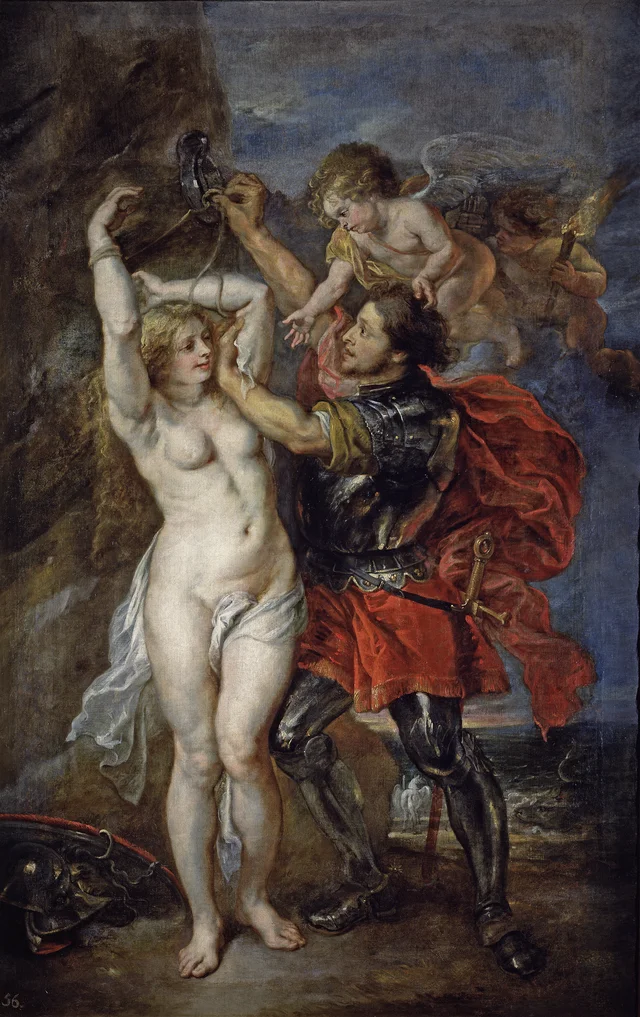 Perseus Freeing AndromedaJacob Jordaens, 1639
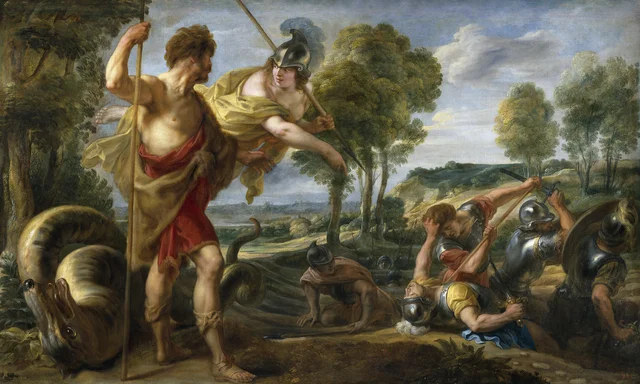 Cadmus and MinervaJacob Jordaens, 1636
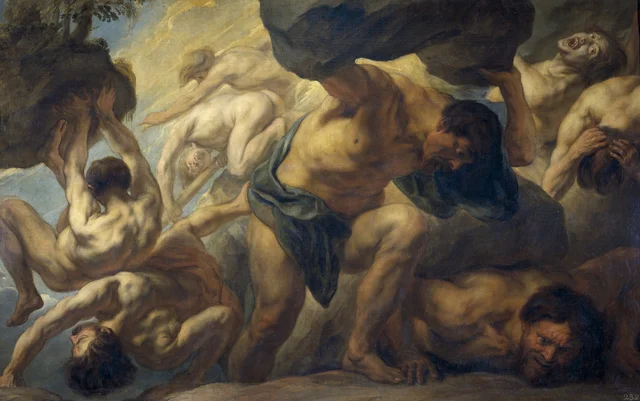 The Fall of the GiantsJacob Jordaens, 1636
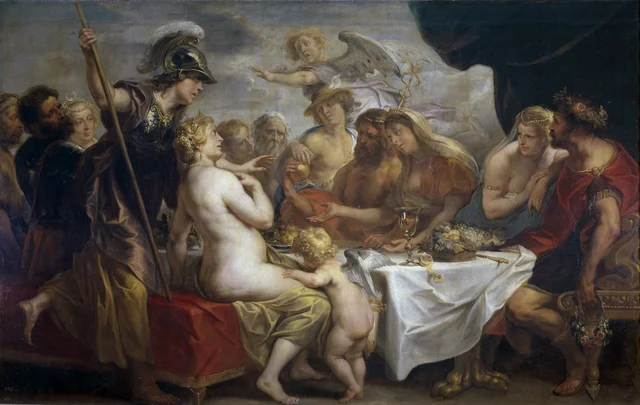 The wedding of Thetis and PeleusJacob Jordaens, 1633
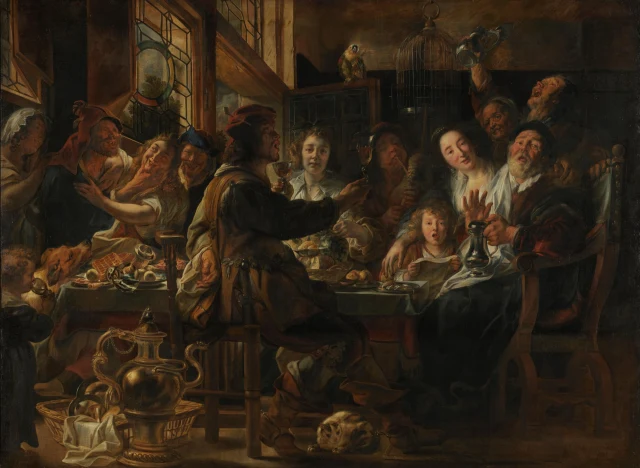 As the Old Sing, So Pipe the YoungJacob Jordaens, 1646
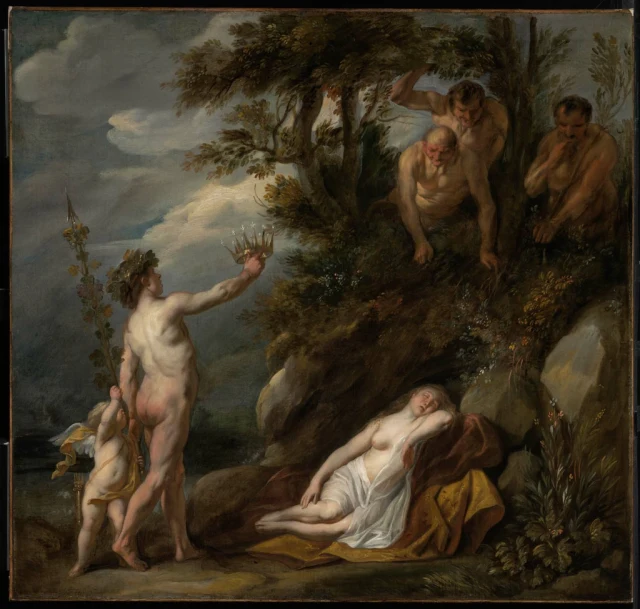 Bacchus Discovering AriadneJacob Jordaens, 1647
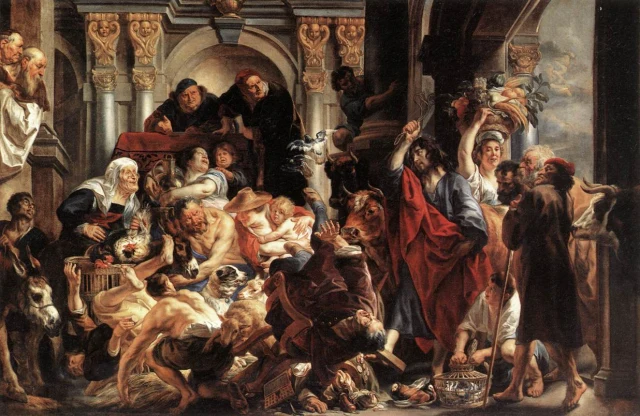 Christ Driving the Merchants from the TempleJacob Jordaens, 1647
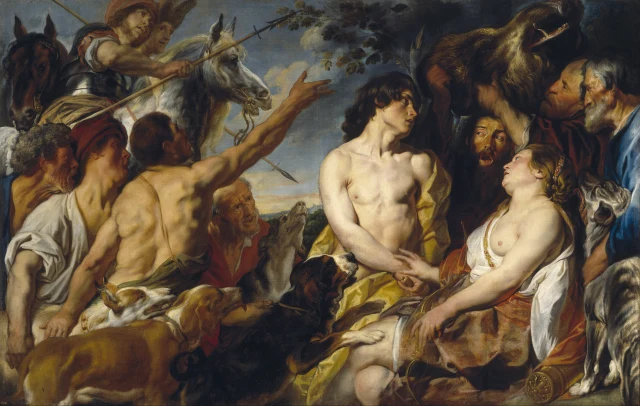 Meleager and AtalantaJacob Jordaens
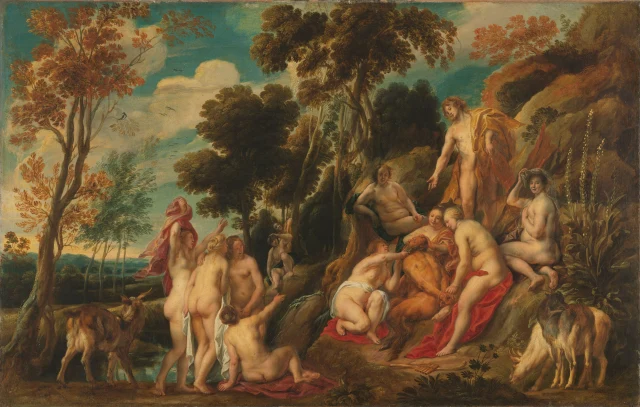 Nymphs Cutting Off Pan's BeardJacob Jordaens, 1640
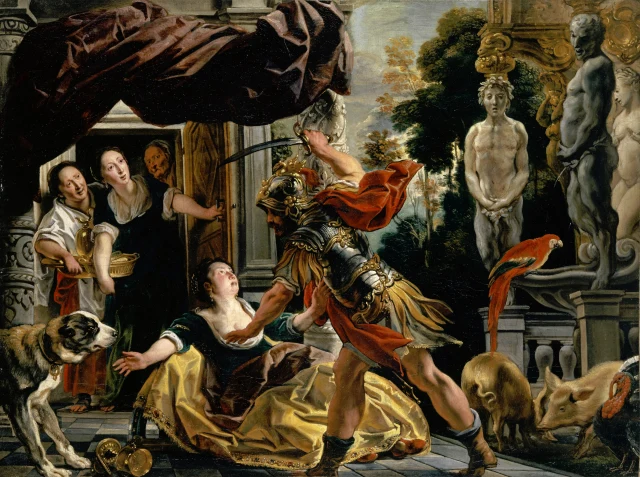 Odysseus Threatens CirceJacob Jordaens, 1630
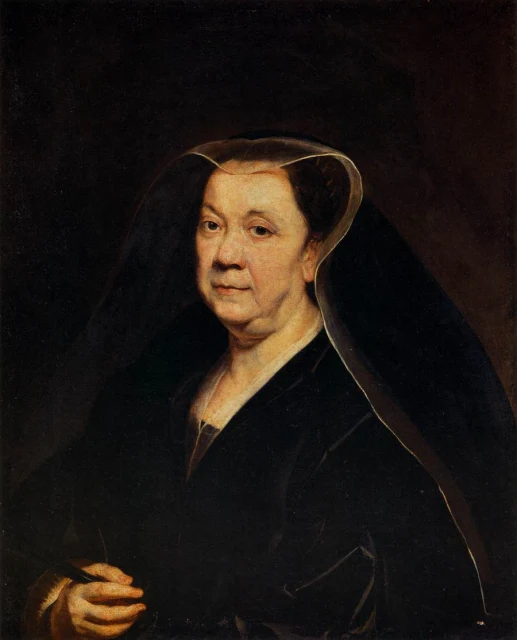 Portrait of a GentlewomanJacob Jordaens, 1660