The Sleeping Innkeeper (Phlegmaticus)
Details
The story
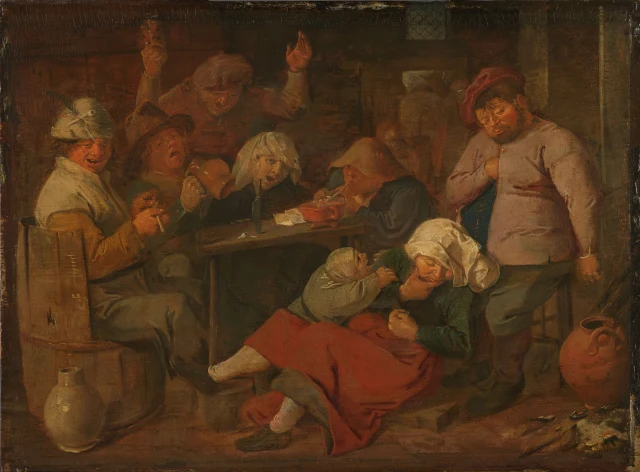
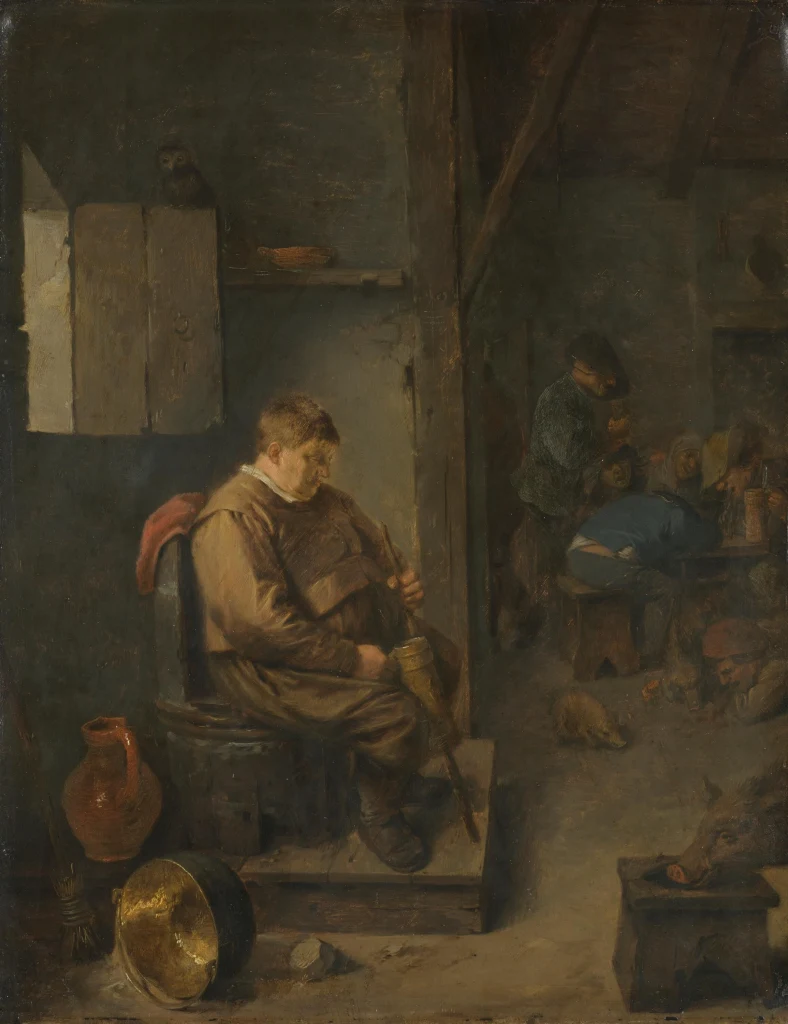
The Latin word in the title, Phlegmaticus, comes from medicine. In the 1630s doctors still worked with the ancient theory of the four humours, the bodily fluids whose balance was believed to shape a person's health and character. A body ruled by phlegm, cold and moist, produced the phlegmatic type, slow, heavy and inclined to sleep. Brouwer gives that type a body. A fat man has nodded off with a jug and a walking staff, and the museum reads him as the tavern regular who does nothing but drink and laze about. He stands for a vice that the other drinkers in the room share, and they, in the museum's words, are no better than the pigs eating up the vomit. Brouwer painted it around 1633 on a small sheet of copper, about 31 centimetres high. Munich has the most important collection of his work anywhere, and the Alte Pinakothek shows 17 of his paintings together in a single cabinet.