The Three Ages of Man
Details
The story
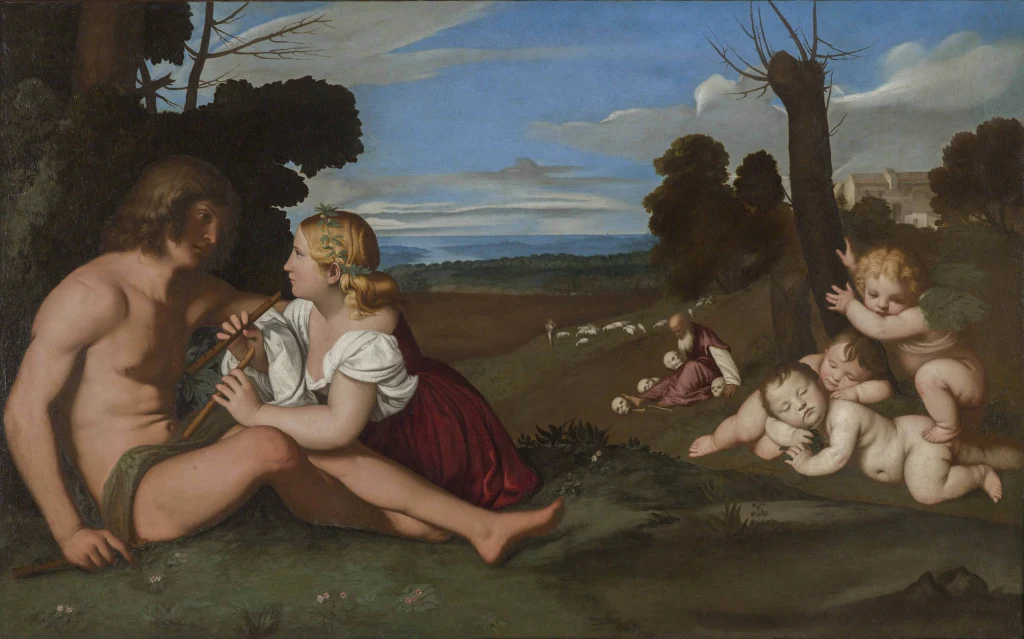
When the princess Olimpia Aldobrandini died in 1681, her pictures had two families to satisfy. She had married first into the Borghese and then into the Pamphilj, and the inventory drawn up for her heirs in 1682 split her collection between them. One treasure stayed on the Pamphilj side, Titian's Three Ages of Man, painted about 1511. This canvas is most likely the Borghese answer. They had a copy made, and it is given to Sassoferrato, then in his last years. It follows the original closely, with the young couple and their pipes, the sleeping infants with a winged Cupid climbing over them, and an old man in the distance. The critic Adolfo Venturi called it faithful but cold. The one real change is around the old man. Titian gave him two skulls, and the copy gives him four.