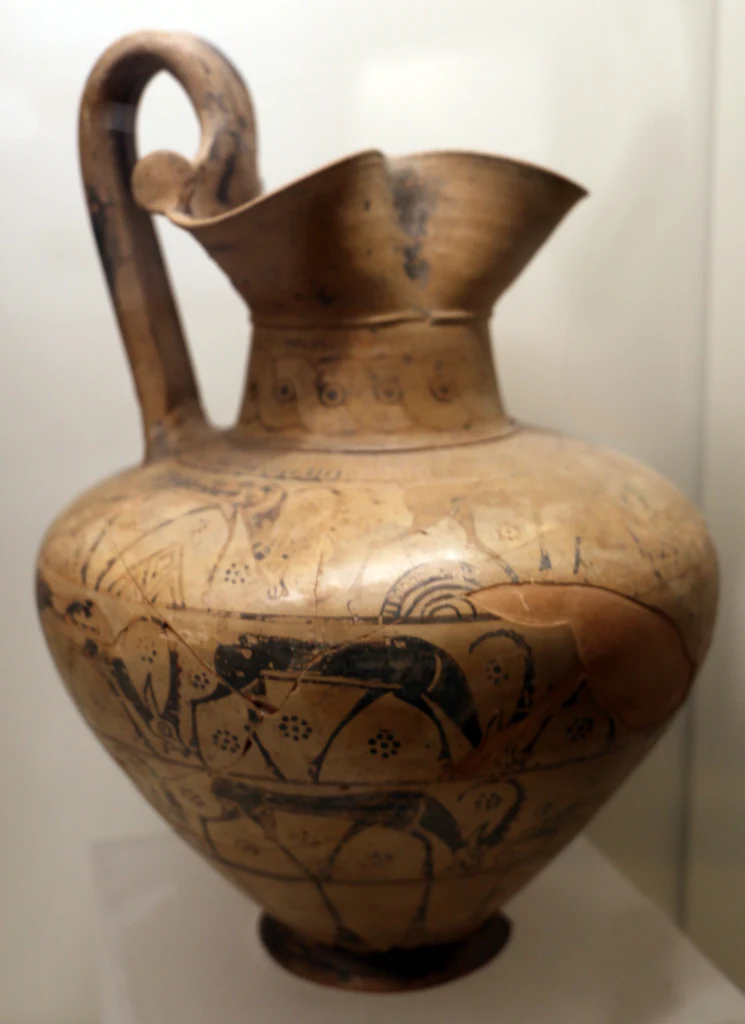
Trefoil Jug with Ibexes
Details
The story
Wild goats graze in single file around this jug, heads lowered. The main band, from the shoulder to the widest point, holds four ibexes, with small triangles and half-circles filling the spaces between their legs. Below come two more bands, one with seven ibexes and one with five and a goose, and dotted rosettes are scattered through the gaps. A braid runs round the neck and rays rise from the foot.
Grazing goats were the favourite motif of painted pottery from the Greek east, which is why modern scholars call it the Wild Goat Style, and the painter added touches taken from Corinthian vases. The jug itself was made at Vulci in Etruria, around 630 to 620 BC, by the painter known as the Swallow Painter. It reached the museum through a confiscation, so the tomb it came from is unknown.