Andrea Mantegna · PD
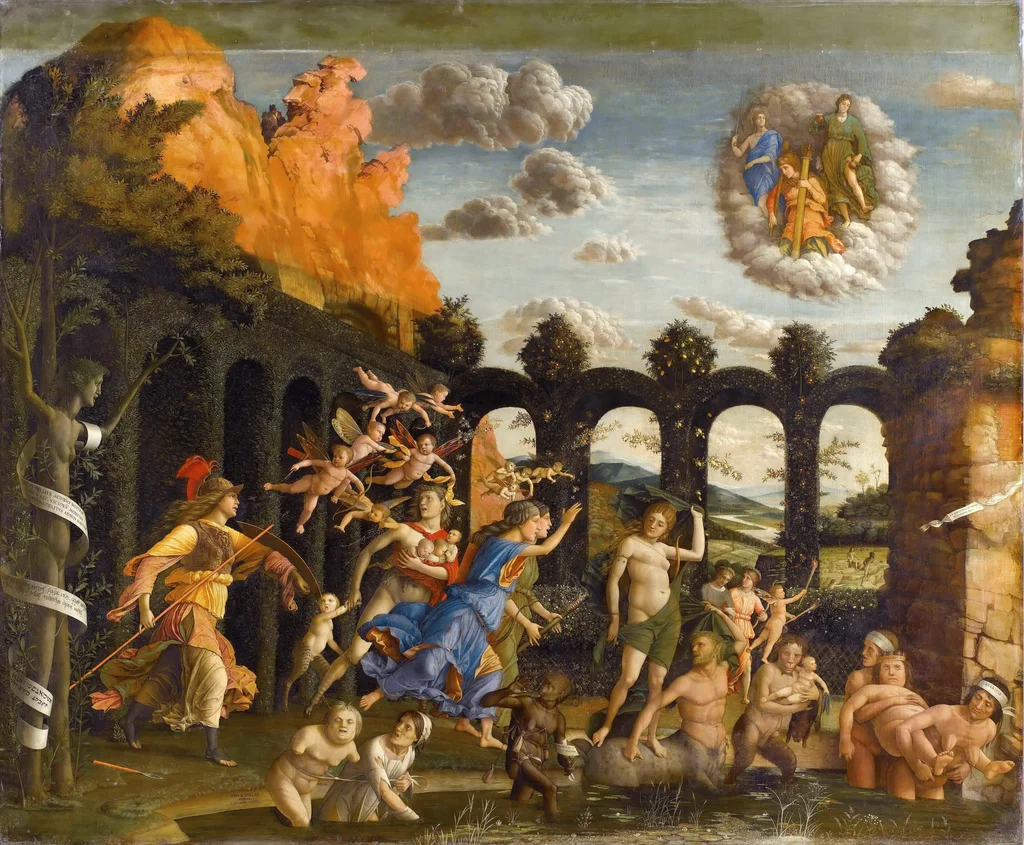
Triumph of the Virtues
Details
The story
Andrea Mantegna painted this crowded allegory near the end of his life for Isabella d'Este, the young marchioness of Mantua, who was assembling a private study room she filled with pictures of learning and virtue. It was the second canvas he made for that room, after a Parnassus of 1497. Minerva, goddess of wisdom, storms in from the left with a broken lance and drives a swarm of vices out of a walled garden, figures of idleness and lust labeled on little scrolls in the old medieval way. High overhead, three virtues watch from a bank of cloud. Isabella gave her painters detailed written instructions on exactly what to include, so the tangle of meaning here is partly hers.