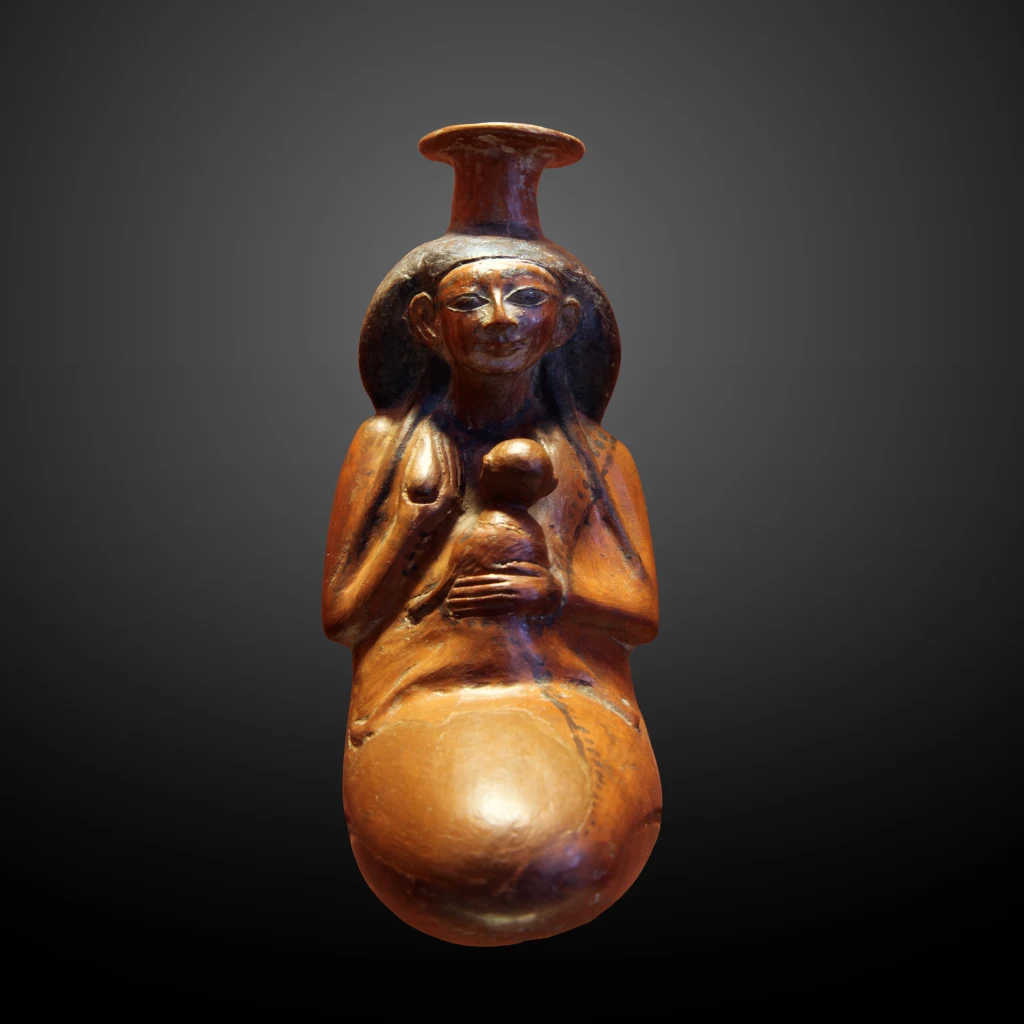
Vase in the Form of a Woman Nursing a Child
Details
The story
A woman squats on the ground in a skirt, holding a child and supporting her breast with one hand. Her body is the vessel, and a narrow neck rises from the top of her head. The figure was modelled in clay, coated with slip, painted in red-brown and black and polished, and it is only about 17 centimetres high. It was made early in the 18th Dynasty, at the start of Egypt's New Kingdom, sometime between about 1539 and 1425 BC.
Egyptian potters of that period made a small group of jars in this form, and the tiny mouth suggests they held something precious, kept in small amounts. Many Egyptologists think it was mother's milk. The Ebers Papyrus, a medical handbook written down early in the same dynasty, prescribes the milk of a woman who has given birth to a boy, to be stored in a jar and used in remedies, and not only remedies for children.
This vase was collected by Bernardino Drovetti, the French consul general in Egypt, who gathered antiquities in enormous numbers. It came to the Louvre in 1827, when his collection was bought for the museum.
More works by Unknown Egyptian artist (18th Dynasty)
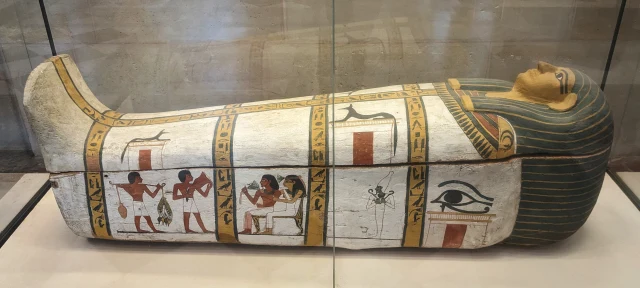 Anthropoid Coffin of MadjaUnknown Egyptian artist (18th Dynasty), -1452
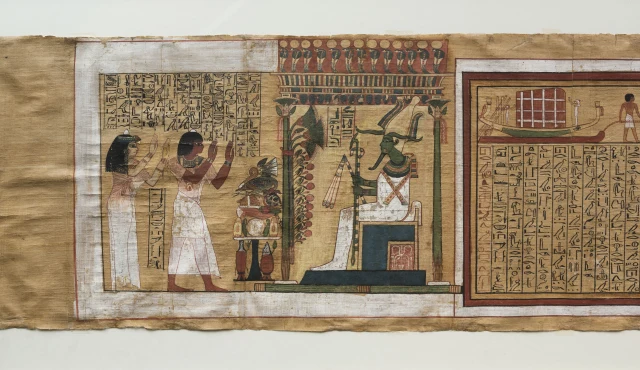 Book of the Dead of KhaUnknown Egyptian artist (18th Dynasty), -1389
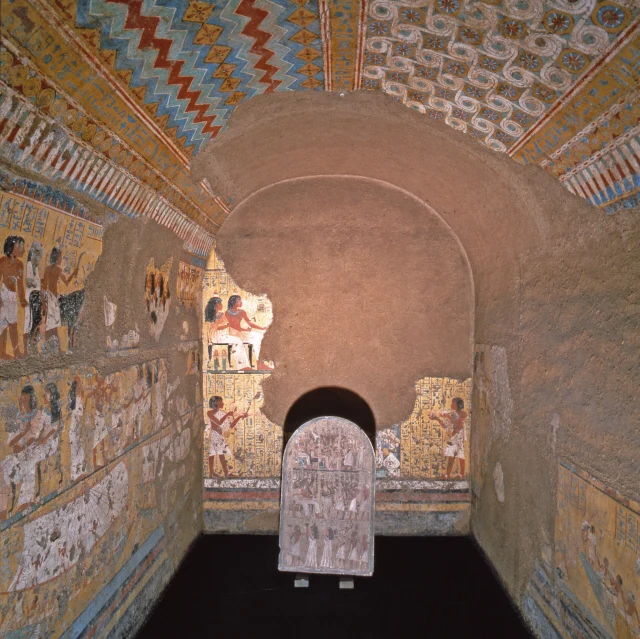 Chapel of MayaUnknown Egyptian artist (18th Dynasty), -1322
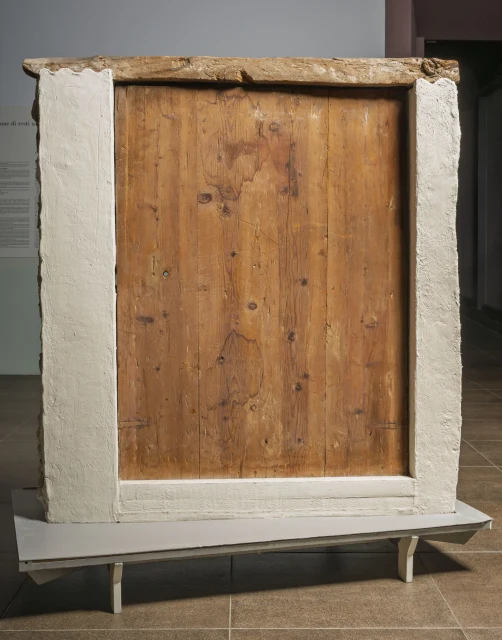 Door of the Burial Chamber of Kha and MeritUnknown Egyptian artist (18th Dynasty), -1389
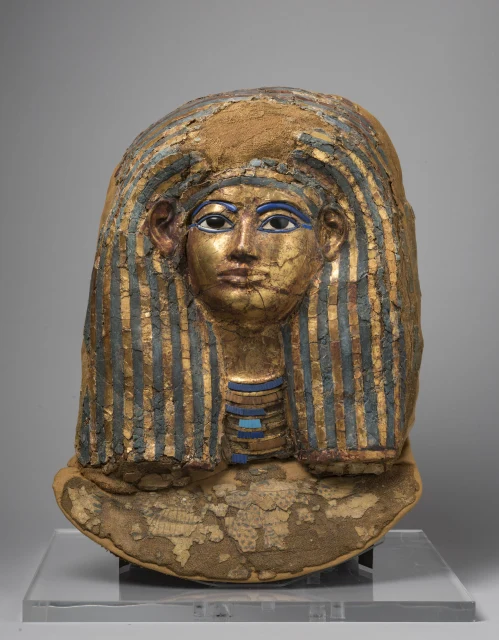 Funerary Mask of MeritUnknown Egyptian artist (18th Dynasty), -1389