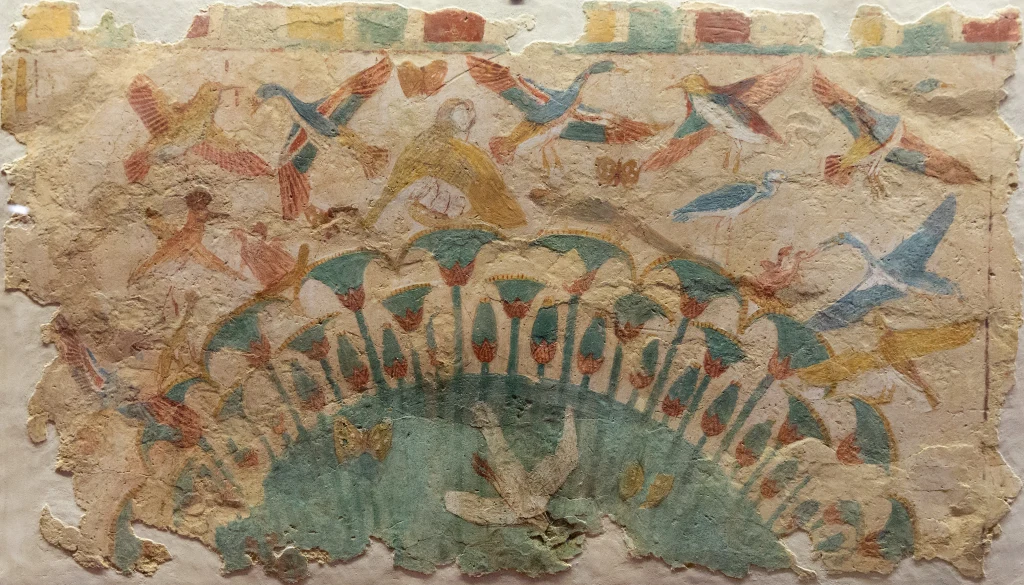
Wall Painting of Birds over a Papyrus Thicket, from the Tomb of Neferhotep
Details
The story
Above a fan of papyrus stems the marsh is crowded with life. There are ducks, an owl, a hoopoe and perhaps a heron, butterflies and a bird's nest, and among the stems a genet and an ichneumon, the Egyptian mongoose, two small hunters that Egyptian painters liked to show raiding nests in the papyrus. This is the thicket from a classic tomb scene in which the owner hunts birds in the marshes. It comes from the tomb of Neferhotep, overseer of the king's granary, at Dra Abu el-Naga on the west bank at Thebes, painted under Thutmose III or Amenhotep II in the 18th Dynasty. The French traveller Frédéric Cailliaud, a mineralogist from Nantes, saw the tomb in good condition around 1820, and he copied and published its scenes of hunting in the marshes and the desert, a banquet, the grape harvest and work in the fields. Later in the 19th century its position was forgotten, and Egyptologists still count it among the lost tombs of Thebes. This fragment belonged to Cailliaud himself. The Cabinet des Médailles in Paris bought it with his second collection in 1824, and it passed to the Louvre in 1907.
More works by Unknown Egyptian artist (18th Dynasty)
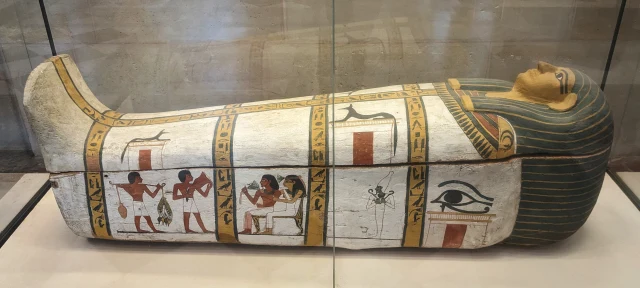 Anthropoid Coffin of MadjaUnknown Egyptian artist (18th Dynasty), -1452
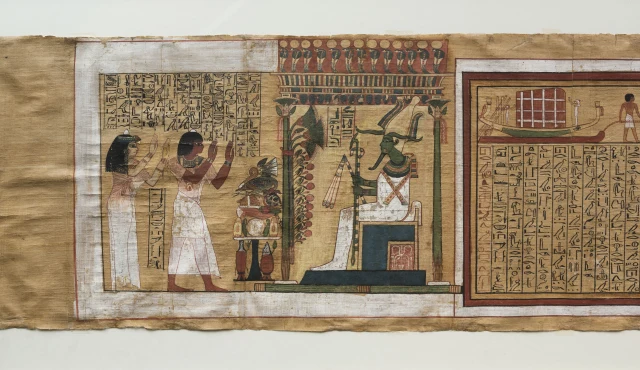 Book of the Dead of KhaUnknown Egyptian artist (18th Dynasty), -1389
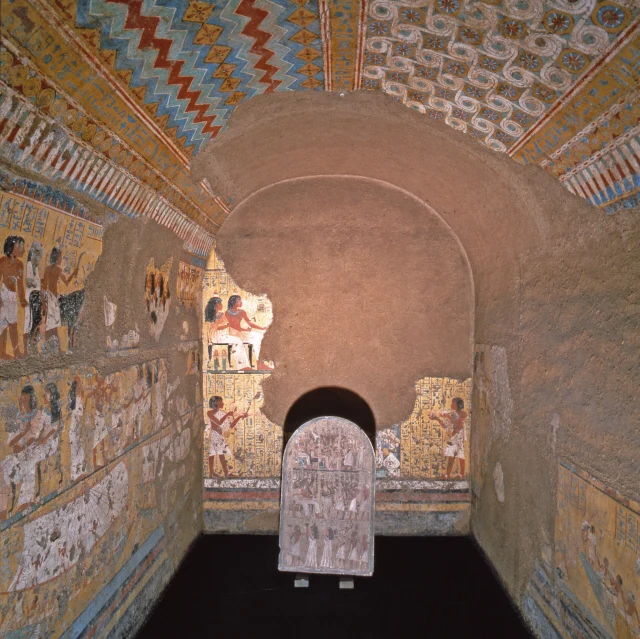 Chapel of MayaUnknown Egyptian artist (18th Dynasty), -1322
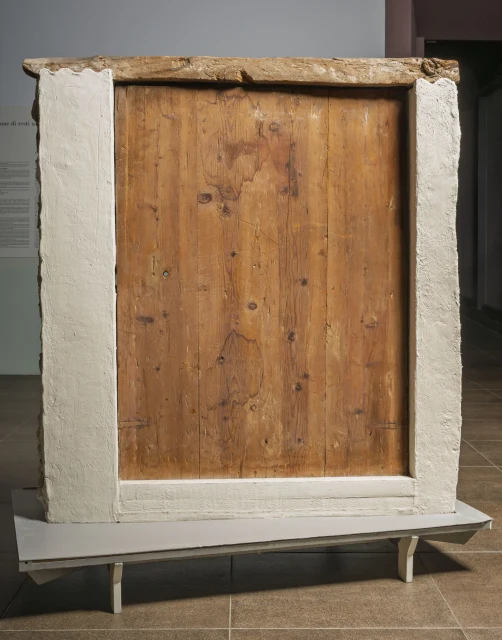 Door of the Burial Chamber of Kha and MeritUnknown Egyptian artist (18th Dynasty), -1389
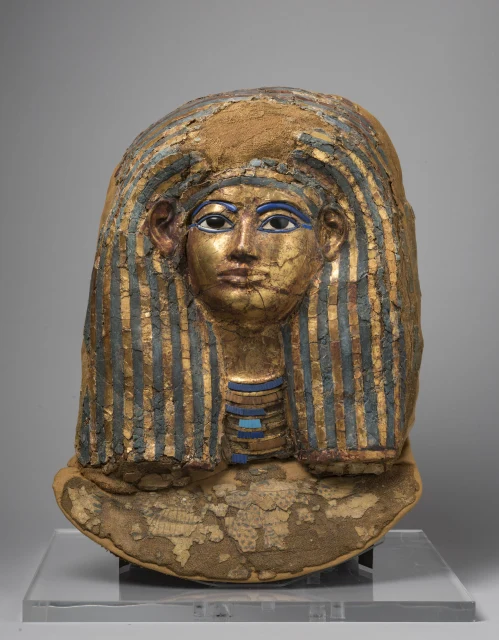 Funerary Mask of MeritUnknown Egyptian artist (18th Dynasty), -1389