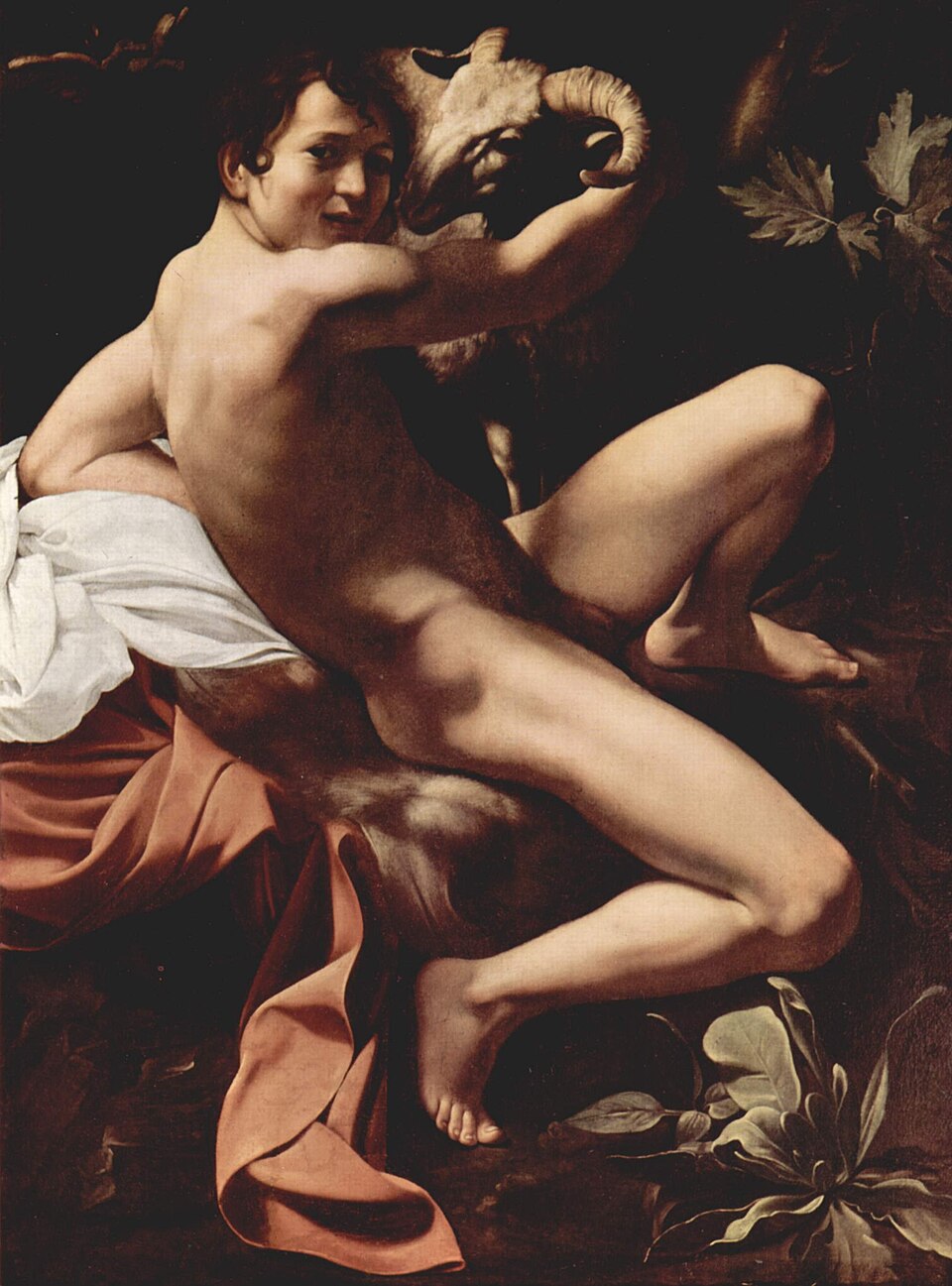
Caravaggio, Young Saint John the Baptist with ram, 1602. Wikimedia Commons. · PD
Young Saint John the Baptist with ram
Details
The story
In 1602 the Roman nobleman Ciriaco Mattei paid Caravaggio for a picture of Saint John the Baptist, and what he got was startling for a sacred subject: a naked, grinning boy twisting round to embrace a ram, his pose openly borrowed from the muscular nudes Michelangelo had painted on the Sistine ceiling. The version scholars agree is Caravaggio's own hangs a short walk away in the Capitoline gallery, with a documented line back to the Mattei family. This canvas in the Doria Pamphilj is one of at least eleven early copies of that composition, and it has kept experts arguing for decades. Some take it for a very good period copy by another hand. Others have argued that Caravaggio repeated his own painting here, a replica from the master himself, and X-rays have been brought in on both sides without settling it. The picture carries almost none of the Baptist's usual signs, no cross and no lamb, only the ram, and some writers have questioned whether it was ever meant to show him at all.