The story
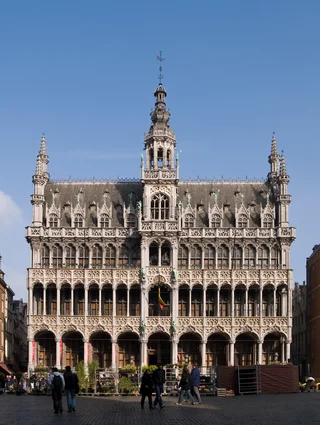
On the top floor of the King's House, on the Grand-Place in Brussels, stands a bronze boy little more than half a metre tall. This is the original Manneken Pis, cast in 1619 by the sculptor Jérôme Duquesnoy the Elder. After the last of several thefts, in 1965, a replica went up on the street corner a few minutes' walk away, and the original was brought indoors here.
The building has an odd name. A covered bread market stood on this spot from the 13th century, which is why its Dutch name is Broodhuis, bread house. It later held offices of the dukes of Brabant, and when their heir Charles V became king of Spain in 1516 it became the Maison du Roi, though no king ever lived in it. In June 1568 the counts of Egmont and Horn, two noblemen who had opposed Spanish policy, were beheaded on the square outside. The old building was damaged in the French bombardment of 1695, and the architect Victor Jamaer rebuilt it in neo-Gothic style between 1874 and 1896. The city museum has been here since 1887.
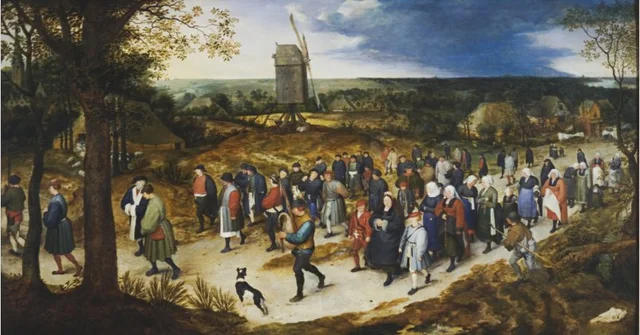
Inside, paintings, tapestries and models of the medieval town tell the history of Brussels. The best-known picture is a Wedding Procession, a crowd of villagers on their way to a wedding, which the city bought in 1966 as an original by Pieter Bruegel the Elder. Most scholars no longer accept that attribution. They see it as one of several versions of a composition from Bruegel's circle, and some catalogues give it to his son Jan Brueghel the Elder.