The story
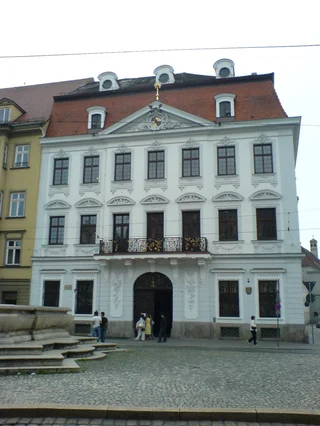
On Augsburg's Maximilianstraße, behind a long Rococo front, a suite of rooms runs for more than a hundred metres and ends in a gilded, mirrored ballroom. The banker Benedikt Adam Liebert von Liebenhofen built the palace from 1765, and in 1770 the ballroom was opened by the young Austrian archduchess Maria Antonia, on her way to France to marry the future Louis XVI. History knows her as Marie Antoinette. The house later passed to the Schaezler family, who gave it to the city in 1958.
The Deutsche Barockgalerie fills those first-floor rooms with around a hundred paintings of the 17th and 18th centuries, with a strong showing of artists who worked in Augsburg, such as Johann Evangelist Holzer and Matthäus Günther, both known for their frescoes. Overhead in the ballroom, a ceiling by the Italian painter Gregorio Guglielmi shows trade linking the continents, a fitting subject for a banker's house.
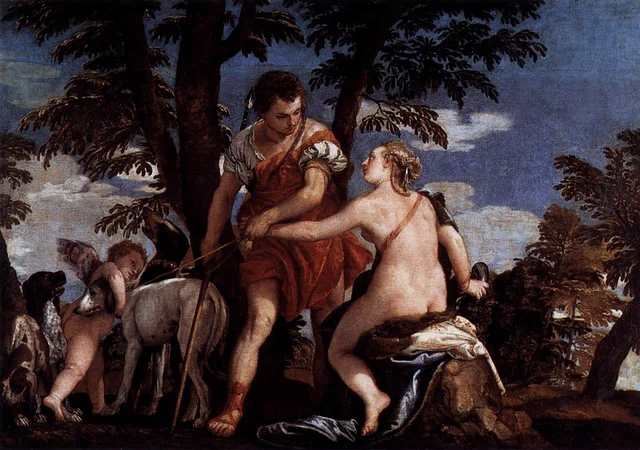
The floor above holds the bequest of the Augsburg-born art dealer Karl Haberstock, with Italian and Flemish masters such as Tiepolo and Van Dyck. Among the Venetian pictures in the palace is Paolo Veronese's Venus and Adonis, painted around 1562, in which Venus tries to hold Adonis back from the hunt by gripping his dogs' leads.