The story
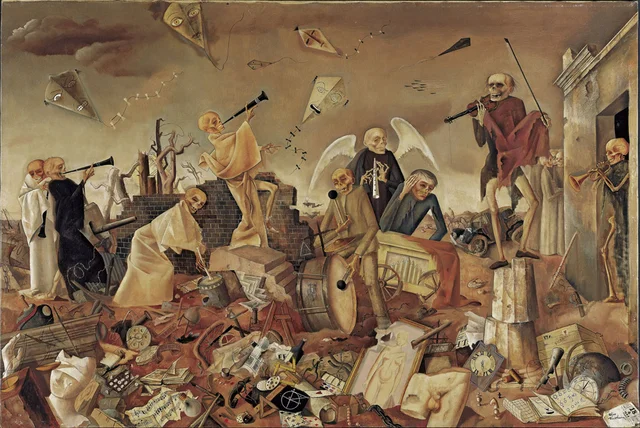
On 18 April 1944, hiding in Brussels, Felix Nussbaum dated a painting of skeletons playing music over a wasteland littered with the debris of civilisation. Triumph of Death is usually counted as his last work. That summer he and his wife, the painter Felka Platek, were arrested and deported to Auschwitz, where they were murdered.
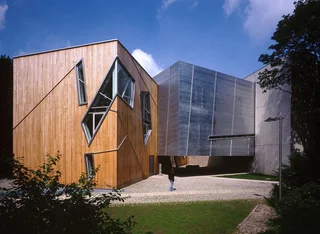
The painting now hangs in Osnabrück, the town in north-west Germany where Nussbaum was born in 1904, in a museum built for his work. Its architect, Daniel Libeskind, called the design Museum without Exit. Completed in 1998, it was the first building Libeskind finished, ahead of his Jewish Museum in Berlin, and its three linked volumes of wood, concrete and zinc cut into one another along narrow passages and sharp angles.
With more than 200 works, it holds the largest collection of Nussbaum's art, following him from his early years in Osnabrück and Berlin through exile in Belgium. Among them is the Self-Portrait with Jewish Identity Card, in which he holds up the stamped papers that marked him as a Jew. The house is part of the Museumsquartier Osnabrück, next to the town's museum of cultural history.