Gedung Agung
Yogyakarta, Indonesia
The story
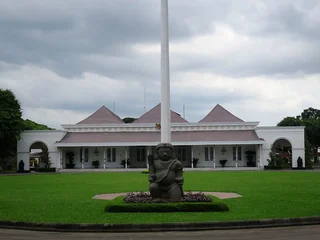
The palace on Yogyakarta's main street was begun in 1824 as the house of the Dutch Resident, the colonial official posted to the sultan's court. Work soon ran into the Java War, the five-year rising led by Prince Diponegoro, a Javanese royal, and the house was only finished in 1832. Its plans are credited to Antoine Payen, a Belgian painter in Dutch service who also gave a young Javanese named Raden Saleh his first painting lessons.
An earthquake brought that first building down in 1867, and the present one rose in its place two years later. From 1946, while Jakarta was occupied by Allied troops, Yogyakarta served as the young republic's capital and this house as the residence of President Sukarno.
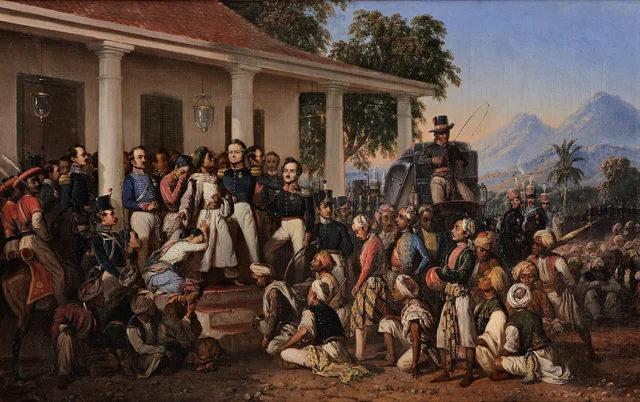
Today it is primarily a presidential palace, but it also holds a museum of state art, much of it gathered by Sukarno, a keen collector, with works by painters such as Affandi and Basoeki Abdullah. Its best-known picture is Raden Saleh's 1857 painting of Diponegoro's arrest by the Dutch in 1830. Saleh painted it in Europe and presented it to King William III of the Netherlands. It returned to Indonesia in 1978, and in December 2014, after a restoration, it was moved here from the Merdeka Palace in Jakarta and hung in the museum's main exhibition room.